Aura Heydenreich – författare
Visar alla böcker från författaren Aura Heydenreich. Handla med fri frakt och snabb leverans.
7 produkter
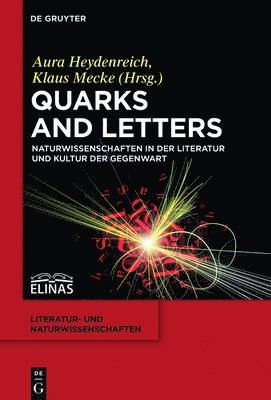
Quarks and Letters
Naturwissenschaften in Der Literatur Und Kultur Der Gegenwart
Av Aura Heydenreich, Klaus Mecke
Inbunden, 2015
1765 kr
Lägg i varukorg
Fragen und Antworten der Hirnforschung, Quantenmechanik oder Evolutionstheorie gehen in Romane ein, und Physiker oder Biologen verwenden rhetorische Sprachbilder, um ihre Erkenntnisse zu vermitteln oder sogar erst zu generieren. Dass literarische und wissenschaftliche Interessen sich nicht nur …
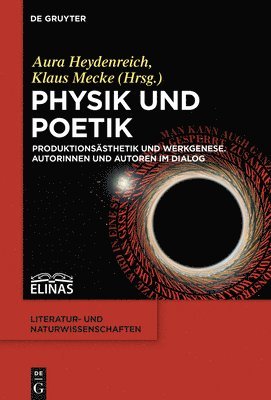
Physik und Poetik
Av Aura Heydenreich, Klaus Mecke
Inbunden, 2015
1765 kr
Lägg i varukorg
Viele Schriftsteller beschäftigen sich intensiv mit den weltbildprägenden Erkenntnissen der Physik, oft unbeachtet von Literaturkritik und Wissenschaft. Ihre Gründe sind dabei so vielfältig wie die Bücher, die sie schreiben. Sie in Interviews zu Wort kommen zu lassen, bereichert den Diskurs über …
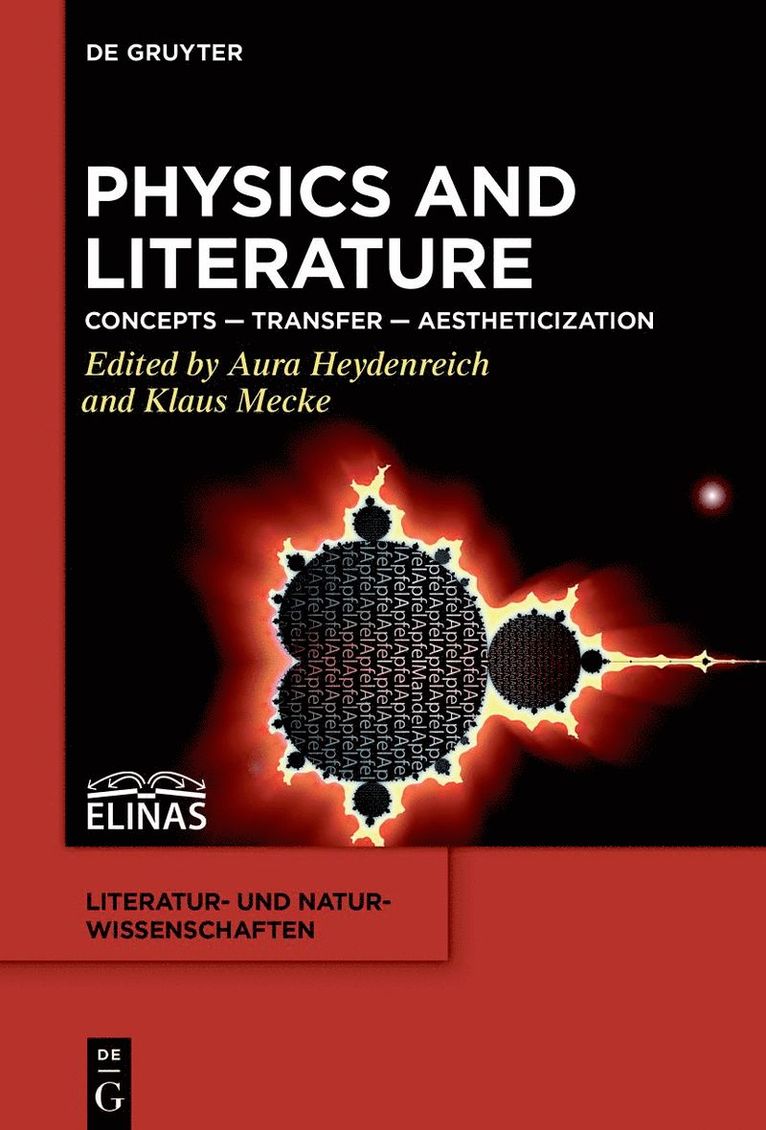
Physics and Literature
Concepts – Transfer – Aestheticization
Av Aura Heydenreich, Klaus Mecke
Inbunden, 2021
1676 kr
Lägg i varukorg
Physics and Literature is a unique collaboration between physicists, literary scholars, and philosophers, the first collection of essays to examine together how science and literature, beneath their practical differences, share core dimensions – forms of questioning, thinking, discovering and …
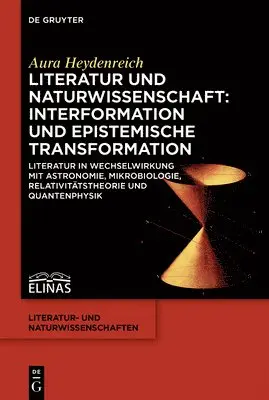
Literatur Und Naturwissenschaft: Interformation Und Epistemische Transformation
Literatur in Wechselwirkung Mit Astronomie, Mikrobiologie, Relativitätstheorie Und Quantenphysik
Inbunden, 2024
1524 kr
Lägg i varukorg
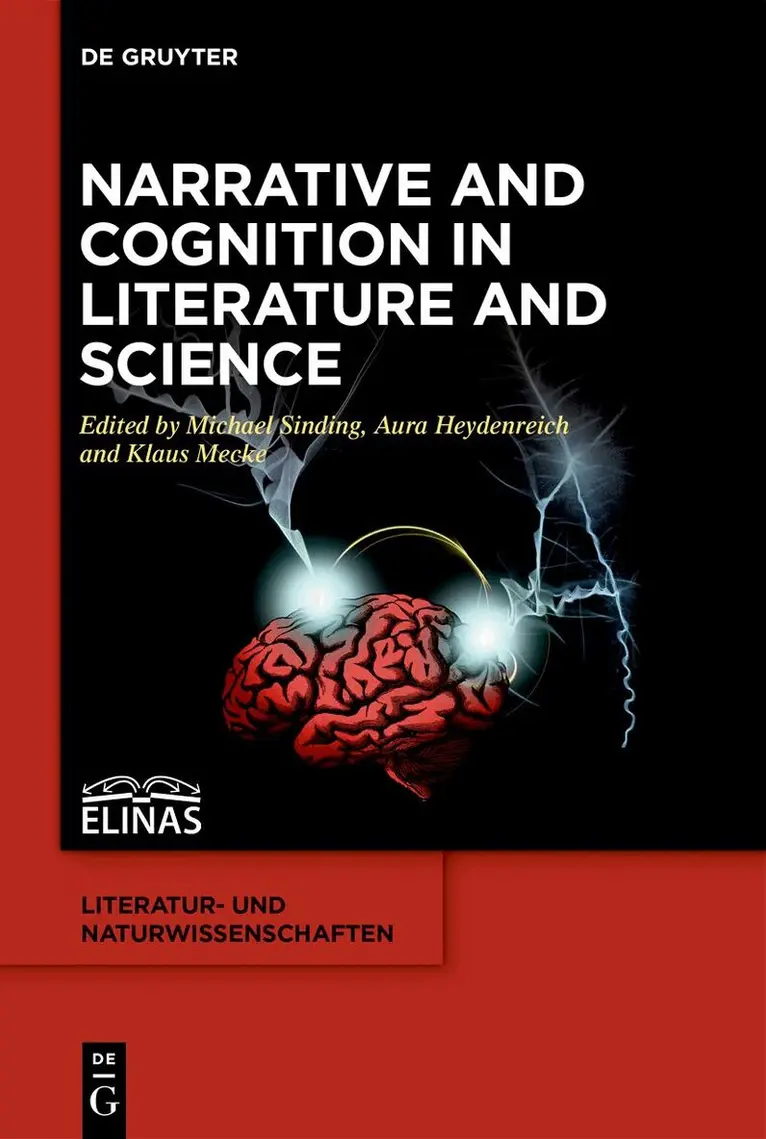
Narrative and Cognition in Literature and Science
Av Michael Sinding, Aura Heydenreich m. fl.
Inbunden, 2025
1501 kr
Lägg i varukorg
This volume explores cognitive perspectives on how science and narrative shape one another. Narrative is a principle of cognition, and cognition is fundamental to narrative. This duality enables a deeper mapping of the feedback between story and the natural sciences. Science, as a …
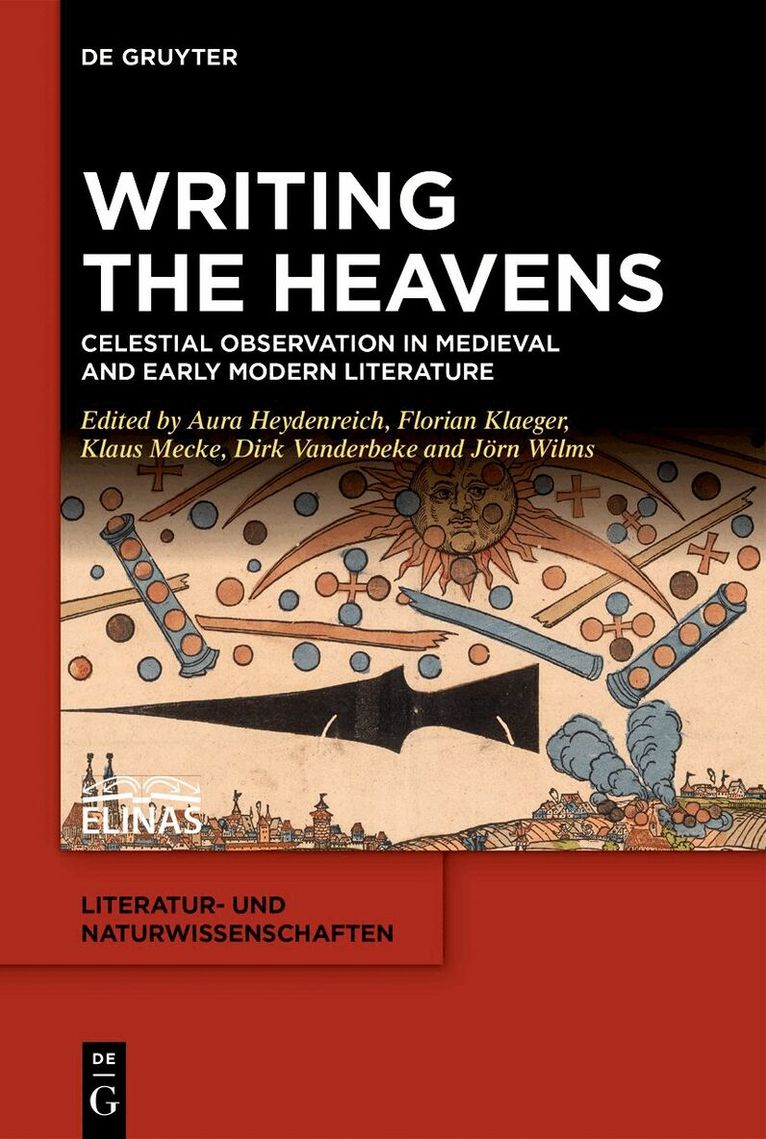
Writing the Heavens
Celestial Observation in Medieval and Early Modern Literature
Av Aura Heydenreich, Florian Klaeger m. fl.
Inbunden, 2024
1842 kr
Lägg i varukorg
In the Middle Ages and early modernity, celestial observation was frequently a subject for verbal rather than numerical and geometrical recording. These records can now be difficult to decode, since what they address is frequently obscured by formal conventions of genre, imagery, rhetoric, prosody, …
metamorphosen 20 – Alchemie
Magazin für Literatur und Kultur
Av Christian Wollecke, Jonas Rump m. fl.
E-bok, 2018
60 kr
Lägg i varukorg
"was entweicht beim verbrennen der wörter in zahlen, der zahlen in wörter?" In der 20. Ausgabe der metamorphosen geht es um die Alchemie – als Chiffre für das Rational-Irrationale der modernen "Hard Sciences": also fortschreitende Naturbeherrschung einerseits, andererseits das Utopische, etwa in …