Avi Lifschitz - Böcker
Visar alla böcker från författaren Avi Lifschitz. Handla med fri frakt och snabb leverans.
7 produkter
7 produkter
481 kr
Skickas inom 7-10 vardagar
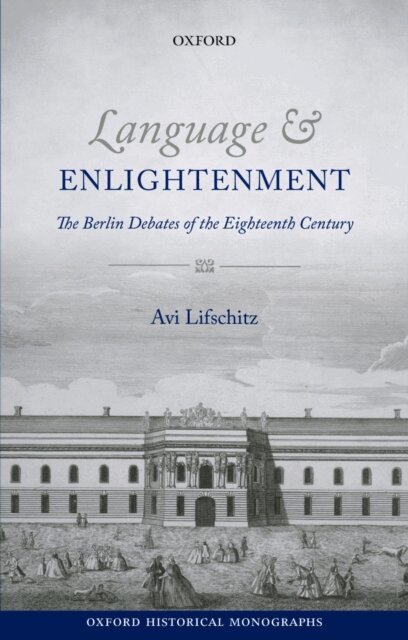
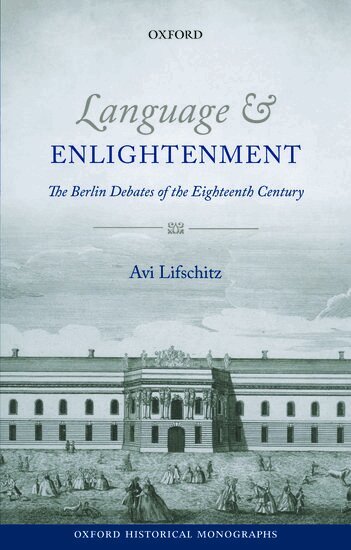
What is the role of language in human cognition? Could we attain self-consciousness and construct our civilization without language? Such were the questions at the basis of eighteenth-century debates on the joint evolution of language, mind, and culture. Language and Enlightenment highlights the importance of language in the social theory, epistemology, and aesthetics of the Enlightenment. While focusing on the Berlin Academy under Frederick the Great, Avi Lifschitz situates the Berlin debates within a larger temporal and geographical framework. He argues that awareness of the historicity and linguistic rootedness of all forms of life was a mainstream Enlightenment notion rather than a feature of the so-called 'Counter-Enlightenment'. Enlightenment authors of different persuasions investigated whether speechless human beings could have developed their language and society on their own. Such inquiries usually pondered the difficult shift from natural signs like cries and gestures to the artificial, articulate words of human language. This transition from nature to artifice was mirrored in other domains of inquiry, such as the origins of social relations, inequality, the arts, and the sciences. By examining a wide variety of authors - Leibniz, Wolff, Condillac, Rousseau, Michaelis, and Herder, among others - Language and Enlightenment emphasises the open and malleable character of the eighteenth-century Republic of Letters. The language debates demonstrate that German theories of culture and language were not merely a rejection of French ideas. New notions of the genius of language and its role in cognition were constructed through a complex interaction with cross-European currents, especially via the prize contests at the Berlin Academy.
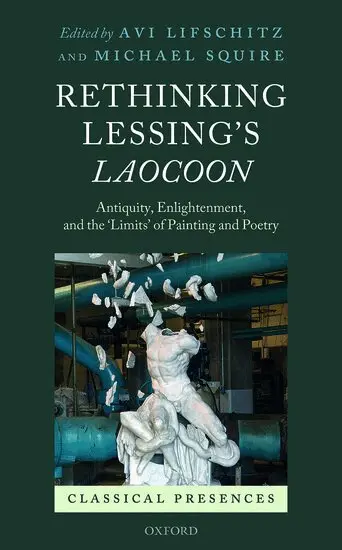
Rethinking Lessing's Laocoon
Antiquity, Enlightenment, and the 'Limits' of Painting and Poetry
Inbunden, Engelska, 2017
1 995 kr
Skickas inom 7-10 vardagar
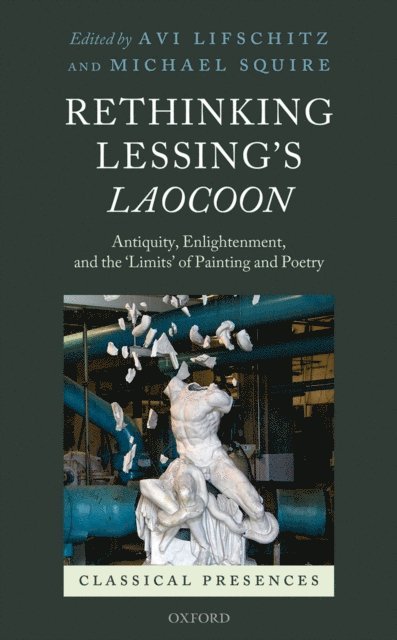
Gotthold Ephraim Lessing first published Laokoon, oder über die Grenzen der Mahlerey und Poesie (Laocoon, or on the Limits of Painting and Poetry) in 1766. Over the last 250 years, Lessing's essay has exerted an incalculable influence on western critical thinking. Not only has it directed the history of post-Enlightenment aesthetics, it has also shaped the very practices of 'poetry' and 'painting' in a myriad of different ways. In this anthology of specially commissioned chapters - comprising the first ever edited book on the Laocoon in English - a range of leading critical voices has been brought together to reassess Lessing's essay on its 250th anniversary. Combining perspectives from multiple disciplines (including classics, intellectual history, philosophy, aesthetics, media studies, comparative literature, and art history), the book explores the Laocoon from a plethora of critical angles. Chapters discuss Lessing's interpretation of ancient art and poetry, the cultural backdrops of the eighteenth century, and the validity of the Laocoon's observations in the fields of aesthetics, semiotics, and philosophy. The volume shows how the Laocoon exploits Greek and Roman models to sketch the proper spatial and temporal 'limits' (Grenzen) of what Lessing called 'poetry' and 'painting'; at the same time it demonstrates how Lessing's essay is embedded within Enlightenment theories of art, perception, and historical interpretation, as well as within nascent eighteenth-century ideas about the 'scientific' study of Classical antiquity (Altertumswissenschaft). To engage critically with the Laocoon, and to make sense of its legacy over the last 250 years, consequently involves excavating various 'classical presences': by looking back to the Graeco-Roman past, the volume demonstrates, Lessing forged a whole new tradition of modern aesthetics.
1 531 kr
Skickas inom 5-8 vardagar
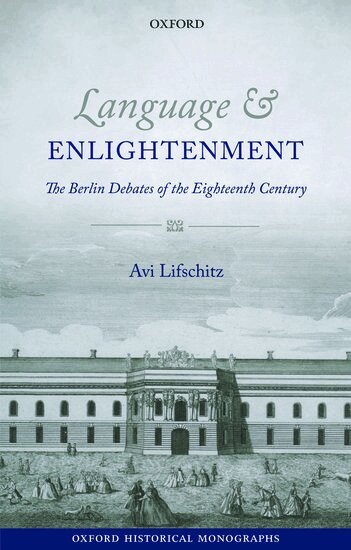
What is the role of language in human cognition? Could we attain self-consciousness and construct our civilisation without language? Such were the questions at the basis of eighteenth-century debates on the joint evolution of language, mind, and culture. Language and Enlightenment highlights the importance of language in the social theory, epistemology, and aesthetics of the Enlightenment. While focusing on the Berlin Academy under Frederick the Great, Avi Lifschitz situates the Berlin debates within a larger temporal and geographical framework. He argues that awareness of the historicity and linguistic rootedness of all forms of life was a mainstream Enlightenment notion rather than a feature of the so-called 'Counter-Enlightenment'. Enlightenment authors of different persuasions investigated whether speechless human beings could have developed their language and society on their own. Such inquiries usually pondered the difficult shift from natural signs like cries and gestures to the artificial, articulate words of human language. This transition from nature to artifice was mirrored in other domains of inquiry, such as the origins of social relations, inequality, the arts and the sciences. By examining a wide variety of authors - Leibniz, Wolff, Condillac, Rousseau, Michaelis, and Herder, among others - Language and Enlightenment emphasises the open and malleable character of the eighteenth-century Republic of Letters. The language debates demonstrate that German theories of culture and language were not merely a rejection of French ideas. New notions of the genius of language and its role in cognition were constructed through a complex interaction with cross-European currents, especially via the prize contests at the Berlin Academy.
376 kr
Skickas inom 7-10 vardagar
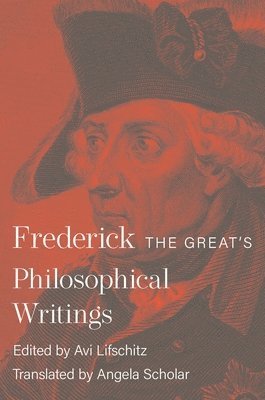
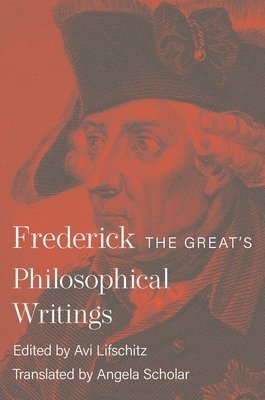
The first modern English edition of diverse Enlightenment-era writings by Prussian monarch Frederick the GreatFrederick II of Prussia (1712–1786), best known as Frederick the Great, was a prolific writer of philosophical discourses, poems, epics, satires, and more, while maintaining extensive correspondence with prominent intellectuals, Voltaire among them. This edition of selected writings, the first to make a wide range of Frederick’s most important ideas available to a modern English readership, moves beyond traditional attempts to see his work only in light of his political aims. In these pages, we can finally appreciate Frederick’s influential contributions to the European Enlightenment—and his unusual role as a monarch who was also a published author.In addition to Frederick’s major opus, the Anti-Machiavel, the works presented here include essays, prefaces, reviews, and dialogues. The subjects discussed run the gamut from ethics to religion to political theory. Accompanied by critical annotations, the texts show that we can understand Frederick’s views of kingship and the state only if we engage with a broad spectrum of his thought, including his attitudes toward morality and self-love. By contextualizing his arguments and impact on Enlightenment beliefs, this volume considers how we can reconcile Frederick’s innovative public musings with his absolutist rule. Avi Lifschitz provides a robust and detailed introduction that discusses Frederick’s life and work against the backdrop of eighteenth-century history and politics.With its unparalleled scope and cross-disciplinary appeal, Frederick the Great’s Philosophical Writings firmly establishes one monarch’s multifaceted relevance for generations of readers and scholars to come.
227 kr
Skickas inom 7-10 vardagar
The first modern English edition of diverse Enlightenment-era writings by Prussian monarch Frederick the GreatFrederick II of Prussia (1712–1786), best known as Frederick the Great, was a prolific writer of philosophical discourses, poems, epics, satires, and more, while maintaining extensive correspondence with prominent intellectuals, Voltaire among them. This edition of selected writings, the first to make a wide range of Frederick’s most important ideas available to a modern English readership, moves beyond traditional attempts to see his work only in light of his political aims. In these pages, we can finally appreciate Frederick’s influential contributions to the European Enlightenment—and his unusual role as a monarch who was also a published author.In addition to Frederick’s major opus, the Anti-Machiavel, the works presented here include essays, prefaces, reviews, and dialogues. The subjects discussed run the gamut from ethics to religion to political theory. Accompanied by critical annotations, the texts show that we can understand Frederick’s views of kingship and the state only if we engage with a broad spectrum of his thought, including his attitudes toward morality and self-love. By contextualizing his arguments and impact on Enlightenment beliefs, this volume considers how we can reconcile Frederick’s innovative public musings with his absolutist rule. Avi Lifschitz provides a robust and detailed introduction that discusses Frederick’s life and work against the backdrop of eighteenth-century history and politics.With its unparalleled scope and cross-disciplinary appeal, Frederick the Great’s Philosophical Writings firmly establishes one monarch’s multifaceted relevance for generations of readers and scholars to come.
Engaging with Rousseau
Reaction and Interpretation from the Eighteenth Century to the Present
Inbunden, Engelska, 2016
1 429 kr
Skickas inom 7-10 vardagar
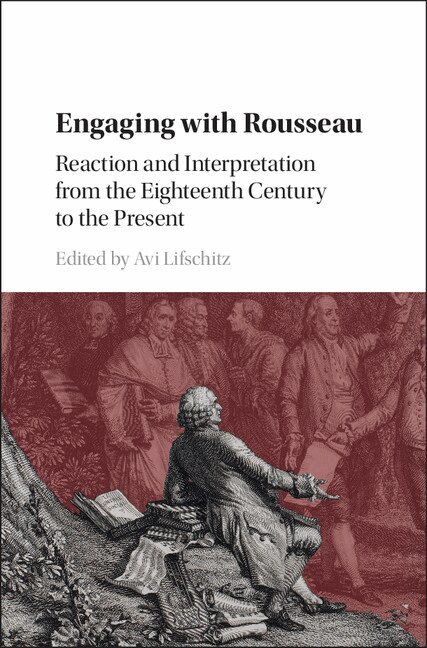
Jean-Jacques Rousseau has been cast as a champion of Enlightenment and a beacon of Romanticism, a father figure of radical revolutionaries and totalitarian dictators alike, an inventor of the modern notion of the self, and an advocate of stern ancient republicanism. Engaging with Rousseau treats his writings as an enduring topic of debate, examining the diverse responses they have attracted from the Enlightenment to the present. Such notions as the general will were, for example, refracted through very different prisms during the struggle for independence in Latin America and in social conflicts in Eastern Europe, or modified by thinkers from Kant to contemporary political theorists. Beyond Rousseau's ideas, his public image too travelled around the world. This book examines engagement with Rousseau's works as well as with his self-fashioning; especially in turbulent times, his defiant public identity and his call for regeneration were admired or despised by intellectuals and political agents.
Engaging with Rousseau
Reaction and Interpretation from the Eighteenth Century to the Present
Häftad, Engelska, 2019
428 kr
Skickas inom 7-10 vardagar
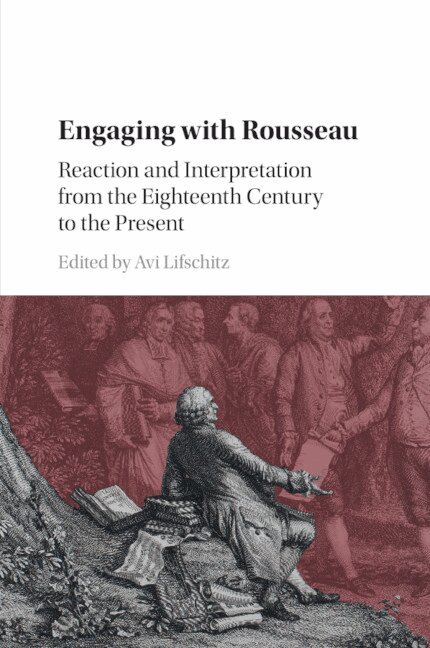
Jean-Jacques Rousseau has been cast as a champion of Enlightenment and a beacon of Romanticism, a father figure of radical revolutionaries and totalitarian dictators alike, an inventor of the modern notion of the self, and an advocate of stern ancient republicanism. Engaging with Rousseau treats his writings as an enduring topic of debate, examining the diverse responses they have attracted from the Enlightenment to the present. Such notions as the general will were, for example, refracted through very different prisms during the struggle for independence in Latin America and in social conflicts in Eastern Europe, or modified by thinkers from Kant to contemporary political theorists. Beyond Rousseau's ideas, his public image too travelled around the world. This book examines engagement with Rousseau's works as well as with his self-fashioning; especially in turbulent times, his defiant public identity and his call for regeneration were admired or despised by intellectuals and political agents.