Avril Alba - Böcker
Visar alla böcker från författaren Avril Alba. Handla med fri frakt och snabb leverans.
5 produkter
5 produkter
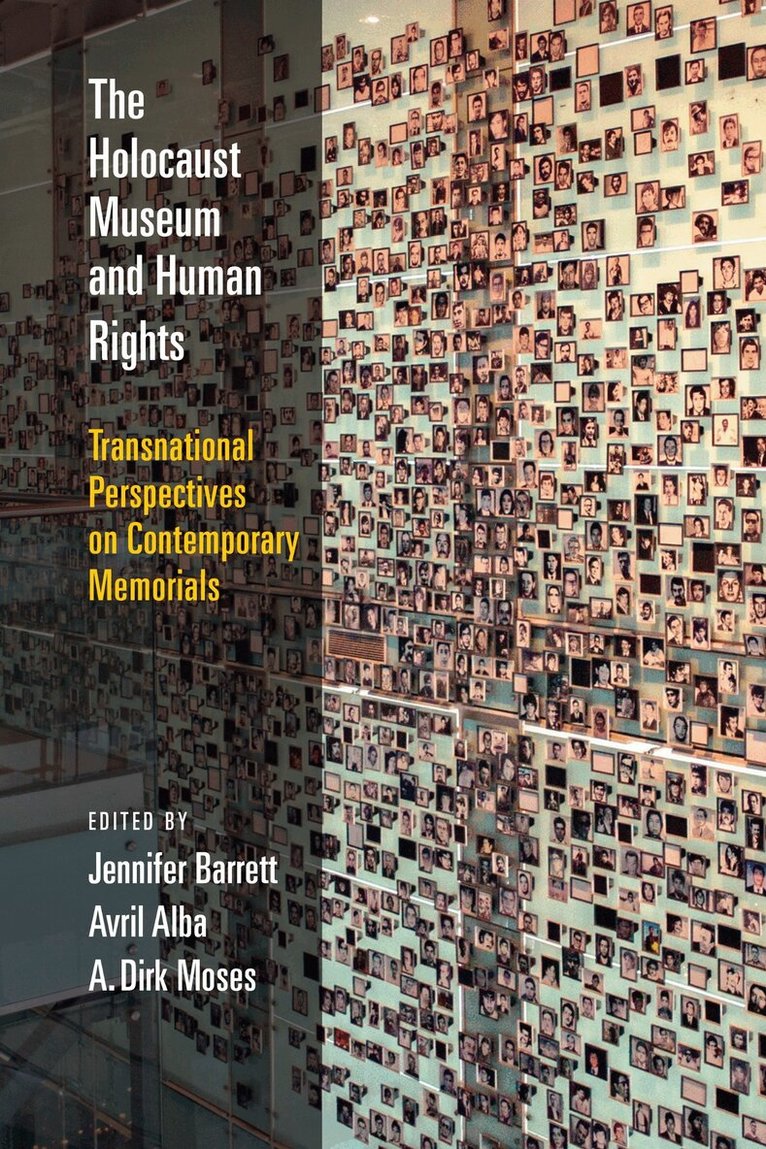
Holocaust Museum and Human Rights
Transnational Perspectives on Contemporary Memorials
Inbunden, Engelska, 2025
821 kr
Skickas inom 7-10 vardagar
Interrogates the global, and often controversial, phenomenon of Holocaust and human rights museumsSpanning six continents—Europe, Australia, Africa, Asia, North America, and South America—this edited collection offers a comparative, transnational study of Holocaust and human rights museums that foregrounds the overlapping and often contested work these institutions do in narrating and memorializing histories of genocide and human rights abuses for a public audience. Museums that link the Holocaust with social justice, human rights, and genocide prevention have been founded in many countries—for example, the Kazerne Dossin Memorial Museum in Belgium, the Anne Frank House in the Netherlands, and the Johannesburg Holocaust and Genocide Centre in South Africa—making Holocaust and human rights museums a global phenomenon. It is not uncommon for these institutions to court controversy by linking the Holocaust to human rights issues in their locales and abroad. Some begin from a "Holocaust core" and extrapolate from this history to address broader concerns, while others integrate the Holocaust as "a" or, at times, "the" case study par excellence of human rights abuses. Other institutions that may not explicitly focus on the Holocaust continue to engage these representational practices to highlight other instances of genocide and human rights abuses.The case studies in this book illuminate the convergences between Holocaust and human rights museums in their demands for social justice and reparation, educational and activist purpose, design principles, and curatorial choices. But it also shows how these museums can also be sites of contestation around how stories of suffering, courage, and survival are told; whose stories are prioritized; and who is consulted. Although Holocaust museums were once the most influential form of representation of human rights issues in the international museum and heritage fields, they are now in dialogue—visually, spatially, methodologically—with museums and memorial sites concerned with human rights more broadly. Interrogating debates in both museology and Holocaust memory studies, this volume reveals how institutions dedicated to these concerns have become active and influential contributors to local, national, and transnational dialogues about human rights.Contributors: Avril Alba, Brook Andrew, Jennifer Barrett, Jennifer Carter, Danielle Celermajer, Steven Cooke, Donna-Lee Frieze, Shirli Gilbert, Sulamith Graefenstein, Christoph Hanzig, Vannessa Hearman, Rosanne Kennedy, Marcia Langton, Edwina Light, Wendy Lipworth, A. Dirk Moses, Tali Nates, Jessica Neath, Michael Robertson, Amy Sodaro, Garry Walter.
428 kr
Skickas inom 7-10 vardagar
The Holocaust is often invoked as a benchmark for talking about human rights abuses from slavery and apartheid to colonialism, ethnic cleansing, and genocide. Western educators and politicians draw seemingly obvious lessons of tolerance and anti-racism from the Nazi past, and their work rests on the implicit assumption that Holocaust education and commemoration will expose the dangers of prejudice and promote peaceful coexistence. Holocaust Memory and Racism in the Postwar World, edited by Shirli Gilbert and Avril Alba, challenges the notion that there is an unproblematic connection between Holocaust memory and the discourse of anti-racism. Through diverse case studies, this volume historicizes how the Holocaust has shaped engagement with racism from the 1940s until the present, demonstrating that contemporary assumptions are neither obvious nor inevitable.Holocaust Memory and Racism in the Postwar World is divided into four sections. The first section focuses on encounters between Nazism and racism during and immediately after World War II, demonstrating not only that racist discourses and politics persisted in the postwar period, but also, perhaps more importantly, that few people identified links with Nazi racism. The second section explores Jewish motivations for participating in anti-racist activism, and the varying memories of the Holocaust that informed their work. The third section historicizes the manifold ways in which the Holocaust has been conceptualized in literary settings, exploring efforts to connect the Holocaust and racism in geographically, culturally, and temporally diverse settings. The final section brings the volume into the present, focusing on contemporary political causes for which the Holocaust provides a benchmark for racial equality and justice. Together, the contributions delineate the complex history of Holocaust memory, recognize its contingency, and provide a foundation from which to evaluate its moral legitimacy and political and social effectiveness. Holocaust Memory and Racism in the Postwar World is intended for students and scholars of Holocaust and genocide studies, professionals working in museums and heritage organizations, and anyone interested in building on their knowledge of the Holocaust and the discourse of racism.
471 kr
Skickas
The Holocaust is often invoked as a benchmark for talking about human rights abuses from slavery and apartheid to colonialism, ethnic cleansing, and genocide. Western educators and politicians draw seemingly obvious lessons of tolerance and anti-racism from the Nazi past, and their work rests on the implicit assumption that Holocaust education and commemoration will expose the dangers of prejudice and promote peaceful coexistence. Holocaust Memory and Racism in the Postwar World, edited by Shirli Gilbert and Avril Alba, challenges the notion that there is an unproblematic connection between Holocaust memory and the discourse of anti-racism. Through diverse case studies, this volume historicizes how the Holocaust has shaped engagement with racism from the 1940s until the present, demonstrating that contemporary assumptions are neither obvious nor inevitable.Holocaust Memory and Racism in the Postwar World is divided into four sections. The first section focuses on encounters between Nazism and racism during and immediately after World War II, demonstrating not only that racist discourses and politics persisted in the postwar period, but also, perhaps more importantly, that few people identified links with Nazi racism. The second section explores Jewish motivations for participating in anti-racist activism, and the varying memories of the Holocaust that informed their work. The third section historicizes the manifold ways in which the Holocaust has been conceptualized in literary settings, exploring efforts to connect the Holocaust and racism in geographically, culturally, and temporally diverse settings. The final section brings the volume into the present, focusing on contemporary political causes for which the Holocaust provides a benchmark for racial equality and justice. Together, the contributions delineate the complex history of Holocaust memory, recognize its contingency, and provide a foundation from which to evaluate its moral legitimacy and political and social effectiveness. Holocaust Memory and Racism in the Postwar World is intended for students and scholars of Holocaust and genocide studies, professionals working in museums and heritage organizations, and anyone interested in building on their knowledge of the Holocaust and the discourse of racism.
1 105 kr
Skickas inom 10-15 vardagar
The Holocaust Memorial Museum reveals and traces the transformation of ancient Jewish symbols, rituals, archetypes and narratives deployed in these sites. Demonstrating how cloaking the 'secular' history of the Holocaust in sacred garb, memorial museums generate redemptive yet conflicting visions of the meaning and utility of Holocaust memory.
2 763 kr
Kommande