Shirli Gilbert - Böcker
Visar alla böcker från författaren Shirli Gilbert. Handla med fri frakt och snabb leverans.
7 produkter
7 produkter
670 kr
Skickas inom 5-8 vardagar
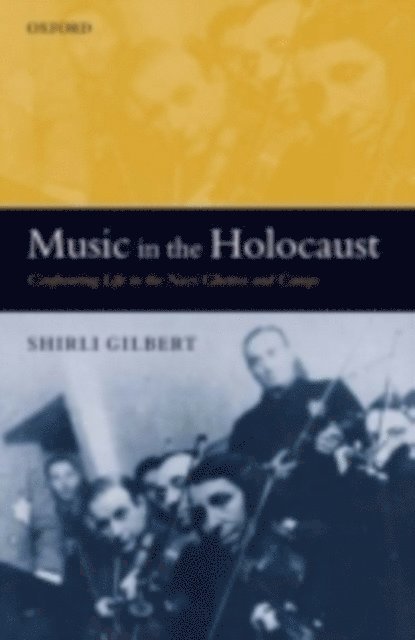
In Music in the Holocaust Shirli Gilbert provides the first large-scale, critical account of the role of music amongst communities imprisoned under Nazism. She documents a wide scope of musical activities, ranging from orchestras and chamber groups to choirs, theatres, communal sing-songs, and cabarets, in some of the most important internment centres in Nazi-occupied Europe, including Auschwitz and the Warsaw and Vilna ghettos. Gilbert is also concerned with exploring the ways in which music - particularly the many songs that were preserved - contribute to our broader understanding of the Holocaust and the experiences of its victims. Music in the Holocaust is, at its core, a social history, taking as its focus the lives of individuals and communities imprisoned under Nazism. Music opens a unique window on to the internal world of those communities, offering insight into how they understood, interpreted, and responded to their experiences at the time.
2 009 kr
Skickas inom 5-8 vardagar
In Music in the Holocaust Shirli Gilbert provides the first large-scale, critical account of the role of music amongst communities imprisoned under Nazism. She documents a wide scope of musical activities, ranging from orchestras and chamber groups to choirs, theatres, communal sing-songs, and cabarets, in some of the most important internment centres in Nazi-occupied Europe, including Auschwitz and the Warsaw and Vilna ghettos. Gilbert is also concerned with exploring the ways in which music - particularly the many songs that were preserved - contribute to our broader understanding of the Holocaust and the experiences of its victims. Music in the Holocaust is, at its core, a social history, taking as its focus the lives of individuals and communities imprisoned under Nazism. Music opens a unique window on to the internal world of those communities, offering insight into how they understood, interpreted, and responded to their experiences at the time.
288 kr
Skickas inom 10-15 vardagar
An intimate history of the Holocaust that casts new light on our understanding of victimhood and survival.
429 kr
Skickas inom 7-10 vardagar
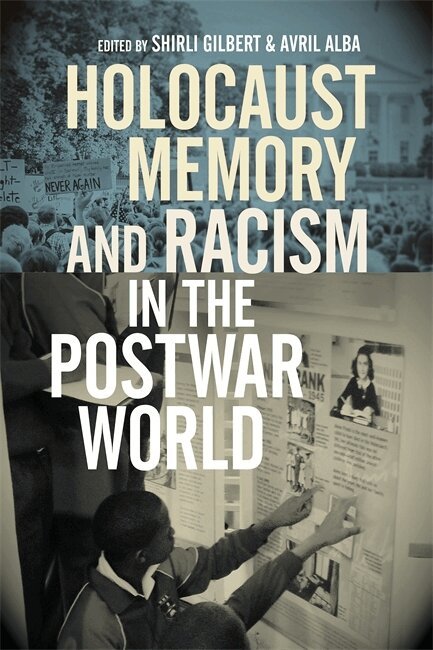
The Holocaust is often invoked as a benchmark for talking about human rights abuses from slavery and apartheid to colonialism, ethnic cleansing, and genocide. Western educators and politicians draw seemingly obvious lessons of tolerance and anti-racism from the Nazi past, and their work rests on the implicit assumption that Holocaust education and commemoration will expose the dangers of prejudice and promote peaceful coexistence. Holocaust Memory and Racism in the Postwar World, edited by Shirli Gilbert and Avril Alba, challenges the notion that there is an unproblematic connection between Holocaust memory and the discourse of anti-racism. Through diverse case studies, this volume historicizes how the Holocaust has shaped engagement with racism from the 1940s until the present, demonstrating that contemporary assumptions are neither obvious nor inevitable.Holocaust Memory and Racism in the Postwar World is divided into four sections. The first section focuses on encounters between Nazism and racism during and immediately after World War II, demonstrating not only that racist discourses and politics persisted in the postwar period, but also, perhaps more importantly, that few people identified links with Nazi racism. The second section explores Jewish motivations for participating in anti-racist activism, and the varying memories of the Holocaust that informed their work. The third section historicizes the manifold ways in which the Holocaust has been conceptualized in literary settings, exploring efforts to connect the Holocaust and racism in geographically, culturally, and temporally diverse settings. The final section brings the volume into the present, focusing on contemporary political causes for which the Holocaust provides a benchmark for racial equality and justice. Together, the contributions delineate the complex history of Holocaust memory, recognize its contingency, and provide a foundation from which to evaluate its moral legitimacy and political and social effectiveness. Holocaust Memory and Racism in the Postwar World is intended for students and scholars of Holocaust and genocide studies, professionals working in museums and heritage organizations, and anyone interested in building on their knowledge of the Holocaust and the discourse of racism.
516 kr
Skickas inom 10-15 vardagar
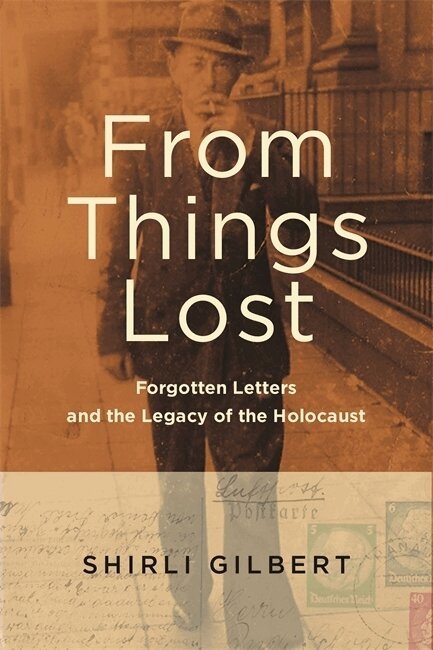
In May 1933, a young man named Rudolf Schwab fled Nazi-occupied Germany. His departure allegedly came at the insistence of a close friend who later joined the Party. Schwab eventually arrived in South Africa, one of the few countries left where Jews could seek refuge, and years later, resumed a relationship in letters with the Nazi who in many ways saved his life. From Things Lost: Forgotten Letters and the Legacy of the Holocaust is a story of displacement, survival, and an unlikely friendship in the wake of the Holocaust via an extraordinary collection of letters discovered in a forgotten trunk.Only a handful of extended Schwab family members were alive in the war’s aftermath. Dispersed across five continents, their lives mirrored those of countless refugees who landed in the most unlikely places. Over years in exile, a web of communication became an alternative world for these refugees, a place where they could remember what they had lost and rebuild their identities anew. Among the cast of characters that historian Shirli Gilbert came to know through the letters, one name that appeared again and again was Karl Kipfer. He was someone with whom Rudolf clearly got on exceedingly well—there was lots of joking, familiarity, and sentimental reminiscing. ""That was Grandpa’s best friend growing up,"" Rudolf’s grandson explained to Gilbert; ""He was a Nazi and was the one who encouraged Rudolf to leave Germany. . . . He also later helped him to recover the family’s property."" Gilbert takes readers on a journey through a family’s personal history wherein we learn about a cynical Karl who attempts to make amends for his ""undemocratic past,"" and a version of Rudolf who spends hours aloof at his Johannesburg writing desk, dressed in his Sunday finest, holding together the fragile threads of his existence. The Schwab family’s story brings us closer to grasping the complex choices and motivations that—even in extreme situations, or perhaps because of them—make us human.In a world of devastation, the letters in From Things Lost act as a surrogate for the gravestones that did not exist and funerals that were never held. Readers of personal accounts of the Holocaust will be swept away by this intimate story.
471 kr
Skickas
The Holocaust is often invoked as a benchmark for talking about human rights abuses from slavery and apartheid to colonialism, ethnic cleansing, and genocide. Western educators and politicians draw seemingly obvious lessons of tolerance and anti-racism from the Nazi past, and their work rests on the implicit assumption that Holocaust education and commemoration will expose the dangers of prejudice and promote peaceful coexistence. Holocaust Memory and Racism in the Postwar World, edited by Shirli Gilbert and Avril Alba, challenges the notion that there is an unproblematic connection between Holocaust memory and the discourse of anti-racism. Through diverse case studies, this volume historicizes how the Holocaust has shaped engagement with racism from the 1940s until the present, demonstrating that contemporary assumptions are neither obvious nor inevitable.Holocaust Memory and Racism in the Postwar World is divided into four sections. The first section focuses on encounters between Nazism and racism during and immediately after World War II, demonstrating not only that racist discourses and politics persisted in the postwar period, but also, perhaps more importantly, that few people identified links with Nazi racism. The second section explores Jewish motivations for participating in anti-racist activism, and the varying memories of the Holocaust that informed their work. The third section historicizes the manifold ways in which the Holocaust has been conceptualized in literary settings, exploring efforts to connect the Holocaust and racism in geographically, culturally, and temporally diverse settings. The final section brings the volume into the present, focusing on contemporary political causes for which the Holocaust provides a benchmark for racial equality and justice. Together, the contributions delineate the complex history of Holocaust memory, recognize its contingency, and provide a foundation from which to evaluate its moral legitimacy and political and social effectiveness. Holocaust Memory and Racism in the Postwar World is intended for students and scholars of Holocaust and genocide studies, professionals working in museums and heritage organizations, and anyone interested in building on their knowledge of the Holocaust and the discourse of racism.
373 kr
Skickas inom 7-10 vardagar
Composing Apartheid is the first book ever to chart the musical world of a notorious period in world history, apartheid South Africa. It explores how music was produced through, and was productive of, key features of apartheid's social and political topography, as well as how music and musicians contested and even helped to conquer apartheid. The collection of essays is intentionally broad, and the contributors include historians, sociologists and anthropologists, as well as ethnomusicologists, music theorists and historical musicologists. The essays focus on a variety of music (jazz, music in the Western art tradition, popular music) and on major composers (such as Kevin Volans) and works (Handel's Messiah). Musical institutions and previously little-researched performers (such as the African National Congress's troupe-in-exile, Amandla) are explored. The writers move well beyond their subject matter, intervening in debates on race, historiography, and postcolonial epistemologies and pedagogies.