Ayda Eraydin - Böcker
Visar alla böcker från författaren Ayda Eraydin. Handla med fri frakt och snabb leverans.
4 produkter
4 produkter
697 kr
Skickas inom 10-15 vardagar
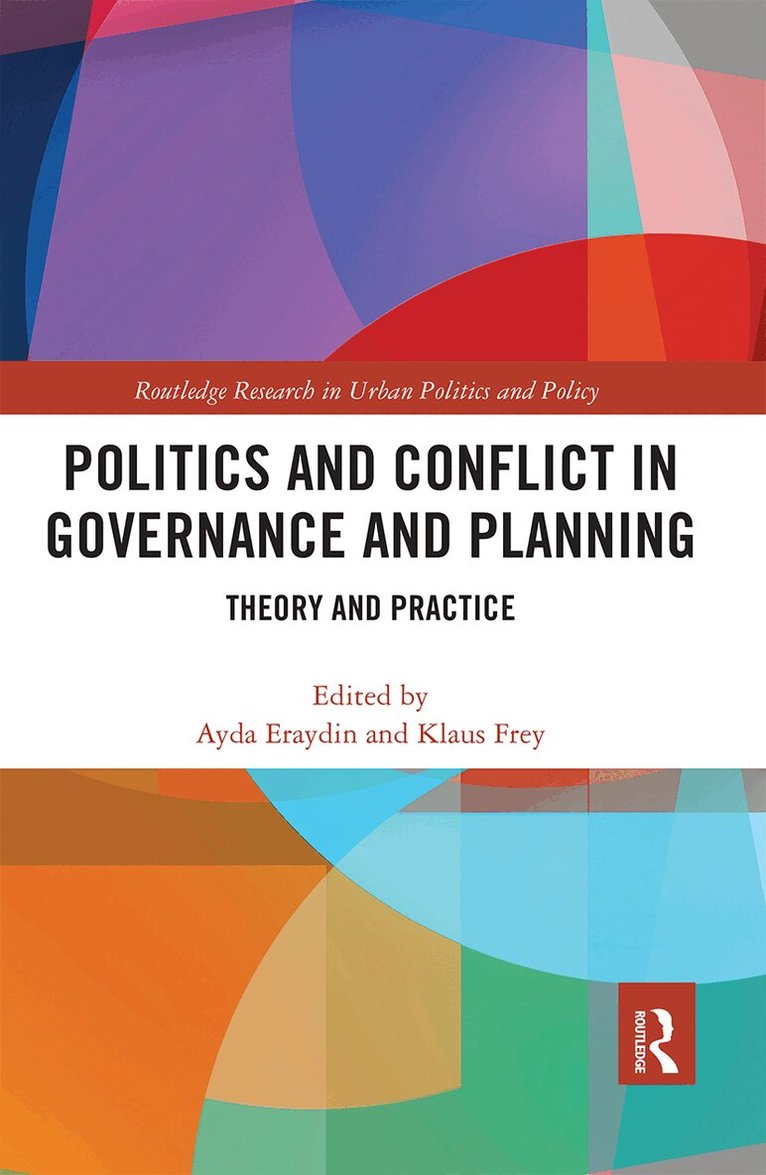
Politics and Conflict in Governance and Planning offers a critical evaluation of manifold ways in which the political dimension is reflected in contemporary planning and governance. While the theoretical debates on post-politics and the wider frame of post-foundational political theory provide substantive explanations for the crisis in planning and governance, still there is a need for a better understanding of how the political is manifested in the planning contents, shaped by institutional arrangements and played out in the planning processes. This book undertakes a reassessment of the changing role of the political in contemporary planning and governance. Employing a wide range of empirical research conducted in several regions of the world, it draws a more complex and heterogeneous picture of the context-specific depoliticisation and repoliticisation processes taking place in local and regional planning and governance. It shows not only the domination of market forces and the consequent suppression of the political but also how political conflicts and struggles are defined, tackled and transformed in view of the multifaceted rules and constraints recently imposed to local and regional planning. Switching the focus to how strategies and forms of depoliticised governance can be repoliticised through renewed planning mechanisms and socio-political mobilisation, Politics and Conflict in Governance and Planning is a critical and much needed contribution to the planning literature and its incorporation of the post-politics and post-democracy debate.
2 306 kr
Skickas inom 10-15 vardagar
Politics and Conflict in Governance and Planning offers a critical evaluation of manifold ways in which the political dimension is reflected in contemporary planning and governance. While the theoretical debates on post-politics and the wider frame of post-foundational political theory provide substantive explanations for the crisis in planning and governance, still there is a need for a better understanding of how the political is manifested in the planning contents, shaped by institutional arrangements and played out in the planning processes. This book undertakes a reassessment of the changing role of the political in contemporary planning and governance. Employing a wide range of empirical research conducted in several regions of the world, it draws a more complex and heterogeneous picture of the context-specific depoliticisation and repoliticisation processes taking place in local and regional planning and governance. It shows not only the domination of market forces and the consequent suppression of the political but also how political conflicts and struggles are defined, tackled and transformed in view of the multifaceted rules and constraints recently imposed to local and regional planning. Switching the focus to how strategies and forms of depoliticised governance can be repoliticised through renewed planning mechanisms and socio-political mobilisation, Politics and Conflict in Governance and Planning is a critical and much needed contribution to the planning literature and its incorporation of the post-politics and post-democracy debate.
1 064 kr
Skickas inom 10-15 vardagar
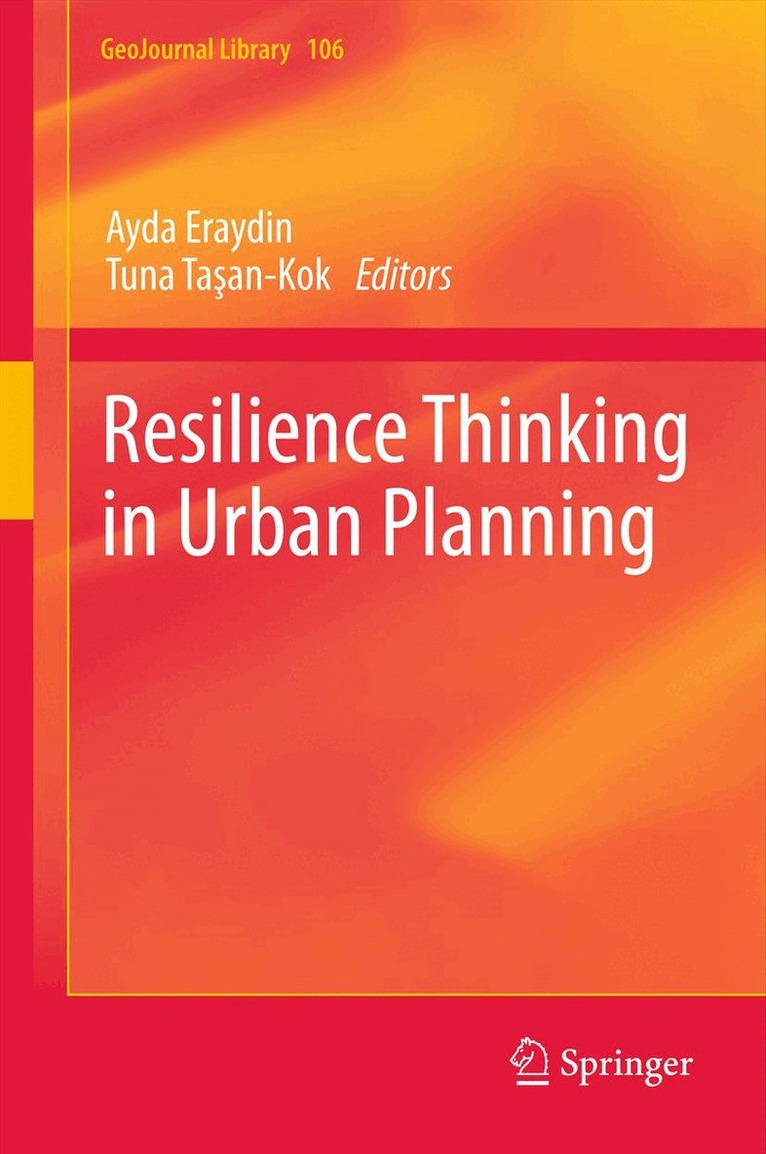
There is consensus in literature that urban areas have become increasingly vulnerable to the outcomes of economic restructuring under the neoliberal political economic ideology. The increased frequency and widening diversity of problems offer evidence that the socio-economic and spatial policies, planning and practices introduced under the neoliberal agenda can no longer be sustained. As this shortfall was becoming more evident among urban policymakers, planners, and researchers in different parts of the world, a group of discontent researchers began searching for new approaches to addressing the increasing vulnerabilities of urban systems in the wake of growing socio-economic and ecological problems. This book is the joint effort of those who have long felt that contemporary planning systems and policies are inadequate in preparing cities for the future in an increasingly neoliberalising world. It argues that “resilience thinking” can form the basis of an alternative approach to planning. Drawing upon case studies from five cities in Europe, namely Lisbon, Porto, Istanbul, Stockholm, and Rotterdam, the book makes an exploration of the resilience perspective, raising a number of theoretical debates, and suggesting a new methodological approach based on empirical evidence. This book provides insights for intellectuals exploring alternative perspectives and principles of a new planning approach.
1 064 kr
Skickas inom 10-15 vardagar
There is consensus in literature that urban areas have become increasingly vulnerable to the outcomes of economic restructuring under the neoliberal political economic ideology. The increased frequency and widening diversity of problems offer evidence that the socio-economic and spatial policies, planning and practices introduced under the neoliberal agenda can no longer be sustained. As this shortfall was becoming more evident among urban policymakers, planners, and researchers in different parts of the world, a group of discontent researchers began searching for new approaches to addressing the increasing vulnerabilities of urban systems in the wake of growing socio-economic and ecological problems. This book is the joint effort of those who have long felt that contemporary planning systems and policies are inadequate in preparing cities for the future in an increasingly neoliberalising world. It argues that “resilience thinking” can form the basis of an alternative approach to planning. Drawing upon case studies from five cities in Europe, namely Lisbon, Porto, Istanbul, Stockholm, and Rotterdam, the book makes an exploration of the resilience perspective, raising a number of theoretical debates, and suggesting a new methodological approach based on empirical evidence. This book provides insights for intellectuals exploring alternative perspectives and principles of a new planning approach.