• Fri frakt över 249 kr
  • •
  • Snabba leveranser
  • •
  • Billiga böcker
Kundservice

Du är på sajten för privatpersoner.

Företag, bibliotek eller offentlig verksamhet?

Du handlar på classic.bokus.com, där alla dina funktioner finns intakta.
Till classic.bokus.com
Bokus logotyp. Gå till startsidan.
  • Erbjudanden
  • Nyheter
  • Student
  • Topplistor
  • Barn & ungdom
  • Bokus Play
  • E-böcker
  • Pocketböcker
  • Spel & pussel

10% rabatt på allt med kod NYSTART10 →

Sidfot

Mina sidor

    Hjälp

    • Kundservice
    • Vanliga frågor och svar
    • Frakt och leverans
    • Retur vid ångerrätt
    • Reklamera vara
    • Betalning
    • Köpvillkor
    • Allmänna villkor
    • Information om webbplatsens tillgänglighet

    Om Bokus

    • Om oss
    • Pressrum
    • För studenter
    • För företag
    • För bibliotek och offentlig verksamhet
    • För leverantörer
    • Hållbarhet

    Populärt

    • Aktuella erbjudanden
    • Presentkort
    • Studentlitteratur
    • Nya böcker
    • Topplistor
    • Signerade böcker
    • Engelska böcker

    Inspiration

    • Boktips
    • BookTok
    • Populära bokserier
    • Barnbokskaraktärer
    • Populära författare
    Logotyp för Bokus
    Följ oss på Facebook (extern länk)Följ oss på Instagram (extern länk)Följ oss på YouTube (extern länk)Följ oss på TikTok (extern länk)
    bokus @ CookiesAnpassa cookiesIntegritetspolicyKöpvillkor
    Till Citymail hemsida (extern länk)Till Budbee hemsida (extern länk)Till Postnord hemsida (extern länk)Till Schenker hemsida (extern länk)Till Early Bird hemsida (extern länk)Till Walleys hemsida (extern länk)
    1. Naturvetenskap och teknik
    2. Geovetenskap
    3. Regional planering

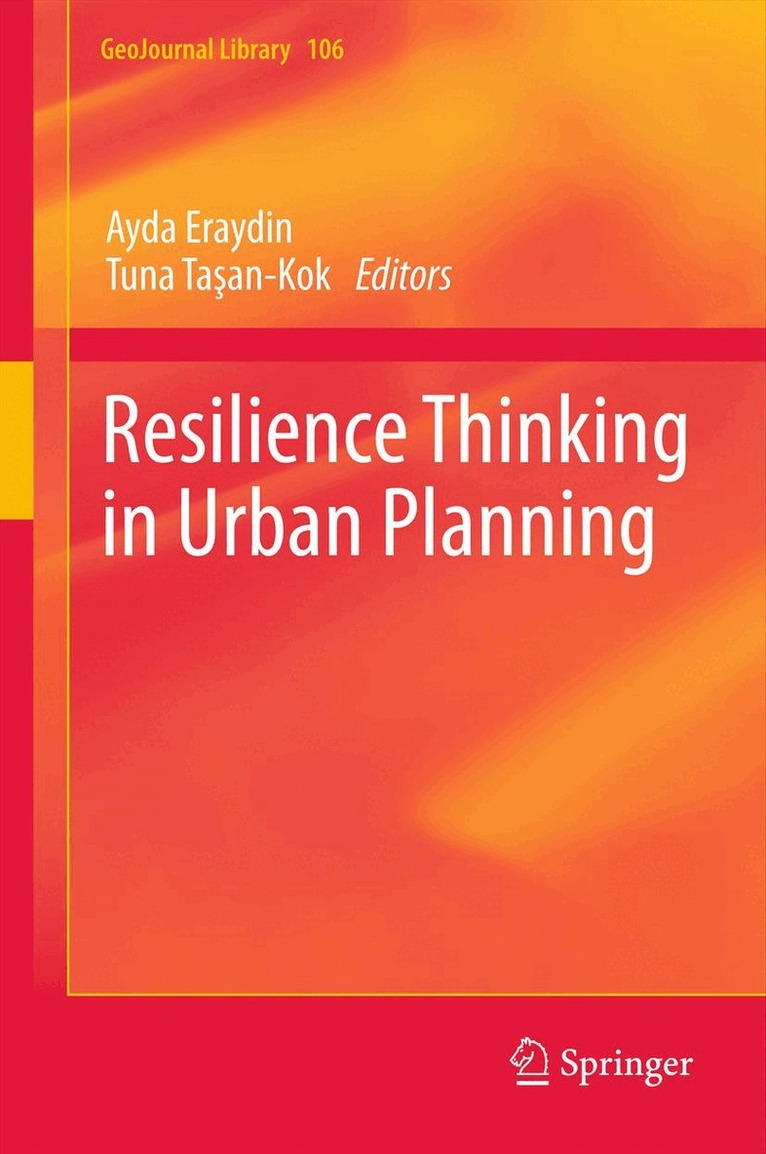
    Resilience Thinking in Urban Planning

    AvAyda Eraydin,Tuna Taşan-Kok

    Häftad, Engelska, 2014

    Del 106 i serien GeoJournal Library

    1 086 kr

    Beställningsvara. Skickas inom 10-15 vardagar. Fri frakt över 249 kr.

    Beskrivning

    There is consensus in literature that urban areas have become increasingly vulnerable to the outcomes of economic restructuring under the neoliberal political economic ideology. The increased frequency and widening diversity of problems offer evidence that the socio-economic and spatial policies, planning and practices introduced under the neoliberal agenda can no longer be sustained. As this shortfall was becoming more evident among urban policymakers, planners, and researchers in different parts of the world, a group of discontent researchers began searching for new approaches to addressing the increasing vulnerabilities of urban systems in the wake of growing socio-economic and ecological problems. This book is the joint effort of those who have long felt that contemporary planning systems and policies are inadequate in preparing cities for the future in an increasingly neoliberalising world. It argues that “resilience thinking” can form the basis of an alternative approach to planning. Drawing upon case studies from five cities in Europe, namely Lisbon, Porto, Istanbul, Stockholm, and Rotterdam, the book makes an exploration of the resilience perspective, raising a number of theoretical debates, and suggesting a new methodological approach based on empirical evidence. This book provides insights for intellectuals exploring alternative perspectives and principles of a new planning approach.

    Produktinformation

    • Utgivningsdatum:2014-12-14
    • Mått:155 x 235 x 15 mm
    • Vikt:406 g
    • Format:Häftad
    • Språk:Engelska
    • Serie:GeoJournal Library
    • Antal sidor:250
    • Upplaga:2013
    • Förlag:Springer
    • ISBN:9789401784078

    Utforska kategorier

    • Regional planering inom Naturvetenskap och teknik

    Recensioner i media

    "The book explores inventive ways of sustainable urban planning in search of new response to the fragmentation of urban spaces in the neoliberal epoch. The authors make a very productive use of the popular resilience concept in order to recombine the economic and ecological opportunities of urban development into a synthetic trajectory of co-evolution..." Willem Salet Professor of Urban and Regional Planning University of Amsterdam "This important and original book is one of the first that grapples with contemporary debates over resilience planning in post-credit crunch Europe. It delivers genuinely new conceptual and empirical insights into the ways in which resilience thinking has spread from its traditional concerns with environmental management into a more holistic discourse that encompass the planning of social and economic change in cities and regions. It is a book I strongly recommend..." Professor Mike Raco, Bartlett School of Planning, University College London, UK

    Innehållsförteckning

    • Chapter 1: Introduction: Resilience Thinking in Urban Planning: Ayda Eraydin and Tuna Taşan-Kok.- Chapter 2: “Resilience Thinking” for Planning: Ayda Eraydin.- Chapter 3: Conceptual Overview of Resilience: History and Context: Tuna Taşan-Kok, Dominic Stead and Peiwen Lu.- Chapter 4: Urban Resilience and Spatial Dynamics: Sara Santos Cruz,  João Pedro Costa, Silvia Ávila de Sousa and Paulo Pinho.- Chaper 5: Analysing the Socio-spatial Vulnerability to Drivers of Globalisation in Lisbon, Oporto, Istanbul, Stockholm and Rotterdam: Tuna Taşan-Kok and Dominic Stead.- Chapter 6: Systems, Cultures, Styles: Spatial Planning in Portugal, Turkey, Sweden and the Netherlands: Sofia Morgado and Luís Dias.- Chapter 7: Managing Urban Change in Five European Urban Agglomerations: Key Policy Documents and Institutional Frameworks: Peter Schmitt.- Chapter 8: Evaluating Resilience in Planning: Paulo Pinho, Vítor Oliveira and Ana Martins.- Chapter 9: Assessing Urban Resilience in the Metropolitan Areaof Lisbon: the Case of Alcântara: Luís Dias, Sofia Morgado and João Pedro Costa.- Chapter 10: Evaluating Urban Policies from a Resilient Perspective: The Case of Oporto: Vítor Oliveira, Ana Martins and Sara Santos Cruz.- Chapter 11: The Evaluation of Different Processes of Spatial Development from a Resilience Perspective in Istanbul: Ayda Eraydin, Ali Türel and Deniz Altay Kaya.- Chapter 12: Urban Resilience and Polycentricity – the Case of the Stockholm Urban Agglomeration: Peter Schmitt, Lisbeth Greve Harbo, Asli Tepecik Diş and Anu Henriksson.- Chapter 13: Urban Resilience, Climate Change and Land-Use Planning in Rotterdam: Dominic  Stead and Tuna Taşan-Kok.- Chapter 14: The Evaluation of Findings and Future of Resilience Thinking in Planning: Ayda Eraydin and Tuna Taşan-Kok.- Index.