Ayse Çağlar - Böcker
Visar alla böcker från författaren Ayse Çağlar. Handla med fri frakt och snabb leverans.
6 produkter
6 produkter
967 kr
Skickas inom 10-15 vardagar
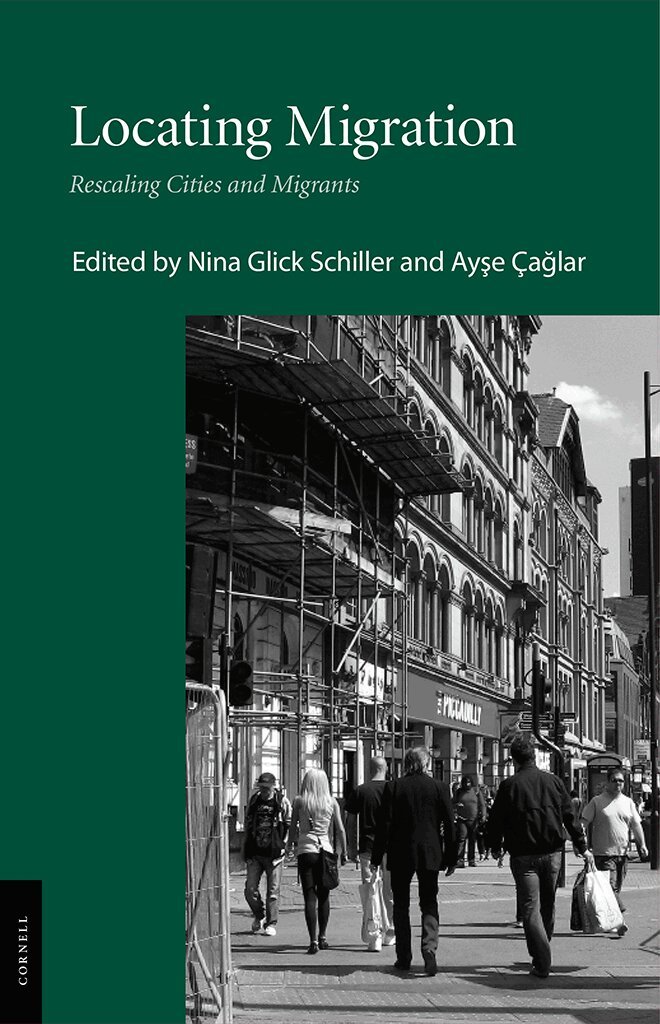
In this book Nina Glick Schiller and Ayse Çaglar, along with a stellar group of contributing authors, examine the relationship between migrants and cities in a time of massive urban restructuring. They find that locality matters in migration research and migrants matter in the reconfiguration of contemporary cities. This book provides a new approach to the study of migrant settlement and transnational connection in which cities rather than nation-states, ethnic groups, or transnational communities serve as the starting point for comparative analysis. Neither negating nor privileging the nation-state, Locating Migration provides ethnographic insights into the various ways in which migrants and specific cities together mutually constitute and contest the local, national, and global. Cities are approached not as containers but as fluid and historically differentiated analytical entry points. Chapters explore migrants' relationship to the neoliberal rebranding, redevelopment, and rescaling of down-and-out, aspiring, and global cities in the United States and Europe. The various chapters document the pathways of incorporation and transnational connection of migrants from Asia, Africa, Latin America, and Europe. Migrants are approached not as a homogenous category but in terms of their range of experiences of class, racialization, gender, history, politics, and religion.Setting aside the migrant/native divide that haunts most migration studies, the authors of this book view migrants as residents of cities and actors within them, understanding that to be a resident of a city is to live within, contribute to, and contest globe-spanning processes that shape urban economy, politics, and culture.
327 kr
Skickas inom 10-15 vardagar
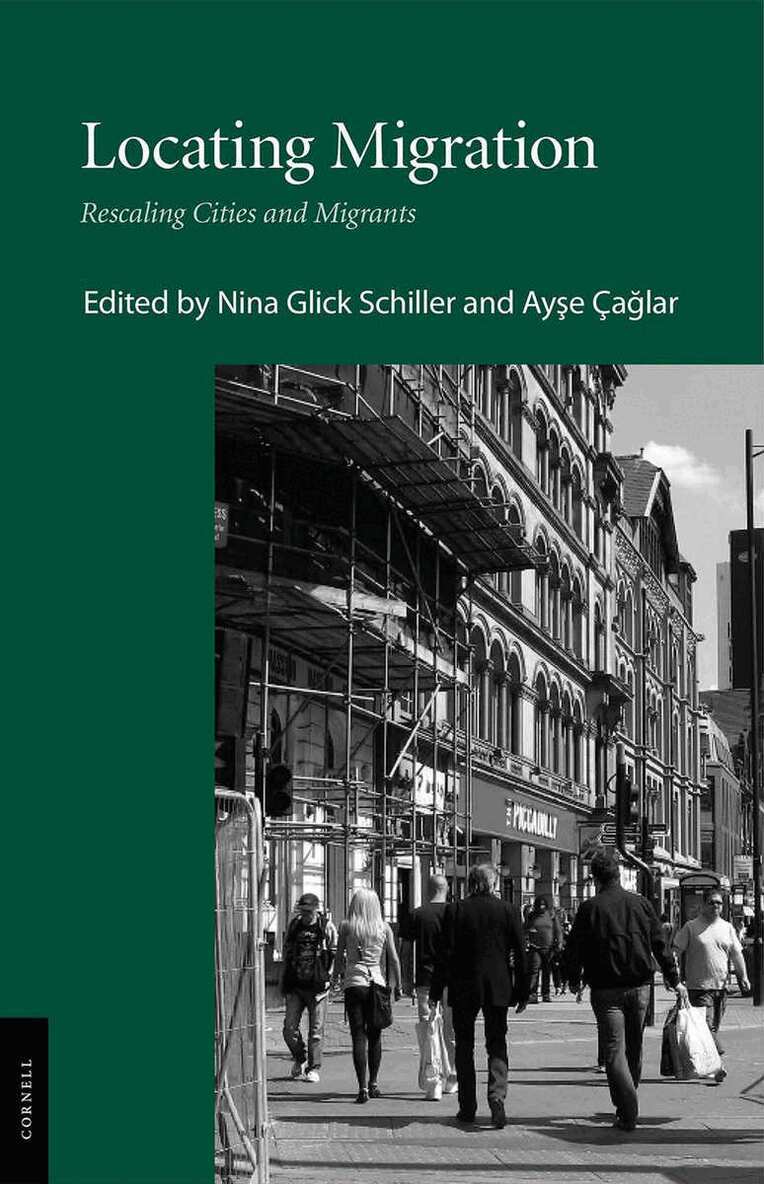
In this book Nina Glick Schiller and Ayse Çaglar, along with a stellar group of contributing authors, examine the relationship between migrants and cities in a time of massive urban restructuring. They find that locality matters in migration research and migrants matter in the reconfiguration of contemporary cities. This book provides a new approach to the study of migrant settlement and transnational connection in which cities rather than nation-states, ethnic groups, or transnational communities serve as the starting point for comparative analysis. Neither negating nor privileging the nation-state, Locating Migration provides ethnographic insights into the various ways in which migrants and specific cities together mutually constitute and contest the local, national, and global. Cities are approached not as containers but as fluid and historically differentiated analytical entry points. Chapters explore migrants' relationship to the neoliberal rebranding, redevelopment, and rescaling of down-and-out, aspiring, and global cities in the United States and Europe. The various chapters document the pathways of incorporation and transnational connection of migrants from Asia, Africa, Latin America, and Europe. Migrants are approached not as a homogenous category but in terms of their range of experiences of class, racialization, gender, history, politics, and religion.Setting aside the migrant/native divide that haunts most migration studies, the authors of this book view migrants as residents of cities and actors within them, understanding that to be a resident of a city is to live within, contribute to, and contest globe-spanning processes that shape urban economy, politics, and culture.
1 922 kr
Skickas inom 3-6 vardagar
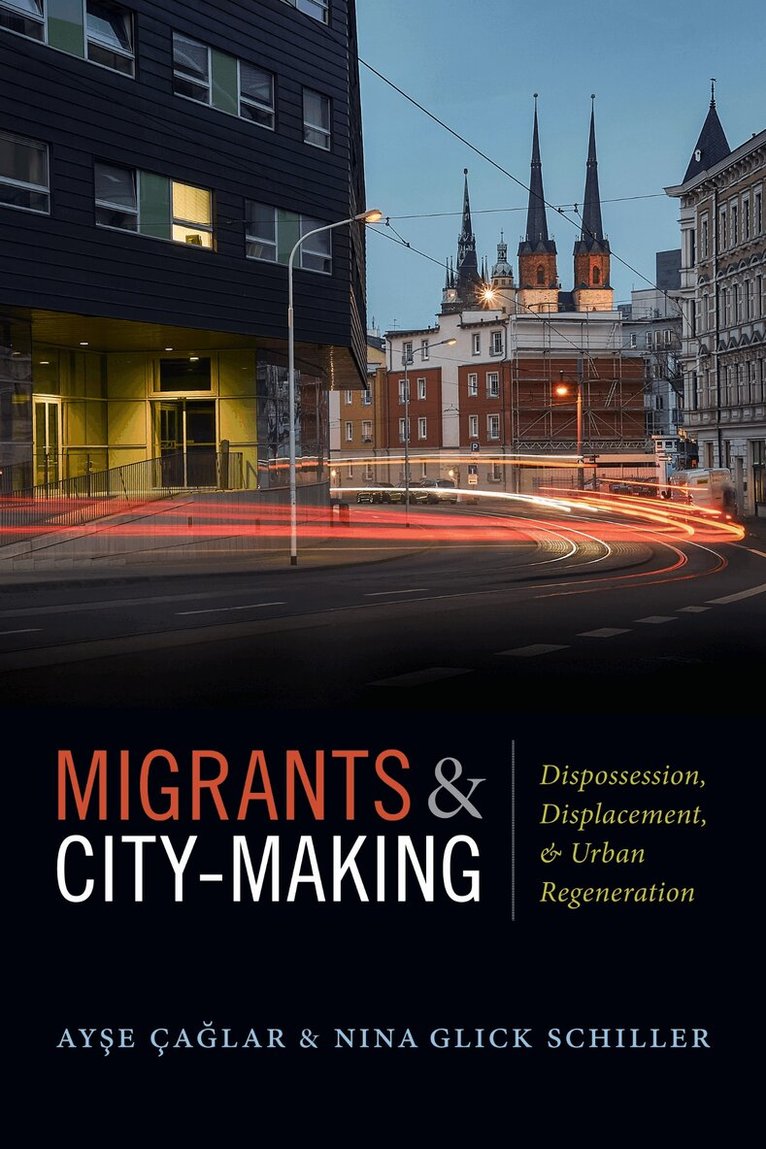
In Migrants and City-Making Ayşe Çağlar and Nina Glick Schiller trace the participation of migrants in the unequal networks of power that connect their lives to regional, national, and global institutions. Grounding their work in comparative ethnographies of three cities struggling to regain their former standing-Mardin, Turkey; Manchester, New Hampshire; and Halle/Saale, Germany-Çağlar and Glick Schiller challenge common assumptions that migrants exist on society’s periphery, threaten social cohesion, and require integration. Instead Çağlar and Glick Schiller explore their multifaceted role as city-makers, including their relationships to municipal officials, urban developers, political leaders, business owners, community organizers, and social justice movements. In each city Çağlar and Glick Schiller met with migrants from around the world; attended cultural events, meetings, and religious services; and patronized migrant-owned businesses, allowing them to gain insights into the ways in which migrants build social relationships with non-migrants and participate in urban restoration and development. In exploring the changing historical contingencies within which migrants live and work, Çağlar and Glick Schiller highlight how city-making invariably involves engaging with the far-reaching forces that dispossess people of their land, jobs, resources, neighborhoods, and hope.
359 kr
Skickas
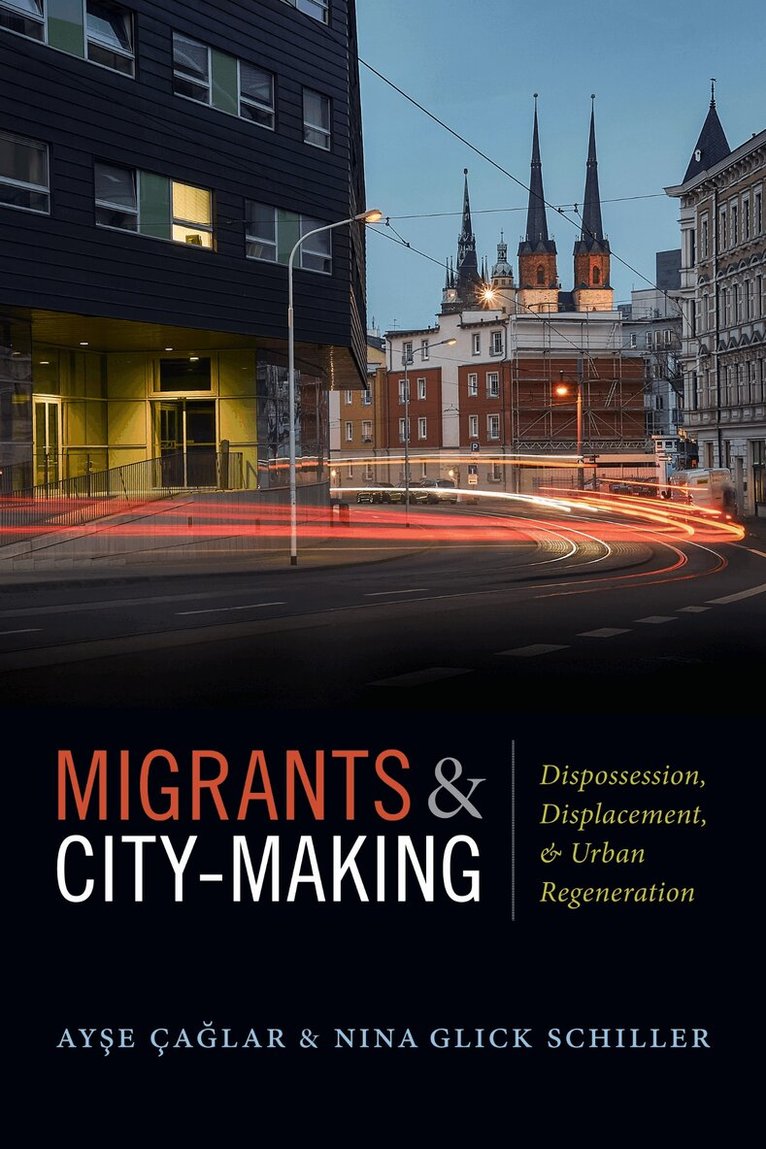
In Migrants and City-Making Ayşe Çağlar and Nina Glick Schiller trace the participation of migrants in the unequal networks of power that connect their lives to regional, national, and global institutions. Grounding their work in comparative ethnographies of three cities struggling to regain their former standing-Mardin, Turkey; Manchester, New Hampshire; and Halle/Saale, Germany-Çağlar and Glick Schiller challenge common assumptions that migrants exist on society’s periphery, threaten social cohesion, and require integration. Instead Çağlar and Glick Schiller explore their multifaceted role as city-makers, including their relationships to municipal officials, urban developers, political leaders, business owners, community organizers, and social justice movements. In each city Çağlar and Glick Schiller met with migrants from around the world; attended cultural events, meetings, and religious services; and patronized migrant-owned businesses, allowing them to gain insights into the ways in which migrants build social relationships with non-migrants and participate in urban restoration and development. In exploring the changing historical contingencies within which migrants live and work, Çağlar and Glick Schiller highlight how city-making invariably involves engaging with the far-reaching forces that dispossess people of their land, jobs, resources, neighborhoods, and hope.
521 kr
Skickas inom 3-6 vardagar
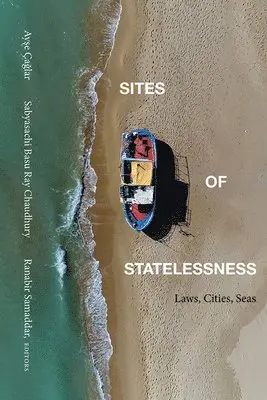
Explores various unusual sites of statelessness like sea, cities, and laws, beyond mere legal and regulatory frameworks, that determines statelessness.Statelessness is incessantly produced in seas, cities, and law. Building around the postcolonial experiences of statelessness Sites of Statelessness examines the entanglements of citizenship policies and practices with the spread of statelessness in contemporary times, something that defies any kind of a citizen/stateless binary. These policies are significant, the background of a shift in emphasis from jus soli to jus sanguinis, the proliferation of borderland populations and nowhere people, population flows across (post)colonial border formations and boundary delimitations, and the growth of regional, formal, and informal labor markets characterized by immigrant labor economies. In this context, contributors address the distinctive dynamics of the different sites in the production of statelessness and considers the impact of these sites as critical and does not merely treat them as a backdrop. They argue that these different sites evoke different histories and repertoires and also bring different possibilities of alignment with emerging problematics.
1 339 kr
Skickas inom 3-6 vardagar
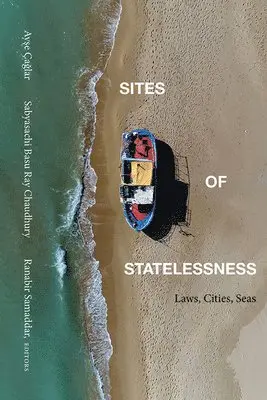
Explores various unusual sites of statelessness like sea, cities, and laws, beyond mere legal and regulatory frameworks, that determines statelessness.Statelessness is incessantly produced in seas, cities, and law. Building around the postcolonial experiences of statelessness Sites of Statelessness examines the entanglements of citizenship policies and practices with the spread of statelessness in contemporary times, something that defies any kind of a citizen/stateless binary. These policies are significant, the background of a shift in emphasis from jus soli to jus sanguinis, the proliferation of borderland populations and nowhere people, population flows across (post)colonial border formations and boundary delimitations, and the growth of regional, formal, and informal labor markets characterized by immigrant labor economies. In this context, contributors address the distinctive dynamics of the different sites in the production of statelessness and considers the impact of these sites as critical and does not merely treat them as a backdrop. They argue that these different sites evoke different histories and repertoires and also bring different possibilities of alignment with emerging problematics.