Barbara Creed - Böcker
Visar alla böcker från författaren Barbara Creed. Handla med fri frakt och snabb leverans.
10 produkter
10 produkter
2 029 kr
Skickas inom 10-15 vardagar
This is a timely update of a seminal text which re-interprets key films of the horror genre, including Carrie, The Exorcist, The Brood and Psycho.In the first edition, Creed draws on Julia Kristeva’s theory of abjection to challenge the popular view that women in horror are almost always victims, and argues that patriarchal ideology constructs women as monstrous in relation to her sexuality and reproductive body to justify her subjugation. Although a projection of male fears and paranoid fantasies, the monstrous-feminine is nonetheless a terrifying figure. Creed’s argument contests Freudian and Lacanian theories of sexual difference to offer a provocative rereading of classical and contemporary horror. This updated edition includes a new section examining contemporary feminist horror films in relation to nonhuman theory. Creed proposes a new concept of radical abjection to reinterpret the monstrous-feminine as a figure who embraces abjection by reclaiming her body and re-defining her otherness as nonhuman – while questioning patriarchy, anthropocentrism, misogyny and the meaning of the human. Films discussed include Ginger Snaps, Teeth, Atlantics, The Girl with All the Gifts, Border and Titane. Barbara Creed’s classic remains as relevant as ever and this edition will be of interest to academics and students of feminist theory, nonhuman theory, critical animal studies, race, and queer theory.
533 kr
Skickas inom 10-15 vardagar
This is a timely update of a seminal text which re-interprets key films of the horror genre, including Carrie, The Exorcist, The Brood and Psycho.In the first edition, Creed draws on Julia Kristeva’s theory of abjection to challenge the popular view that women in horror are almost always victims, and argues that patriarchal ideology constructs women as monstrous in relation to her sexuality and reproductive body to justify her subjugation. Although a projection of male fears and paranoid fantasies, the monstrous-feminine is nonetheless a terrifying figure. Creed’s argument contests Freudian and Lacanian theories of sexual difference to offer a provocative rereading of classical and contemporary horror. This updated edition includes a new section examining contemporary feminist horror films in relation to nonhuman theory. Creed proposes a new concept of radical abjection to reinterpret the monstrous-feminine as a figure who embraces abjection by reclaiming her body and re-defining her otherness as nonhuman – while questioning patriarchy, anthropocentrism, misogyny and the meaning of the human. Films discussed include Ginger Snaps, Teeth, Atlantics, The Girl with All the Gifts, Border and Titane. Barbara Creed’s classic remains as relevant as ever and this edition will be of interest to academics and students of feminist theory, nonhuman theory, critical animal studies, race, and queer theory.
597 kr
Skickas inom 10-15 vardagar
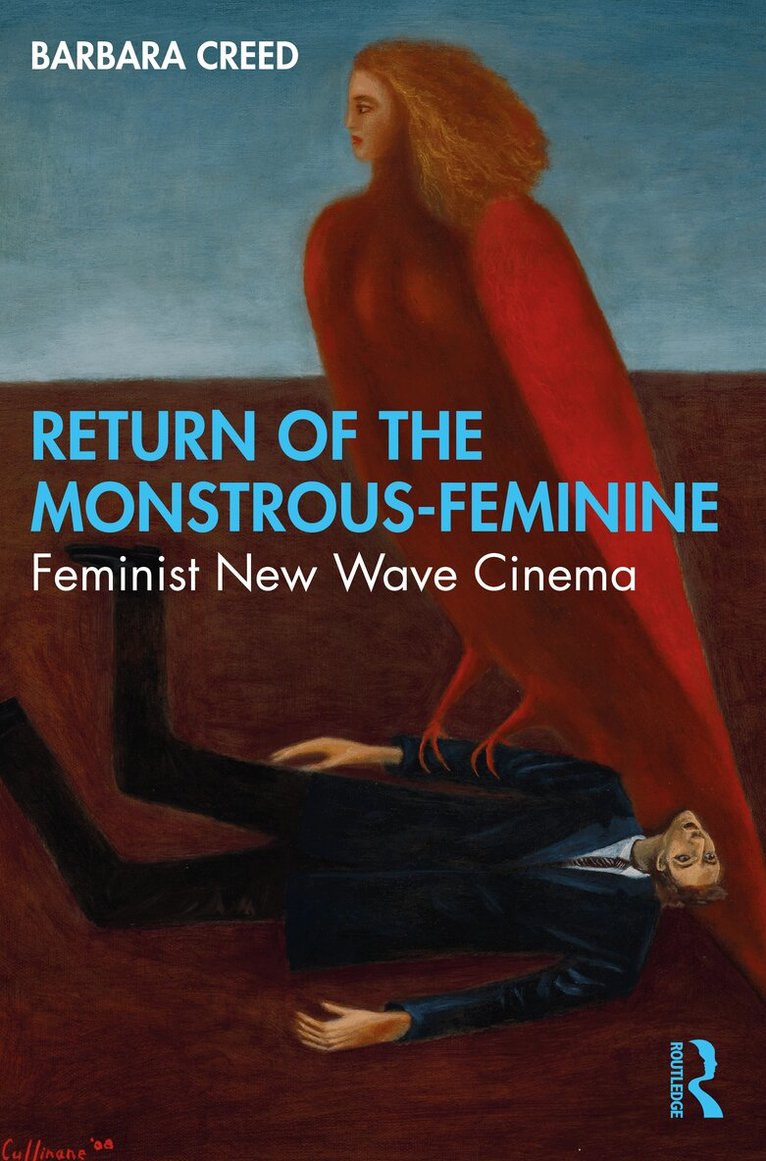
This follow-up to the classic text of The Monstrous-Feminine analyses those contemporary films which explore social justice issues such as women’s equality, violence against women, queer relationships, race and the plight of the planet and its multi-species. Examining a new movement – termed by Creed as Feminist New Wave Cinema – The Return of the Monstrous-Feminine explores a significant change that has occurred over the past two decades in the representation of the monstrous-feminine in visual discourse. The Monstrous-Feminine is a figure in revolt on a journey through the dark night of abjection. Taking particular interest in women directors who create the figure of the Monstrous-Feminine, in cinema that foregrounds everyday horrors in addition to classic horror, Creed looks at a range of diverse films including The Babadook, A Girl Walks Home Alone at Night, Nomadland, Carol, Raw, Revenge, and the television series The Handmaid’s Tale. These films center on different forms of revolt, from inner revolt to social, supernatural and violent revolt, which appear in Feminist New Wave Cinema. These relate in the main to the emergence of a range of social protest movements that have gathered momentum in the new millennium and given voice to new theoretical and critical discourses. These include: third and fourth wave feminism, the #MeToo movement, queer theory, race theory, the critique of anthropocentrism and human animal theory. These theoretical discourses have played a key role in influencing Feminist New Wave Cinema whose films are distinctive, stylish and diverse.This is an essential companion to the original classic text and is ideal for students in Gender and Media, Gender and Horror, Gender and Film and Feminist Film theory courses.
2 216 kr
Skickas inom 10-15 vardagar
This follow-up to the classic text of The Monstrous-Feminine analyses those contemporary films which explore social justice issues such as women’s equality, violence against women, queer relationships, race and the plight of the planet and its multi-species. Examining a new movement – termed by Creed as Feminist New Wave Cinema – The Return of the Monstrous-Feminine explores a significant change that has occurred over the past two decades in the representation of the monstrous-feminine in visual discourse. The Monstrous-Feminine is a figure in revolt on a journey through the dark night of abjection. Taking particular interest in women directors who create the figure of the Monstrous-Feminine, in cinema that foregrounds everyday horrors in addition to classic horror, Creed looks at a range of diverse films including The Babadook, A Girl Walks Home Alone at Night, Nomadland, Carol, Raw, Revenge, and the television series The Handmaid’s Tale. These films center on different forms of revolt, from inner revolt to social, supernatural and violent revolt, which appear in Feminist New Wave Cinema. These relate in the main to the emergence of a range of social protest movements that have gathered momentum in the new millennium and given voice to new theoretical and critical discourses. These include: third and fourth wave feminism, the #MeToo movement, queer theory, race theory, the critique of anthropocentrism and human animal theory. These theoretical discourses have played a key role in influencing Feminist New Wave Cinema whose films are distinctive, stylish and diverse.This is an essential companion to the original classic text and is ideal for students in Gender and Media, Gender and Horror, Gender and Film and Feminist Film theory courses.
376 kr
Tillfälligt slut
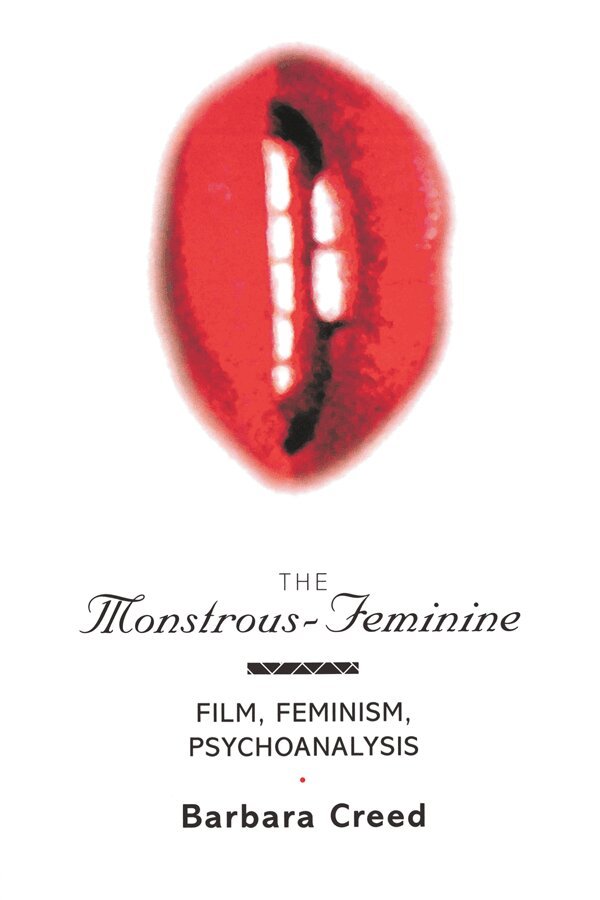
In almost all critical writings on the horror film, woman is conceptualised only as victim. In The Monstrous-Feminine Barbara Creed challenges this patriarchal view by arguing that the prototype of all definitions of the monstrous is the female reproductive body.With close reference to a number of classic horror films including the Alien trilogy, The Exorcist and Psycho, Creed analyses the seven `faces' of the monstrous-feminine: archaic mother, monstrous womb, vampire, witch, possessed body, monstrous mother and castrator. Her argument that man fears woman as castrator, rather than as castrated, questions not only Freudian theories of sexual difference but existing theories of spectatorship and fetishism, providing a provocative re-reading of classical and contemporary film and theoretical texts.
579 kr
Skickas inom 10-15 vardagar
Body Trade exposes myths surrounding the trade in heads, cannibalism, captive white women, the display of indigenous people in fairs and circuses, the stolen generations, the 'comfort' women and the making of the exotic/erotic body. This is a lively and intriguiung comtribution to the study of the postcolonial body.
2 150 kr
Skickas inom 10-15 vardagar
Body Trade exposes myths surrounding the trade in heads, cannibalism, captive white women, the display of indigenous people in fairs and circuses, the stolen generations, the 'comfort' women and the making of the exotic/erotic body. This is a lively and intriguiung comtribution to the study of the postcolonial body.
342 kr
Skickas inom 7-10 vardagar
The horror film has always been populated by male monsters, many of which do carry out monstrous acts of violation, rape and castration. The horror film is also filled with male monsters who grow fur, change shape, bleed and give birth. What is it that defines male monstrosity? How does the male monster differ from the female monster? In contrast to the monstrous-feminine, the male monster is almost always defined in close relation to its sexual other, that is, the male monster is a feminised creature linked to woman, nature and the animal. Woman is the prototype, the male monster her impression.
Darwin's Screens
Evolutionary Aesthetics, Time and Sexual Display in the Cinema
Häftad, Engelska, 2009
384 kr
Skickas inom 7-10 vardagar
Darwin's Screens addresses a major gap in film scholarship - the key influence of Charles Darwin's theories on the history of the cinema. Much has been written on the effect of other great thinkers such as Freud and Marx but very little on the important role played by Darwinian ideas on the evolution of the newest art form of the twentieth century. Creed argues that Darwinian ideas influenced the evolution of early film genres such as horror, the detective film, science fiction, film noir and the musical. Her study draws on Darwin's theories of sexual selection, deep time and transformation, and on emotions, death, and the meaning of human and animal in order to rethink some of the canonical arguments of film and cinema studies.
1 502 kr
Tillfälligt slut
In almost all critical writings on the horror film, woman is conceptualised only as victim. In The Monstrous-Feminine Barbara Creed challenges this patriarchal view by arguing that the prototype of all definitions of the monstrous is the female reproductive body.With close reference to a number of classic horror films including the Alien trilogy, The Exorcist and Psycho, Creed analyses the seven `faces' of the monstrous-feminine: archaic mother, monstrous womb, vampire, witch, possessed body, monstrous mother and castrator. Her argument that man fears woman as castrator, rather than as castrated, questions not only Freudian theories of sexual difference but existing theories of spectatorship and fetishism, providing a provocative re-reading of classical and contemporary film and theoretical texts.