Barbara Faedda - Böcker
Visar alla böcker från författaren Barbara Faedda. Handla med fri frakt och snabb leverans.
3 produkter
3 produkter
From Da Ponte to the Casa Italiana
A Brief History of Italian Studies at Columbia University
Inbunden, Engelska, 2017
293 kr
Skickas inom 7-10 vardagar
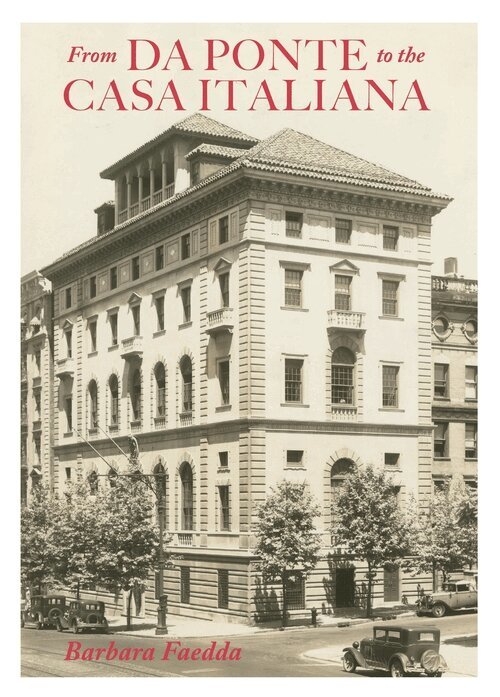
The Casa Italiana—a neo-Renaissance palazzo located on Amsterdam Avenue near 117th Street—has been the most important expression of the Italian presence on Columbia University’s campus since its construction in 1927. As a site of interdisciplinary scholarship and promotion of Italian culture, the Casa Italiana has made a substantial contribution to the academic study of Italy in America and the understanding of Italian cultural identity abroad. Celebrating the Casa’s ninetieth anniversary, From Da Ponte to the Casa Italiana documents and recounts the history of the individuals, both Italian and American, who contributed to the formation of Columbia University’s rich tradition of Italian studies.Barbara Faedda’s succinct yet detailed historical survey begins at the dawn of Italian studies at Columbia with Lorenzo Da Ponte, Mozart’s witty librettist who became the charismatic founder of the New York Metropolitan Opera and Columbia’s first professor of Italian. Covering figures such as the former revolutionary Eleuterio Felice Foresti, Faedda elucidates the complex and often controversial dimensions of the Casa’s history, highlighting protagonists such as the talented but equivocal Giuseppe Prezzolini and Columbia’s president Nicholas M. Butler, as well as Italian-American students and community members. The Casa played a significant role in U.S.-Italian relations from its foundation, and at one point it came under fire, accused of ties to Mussolini and pro-Fascist leanings. Synthesizing archival documents with the work of historians, From Da Ponte to the Casa Italiana tells the compelling stories of the Casa and several of its leading figures, whose influence on the university can still be felt today.
498 kr
Skickas inom 7-10 vardagar
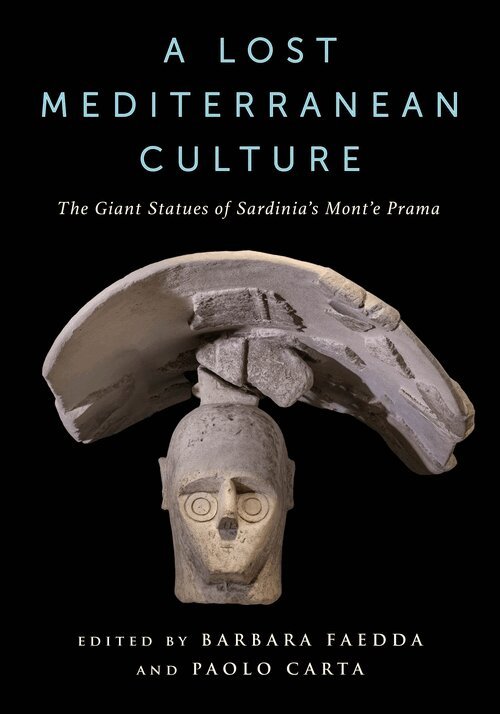
Thousands of shattered limestone pieces came to light in 1974 at the Mont’e Prama site in western Sardinia. They have been reassembled into dozens of striking, colossal statues that reward close study by archaeologists, historians, conservators, and restorers. The giant statues and the individual tombs in this monumental necropolis—sculpted by a powerful Mediterranean civilization—make Mont’e Prama a uniquely rich representation of a culture’s values and traditions in the Bronze Age and the Iron Age.This is the first English-language book to explore Mont’e Prama’s limestone statues—among the most important archaeological discoveries of the past fifty years and the source of fresh discoveries even today. It is written by the people who are leading the excavation and restoration of these treasures; researching the artifacts and their context; and presenting the eerie faces, towering bodies, and sprawling site to the world. A Lost Mediterranean Culture takes the reader through the details of the various discoveries at Mont’e Prama, recounting the history of scholarship on the artifacts and describing the landscape, the context, and the meticulous restoration efforts. It also addresses the illicit trafficking of Sardinian cultural property.Lavishly illustrated with photographs and other figures that showcase fine details, A Lost Mediterranean Culture offers fresh information for specialists and captivates a wider audience with the beauty of these massive sculptures.
416 kr
Skickas inom 7-10 vardagar
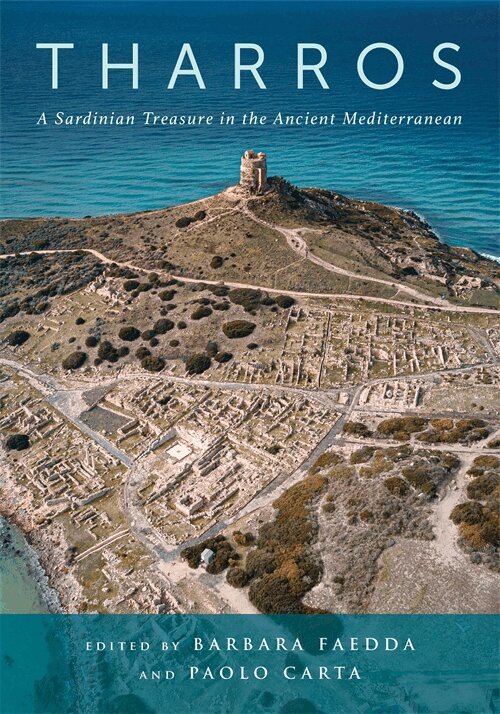
For nearly a thousand years, the city of Tharros in western Sardinia was central to trade routes and cultural exchange, a hub connecting North Africa, the Balearic Islands, and the Eastern Mediterranean. Its earliest ruins, dating from the seventh century BCE, were likely constructed by Punic settlers from North Africa. The Carthaginians built temples and tombs; the Romans, who arrived in the third century BCE, erected their own infrastructure, such as public baths and aqueducts. Tharros was eventually abandoned around 1000 CE. The site was plundered over the centuries, and treasures from its tombs were widely trafficked.This is the first English-language book to explore the rich and fascinating archaeological site of Tharros. Distinguished scholars of Sardinian and Mediterranean archaeology examine the history of excavations and the many significant discoveries that have been made on the site. Essays consider the religious beliefs, burial practices, material culture, and daily life of the inhabitants of ancient Tharros. Dozens of color photographs depict the city’s architecture and artifacts—buildings and roads from the Bronze Age, the Punic era, ancient Roman times, and the Christian centuries, along with treasured and everyday objects now held in major global museums. Showcasing the achievements of Sardinia’s ancient society, this book shines a light on Tharros’s distinctive history and culture.