Paolo Carta - Böcker
Visar alla böcker från författaren Paolo Carta. Handla med fri frakt och snabb leverans.
3 produkter
3 produkter
493 kr
Skickas inom 7-10 vardagar
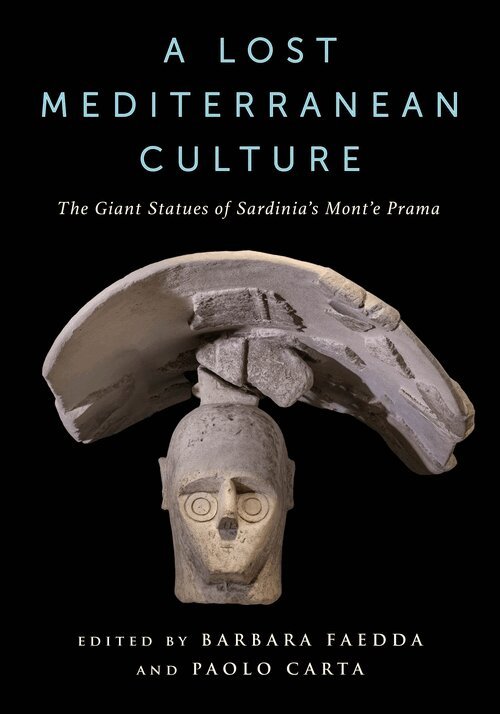
Thousands of shattered limestone pieces came to light in 1974 at the Mont’e Prama site in western Sardinia. They have been reassembled into dozens of striking, colossal statues that reward close study by archaeologists, historians, conservators, and restorers. The giant statues and the individual tombs in this monumental necropolis—sculpted by a powerful Mediterranean civilization—make Mont’e Prama a uniquely rich representation of a culture’s values and traditions in the Bronze Age and the Iron Age.This is the first English-language book to explore Mont’e Prama’s limestone statues—among the most important archaeological discoveries of the past fifty years and the source of fresh discoveries even today. It is written by the people who are leading the excavation and restoration of these treasures; researching the artifacts and their context; and presenting the eerie faces, towering bodies, and sprawling site to the world. A Lost Mediterranean Culture takes the reader through the details of the various discoveries at Mont’e Prama, recounting the history of scholarship on the artifacts and describing the landscape, the context, and the meticulous restoration efforts. It also addresses the illicit trafficking of Sardinian cultural property.Lavishly illustrated with photographs and other figures that showcase fine details, A Lost Mediterranean Culture offers fresh information for specialists and captivates a wider audience with the beauty of these massive sculptures.
412 kr
Skickas inom 7-10 vardagar
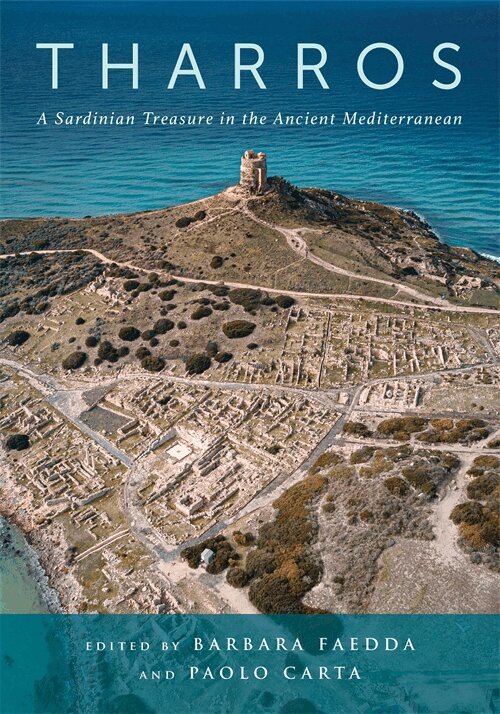
For nearly a thousand years, the city of Tharros in western Sardinia was central to trade routes and cultural exchange, a hub connecting North Africa, the Balearic Islands, and the Eastern Mediterranean. Its earliest ruins, dating from the seventh century BCE, were likely constructed by Punic settlers from North Africa. The Carthaginians built temples and tombs; the Romans, who arrived in the third century BCE, erected their own infrastructure, such as public baths and aqueducts. Tharros was eventually abandoned around 1000 CE. The site was plundered over the centuries, and treasures from its tombs were widely trafficked.This is the first English-language book to explore the rich and fascinating archaeological site of Tharros. Distinguished scholars of Sardinian and Mediterranean archaeology examine the history of excavations and the many significant discoveries that have been made on the site. Essays consider the religious beliefs, burial practices, material culture, and daily life of the inhabitants of ancient Tharros. Dozens of color photographs depict the city’s architecture and artifacts—buildings and roads from the Bronze Age, the Punic era, ancient Roman times, and the Christian centuries, along with treasured and everyday objects now held in major global museums. Showcasing the achievements of Sardinia’s ancient society, this book shines a light on Tharros’s distinctive history and culture.
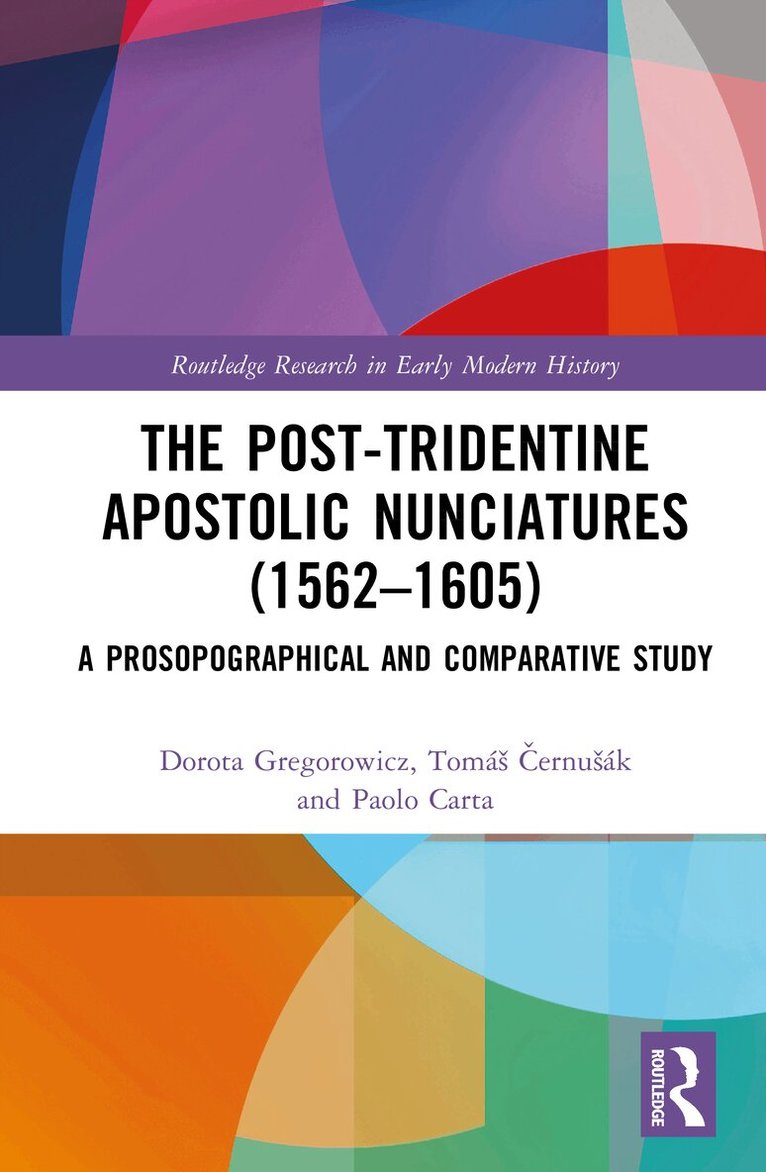
Post-Tridentine Apostolic Nunciatures (1562–1605)
A Prosopographical and Comparative Study
Inbunden, Engelska, 2026
2 258 kr
Kommande
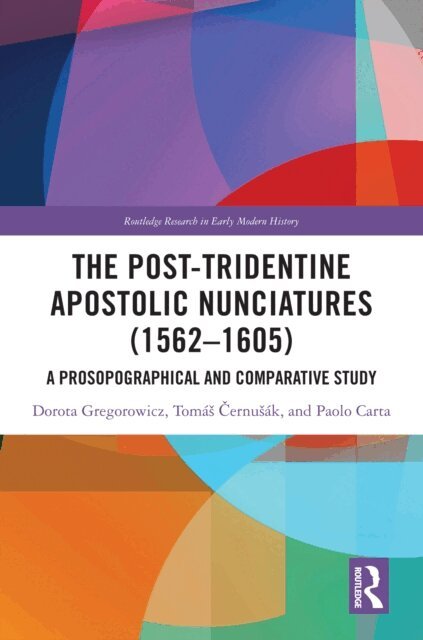
This book offers the first comprehensive prosopographical and comparative study of permanent apostolic nunciatures in post-Tridentine Europe (1562–1605), substantially extending earlier chronological repertories.During this period of institutional reconfiguration, apostolic nuncios operated at the intersection of spiritual leadership and secular politics. Rather than treating diplomacy as a series of bilateral exchanges, the study analyses the nunciature system as a transregional network through which the Holy See projected universal claims, managed confessional divisions, and shaped the political order of early modern Europe. Drawing on a dataset of one hundred and four nuncios, the book combines quantitative analysis with institutional and intellectual history. It reconstructs patterns of recruitment, education, social background, and career advancement, showing how diplomatic service related to episcopal promotion and advancement within the Roman Curia, including the cardinalate and the papacy. The study also examines the functioning of nunciatures at major European courts – from Iberia and France to the Holy Roman Empire and Poland-Lithuania – and highlights their role in implementing Catholic Reform. Finally, it presents the nunciature as a ‘writing workshop’ that generated political knowledge, legal reflection, and detailed mappings of confessional Europe.The volume will interest scholars and graduate students of early modern, Church, and diplomatic history and provides a solid empirical basis for understanding papal diplomacy and European state formation in the age of confessional conflict.