Barbara Franco - Böcker
Visar alla böcker från författaren Barbara Franco. Handla med fri frakt och snabb leverans.
4 produkter
4 produkter
617 kr
Skickas inom 10-15 vardagar
Ideas and Images presents eleven case studies, walking you through the process of developing interpretive history exhibits. Learn how to identify and build new audiences, work with consultants and experts, cope with institutional change, present temporary and permanent exhibitions, and experiment with new subjects, design techniques and media.
Gettysburg Surgeons
Facing a Common Enemy in the Civil War’s Deadliest Battle
Inbunden, Engelska, 2025
366 kr
Skickas
The Battle of Gettysburg was one of the Civil War’s turning points—and one of its bloodiest clashes of arms. At places now etched in history—Devil’s Den, the Wheatfield, Cemetery Ridge—the carnage was horrific: some 50,000 men became casualties, about half of them wounded in need of medical care. During the battle’s three days, and for months after, a thousand surgeons—military as well as civilian, southern but mostly northern—provided care to the wounded in conditions that beggared the imagination and stretched the limits of nineteenth-century medicine. Drawing on nearly a decade of research, historian Barbara Franco stitches together medical history, military history, and Civil War history to highlight the work of the surgeons of Gettysburg.The medical staff of the Army of the Potomac and the Army of Northern Virginia had their hands—and medical tents and wagons—full even before the battle started. On the march for nearly a month, from central Virginia to southern Pennsylvania, soldiers fell out of the ranks daily with heat stroke, exhaustion, dehydration, malnutrition, injuries to feet and legs, wounds from skirmishes with the enemy, and a gut-wrenching array of illnesses, from dysentery to typhoid fever, whose causes were still poorly understood. Doctors and surgeons treated the sick and hurt while on the move themselves, working around the clock to keep the armies in fighting condition.Once the shooting started on the morning of July 1, 1863, the situation became chaotic as medical personnel hurried to Gettysburg, where the fallen littered fields, woods, and town and makeshift hospitals opened in churches, barns, and other buildings. As surgeons settled in overnight, so did the armies, who unleashed hell on each other on July 2 and July 3, culminating in the devastation of Pickett’s Charge. Chaos became nightmare as the wounded flooded hospital tents and surgeons went about the grisly work of treating bloodied and mangled soldiers, triaging patients, amputating limbs, and performing a narrow range of other surgeries, such as trephination of the skull. Surgeons worked in primitive field conditions with little rest or sleep while the battle still raged around them, the wounded groaned and cried, and gruesome scenes unfolded by the minute. Ether and chloroform were available for anesthesia, and morphine for pain, but the era did not yet have antibiotics or an understanding of germs, hygiene, and the need for sterile equipment. The work of surgeons continued long after the two armies left. A massive hospital camp was established, and thousands of Union and Confederate soldiers were treated until the facility finally closed the following November.
1 276 kr
Skickas inom 10-15 vardagar
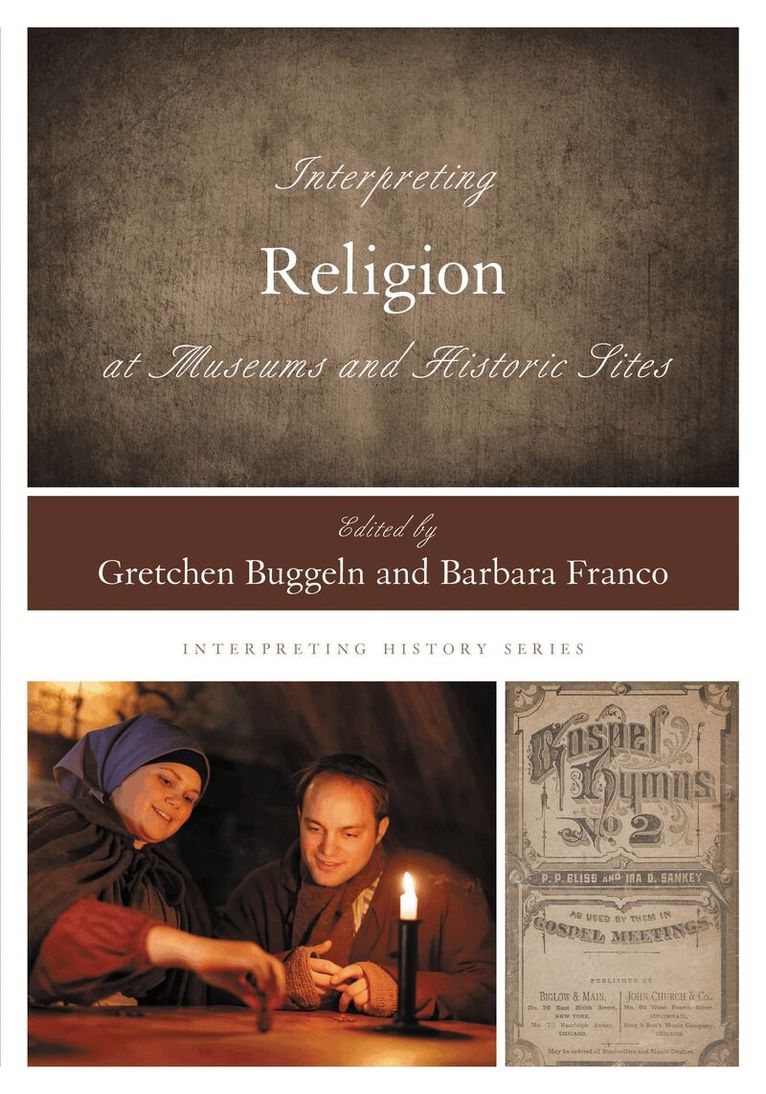
Interpreting Religion at Museums and Historic Sitesencourages readers to consider the history of religion as integral to American culture and provides a practical guide for any museum to include interpretation of religious traditions in its programs and exhibits. Combining both theoretical essays and practical case studies from a wide cross section of the field, the book explores how museums are finding new ways to connect with audiences about this important aspect of American history. This book explores the practical and interpretive problems that museums encounter when they include religion in their interpretation:How do we make sure visitors don't think the museum is taking the side of any particular religious group, or proselytizing, or crossing church-state boundaries? How do we spin out a rich story with the available artifact base? What are the opportunities and perils of telling particular religious stories in a multicultural context? These and other questions are addressed in a series of interpretive essays and case studies that capture the experimental and innovative religion programming that is beginning to find a place in American history museums.An introduction by Gretchen Buggeln places the subject of religion and museums in the intellectual context of national and international scholarship. Case studies cover a range of topics and venues that include outdoor museums, historic houses and exhibits; interpretive issues of secular and sacred contexts; and interpretive techniques like dialogue, music and first person accounts. A concluding essay suggests a publicly oriented historiography of religion for American museums and historic sites.
595 kr
Skickas inom 10-15 vardagar
Interpreting Religion at Museums and Historic Sitesencourages readers to consider the history of religion as integral to American culture and provides a practical guide for any museum to include interpretation of religious traditions in its programs and exhibits. Combining both theoretical essays and practical case studies from a wide cross section of the field, the book explores how museums are finding new ways to connect with audiences about this important aspect of American history. This book explores the practical and interpretive problems that museums encounter when they include religion in their interpretation:How do we make sure visitors don't think the museum is taking the side of any particular religious group, or proselytizing, or crossing church-state boundaries? How do we spin out a rich story with the available artifact base? What are the opportunities and perils of telling particular religious stories in a multicultural context? These and other questions are addressed in a series of interpretive essays and case studies that capture the experimental and innovative religion programming that is beginning to find a place in American history museums.An introduction by Gretchen Buggeln places the subject of religion and museums in the intellectual context of national and international scholarship. Case studies cover a range of topics and venues that include outdoor museums, historic houses and exhibits; interpretive issues of secular and sacred contexts; and interpretive techniques like dialogue, music and first person accounts. A concluding essay suggests a publicly oriented historiography of religion for American museums and historic sites.