

Gettysburg Surgeons
Facing a Common Enemy in the Civil War’s Deadliest Battle
377 kr
Skickas . Fri frakt över 249 kr.
Beskrivning
The Battle of Gettysburg was one of the Civil War’s turning points—and one of its bloodiest clashes of arms. At places now etched in history—Devil’s Den, the Wheatfield, Cemetery Ridge—the carnage was horrific: some 50,000 men became casualties, about half of them wounded in need of medical care. During the battle’s three days, and for months after, a thousand surgeons—military as well as civilian, southern but mostly northern—provided care to the wounded in conditions that beggared the imagination and stretched the limits of nineteenth-century medicine. Drawing on nearly a decade of research, historian Barbara Franco stitches together medical history, military history, and Civil War history to highlight the work of the surgeons of Gettysburg.The medical staff of the Army of the Potomac and the Army of Northern Virginia had their hands—and medical tents and wagons—full even before the battle started. On the march for nearly a month, from central Virginia to southern Pennsylvania, soldiers fell out of the ranks daily with heat stroke, exhaustion, dehydration, malnutrition, injuries to feet and legs, wounds from skirmishes with the enemy, and a gut-wrenching array of illnesses, from dysentery to typhoid fever, whose causes were still poorly understood. Doctors and surgeons treated the sick and hurt while on the move themselves, working around the clock to keep the armies in fighting condition.Once the shooting started on the morning of July 1, 1863, the situation became chaotic as medical personnel hurried to Gettysburg, where the fallen littered fields, woods, and town and makeshift hospitals opened in churches, barns, and other buildings. As surgeons settled in overnight, so did the armies, who unleashed hell on each other on July 2 and July 3, culminating in the devastation of Pickett’s Charge. Chaos became nightmare as the wounded flooded hospital tents and surgeons went about the grisly work of treating bloodied and mangled soldiers, triaging patients, amputating limbs, and performing a narrow range of other surgeries, such as trephination of the skull. Surgeons worked in primitive field conditions with little rest or sleep while the battle still raged around them, the wounded groaned and cried, and gruesome scenes unfolded by the minute. Ether and chloroform were available for anesthesia, and morphine for pain, but the era did not yet have antibiotics or an understanding of germs, hygiene, and the need for sterile equipment. The work of surgeons continued long after the two armies left. A massive hospital camp was established, and thousands of Union and Confederate soldiers were treated until the facility finally closed the following November.
Produktinformation
Utforska kategorier
Mer om författaren
Hoppa över listan

Mer från samma författare
Del 16
Interpreting Religion at Museums and Historic Sites
Gretchen Buggeln, Barbara Franco
Inbunden, 2018
1 330 kr
Del 16
Interpreting Religion at Museums and Historic Sites
Gretchen Buggeln, Barbara Franco
Häftad, 2018
620 kr
Hoppa över listan





Mer från samma serie
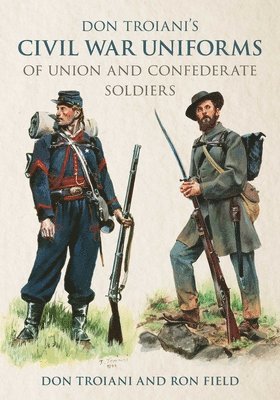
Don Troiani's Civil War Uniforms of Union and Confederate Soldiers
Don Troiani, Ron Field
Häftad, 2026
341 kr
Hoppa över listan



Du kanske också är intresserad av
Del 16
Interpreting Religion at Museums and Historic Sites
Gretchen Buggeln, Barbara Franco
Inbunden, 2018
1 330 kr
Del 16
Interpreting Religion at Museums and Historic Sites
Gretchen Buggeln, Barbara Franco
Häftad, 2018
620 kr
- Signerad!
- Signerad!
Del 3
- Nyhet
- -30%
- -21%
- -19%