Barbara Harshav - Böcker
Visar alla böcker från författaren Barbara Harshav. Handla med fri frakt och snabb leverans.
3 produkter
3 produkter
392 kr
Skickas inom 5-8 vardagar
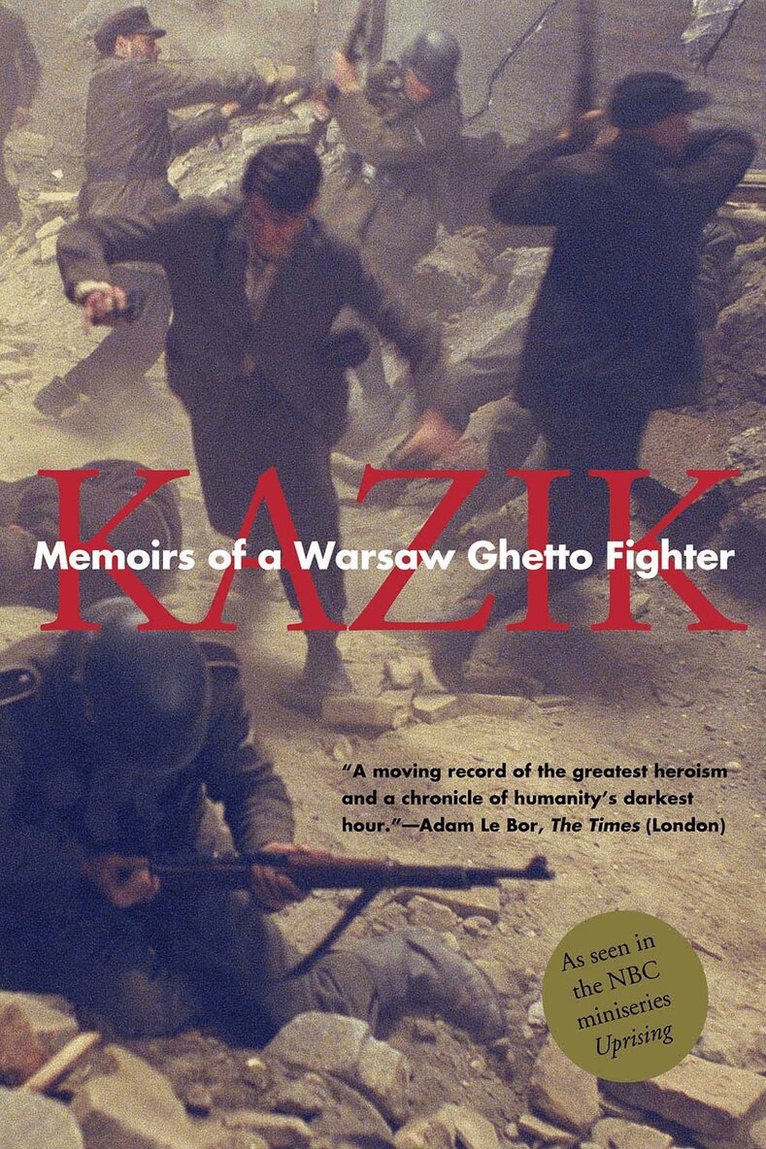
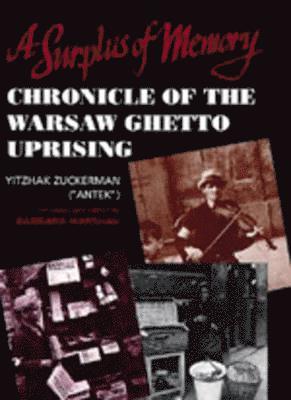
"In the first three days [of the Warsaw Ghetto uprising], the Germans didn't take a single Jew out of the buildings. After their attempts to penetrate the Ghetto had failed, they decided to spare themselves casualties by destroying it from outside with cannon and aerial bombings. A few days later the Ghetto was totally destroyed. . . . The 'streets' were nothing but rows of smoldering ruins. It was hard to cross them without stepping on charred bodies."—KazikWhen the Nazis decided to liquidate the Warsaw Ghetto in 1943, five hundred young Jewish fighters within the Ghetto rose up to defy them. With no weapons, no influence, and no experience in warfare, they managed to resist the Germans for almost a month. In the end, when the battle was lost, the surviving Jews were led out of the ruins through the sewers by a nineteen-year-old fighter known as Kazik. As head courier of the Jewish Fighting Organization (ZOB), which had planned and executed the uprising, Kazik spent the rest of the war helping to care for the several thousand Jews who still remained in Warsaw. This book—an extraordinary story of courage and perseverance—is Kazik's wartime memoir.In stark, spare detail, Kazik reports on the efforts to prepare for the defense of the Warsaw Ghetto, the calamitous battle with the Germans, and the rescue of the few Jews who were still alive after the Ghetto was destroyed. He describes how he assumed a false Aryan identity in order to pass through the city as he collected money and found hiding places for the survivors. Constantly on guard, fearful of informers, his life always in danger, he nevertheless plotted resourcefully to aid his fellow Jews. He tells how he joined the Poles during their ill-fated uprising against the Nazis in Warsaw in 1944, had further brushes with death assisting the Polish underground, and returned to Warsaw to watch its liberation by the Russian army.Suspenseful, moving, and remarkably heroic, Kazik's memoir is only the second source to be published on the Warsaw Ghetto Uprising. It will help demolish the image of Jews as submissive victims in the Holocaust.
1 196 kr
Skickas inom 3-6 vardagar
In 1943, against utterly hopeless odds, the Jews of the Warsaw Ghetto rose up to defy the Nazi horror machine that had set out to exterminate them. One of the leaders of the Jewish Fighting Organization, which led the uprisings, was Yitzhak Zuckerman, known by his underground pseudonym, Antek. Decades later, living in Israel, Antek dictated his memoirs. The Hebrew publication of "Those Seven Years: 1939-1946" was a major event in the historiography of the Holocaust, and now Antek's memoirs are available in English. Unlike Holocaust books that focus on the annihilation of European Jews, Antek's account is of the daily struggle to maintain human dignity under the most dreadful conditions. His passionate, involved testimony, which combines detail, authenticity, and gripping immediacy, has unique historical importance. The memoirs situate the ghetto and the resistance in the social and political context that preceded them, when prewar Zionist and Socialist youth movements were gradually forged into what became the first significant armed resistance against the Nazis in all of occupied Europe.Antek also describes the activities of the resistance after the destruction of the ghetto, when 20,000 Jews hid in 'Aryan' Warsaw and then participated in illegal immigration to Palestine after the war. The only extensive document by any Jewish resistance leader in Europe, Antek's book is central to understanding ghetto life and underground activities, Jewish resistance under the Nazis, and Polish-Jewish relations during and after the war. This extraordinary work is a fitting monument to the heroism of a people.
583 kr
Skickas inom 7-10 vardagar
This remarkable volume introduces to the large English-speaking audience what is probably the most coherent segment of twentieth-century American literature not written in English. The range of American Yiddish Poetry runs the gamut from individualistic verse of alienation in the modern metropolis, responses to Western culture and ideologies, and experiments with poetic form and the resources of the Yiddish language, to the vitriolic associative chains of a politically engaged anarchist existentialist; from hymns to urban architecture and landscapes and the plight of African Americans to confrontations with the experiences of Jewish history and the loss of the Yiddish language. The bilingual facing-page format, the notes and the biographies of poets, the selections from Yiddish theory and criticism, and a comprehensive introduction to the cultural background and concerns of the poetry enhance the poems themselves.