Barbara Kosta - Böcker
Visar alla böcker från författaren Barbara Kosta. Handla med fri frakt och snabb leverans.
6 produkter
6 produkter
Del 8 - Film Europa
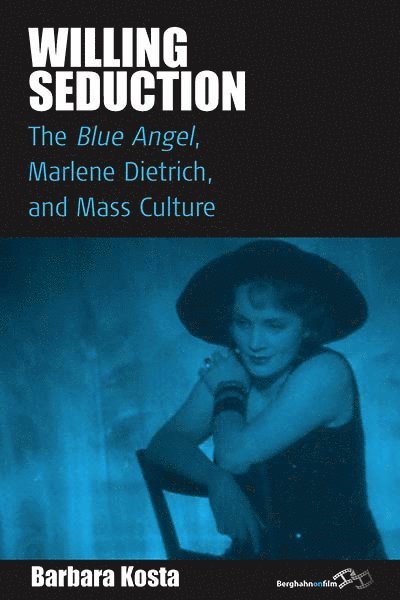
Willing Seduction
<I>The Blue Angel</I>, Marlene Dietrich, and Mass Culture
Häftad, Engelska, 2012
285 kr
Skickas inom 3-6 vardagar
Kosta's book not only adds new material..., but performs the invaluable tasks of synthesizing and building on the massive amounts of writing that has accrued around the film, its director, and stars. This makes the book ideal not only for the collections of German Studies and Film Studies scholars, but also as a text for undergraduate and graduate courses. Kosta writes with sophistication and with a secure grasp of a variety of theoretical registers. German Quarterly This interdisciplinary study will appeal to German and film studies scholars as well as readers interested in question s of gender, visuality, and the history of film. Monatshefte Josef von Sternberg's 1930 film The Blue Angel (Der blaue Engel) is among the best known films of the Weimar Republic (1919-1933). A significant landmark as one of Germany's first major sound films, it is known primarily for launching Marlene Dietrich into Hollywood stardom and for initiating the mythic pairing of the Austrian-born American director von Sternberg with the star performer Dietrich.This fascinating cultural history of The Blue Angel provides a new interpretive framework with which to approach this classic Weimar film and suggests that discourses on mass and high culture are integral to the film's thematic and narrative structure. These discourses surface above all in the relationship between the two main characters, the cabaret entertainer Lola Lola (Marlene Dietrich) and the high school teacher Immanuel Rath (one-time Oscar winner Emil Jannings). In addition to offering insight into some of the major debates that informed the Weimar Republic, this book demonstrates that similar issues continue to shape the contemporary cultural landscape of Germany. Barbara Kosta thus also looks at Dietrich as a contemporary cultural icon and at her symbolic value since German unification and at Lola Lola's various "incarnations." Barbara Kosta is Professor in the Department of German Studies and an affiliated faculty member of Women's Studies and Media Arts at the University of Arizona, where she teaches courses on twentieth-century and contemporary German literature, culture, and film.She is the author of Recasting Autobiography: Women's Counterfictions in Contemporary German Literature and Film (1994), co-author of the first-year German textbook auf deutsch! (1990), and co-editor of Writing Against Boundaries: Gender, Ethnicity and Nationality in the German-speaking Context (2003).
Del 3 - Studies in Central European Culture
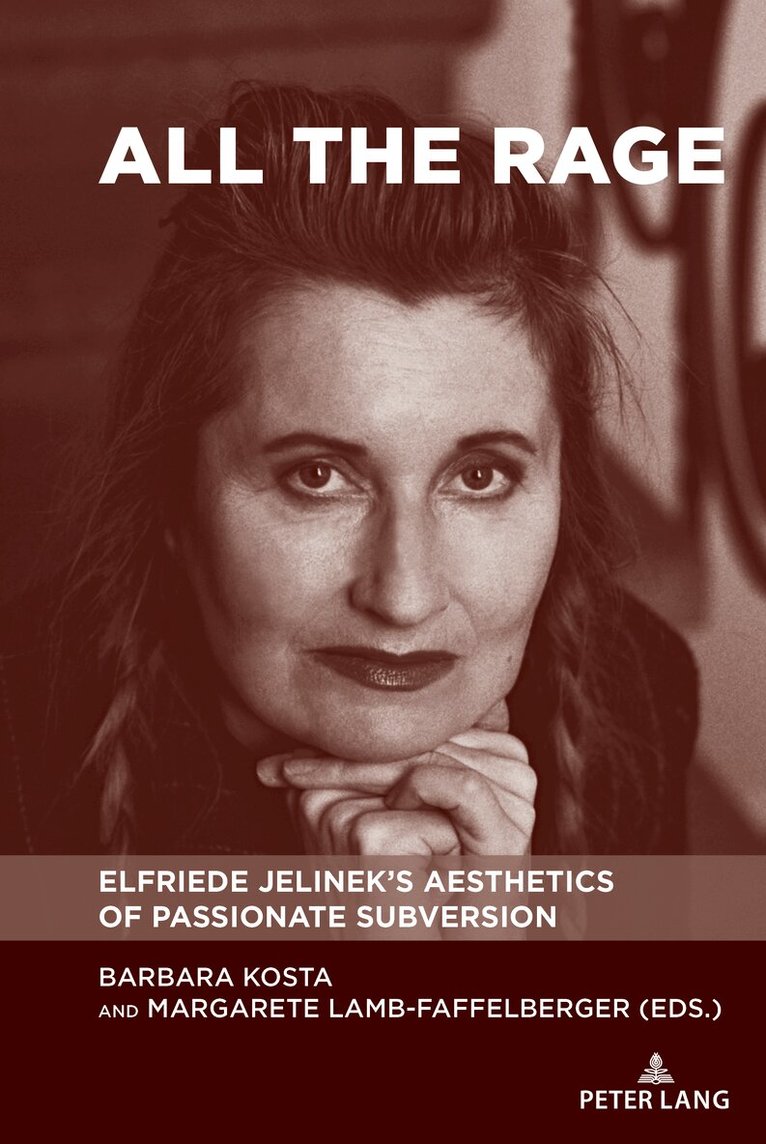
All the Rage
Elfriede Jelinek’s Aesthetics of Passionate Subversion
Inbunden, Engelska, 2026
1 201 kr
Skickas inom 3-6 vardagar
All the Rage introduces Jelinek’s work and its critical relevance for understanding contemporary western society while gaining insight into the vibrancy of her aesthetics. Jelinek’s experimental reconceptualization of theater and literature and her critical interventions into public discourses that support, promote and endure social injustices are central to this volume. Themes of right-wing populism and neoliberalism, war, gender inequalities, racism, migration, the politics of memory, and the erasure of troubling historical pasts command her work. The volume brings together scholars, translators, and international artists who explore topics ranging from directorial considerations, postdramatic, intertextual and intermedial practices, the experience of performing, teaching and translating Jelinek’s work. Thematically relevant today, Austrian writer Elfriede Jelinek, recipient of the 2004 Nobel Prize for Literature, reveals the possibilities of literature and the stage to expose power, violence, and structural harm.
2 076 kr
Skickas inom 3-6 vardagar
Josef von Sternberg’s 1930 film The Blue Angel (Der blaue Engel) is among the best known films of the Weimar Republic (1919-1933). A significant landmark as one of Germany’s first major sound films, it is known primarily for launching Marlene Dietrich into Hollywood stardom and for initiating the mythic pairing of the Austrian-born American director von Sternberg with the star performer Dietrich.This fascinating cultural history of The Blue Angel provides a new interpretive framework with which to approach this classic Weimar film and suggests that discourses on mass and high culture are integral to the film’s thematic and narrative structure. These discourses surface above all in the relationship between the two main characters, the cabaret entertainer Lola Lola (Marlene Dietrich) and the high school teacher Immanuel Rath (one-time Oscar winner Emil Jannings). In addition to offering insight into some of the major debates that informed the Weimar Republic, this book demonstrates that similar issues continue to shape the contemporary cultural landscape of Germany. Barbara Kosta thus also looks at Dietrich as a contemporary cultural icon and at her symbolic value since German unification and at Lola Lola’s various “incarnations.”
1 628 kr
Skickas inom 5-8 vardagar
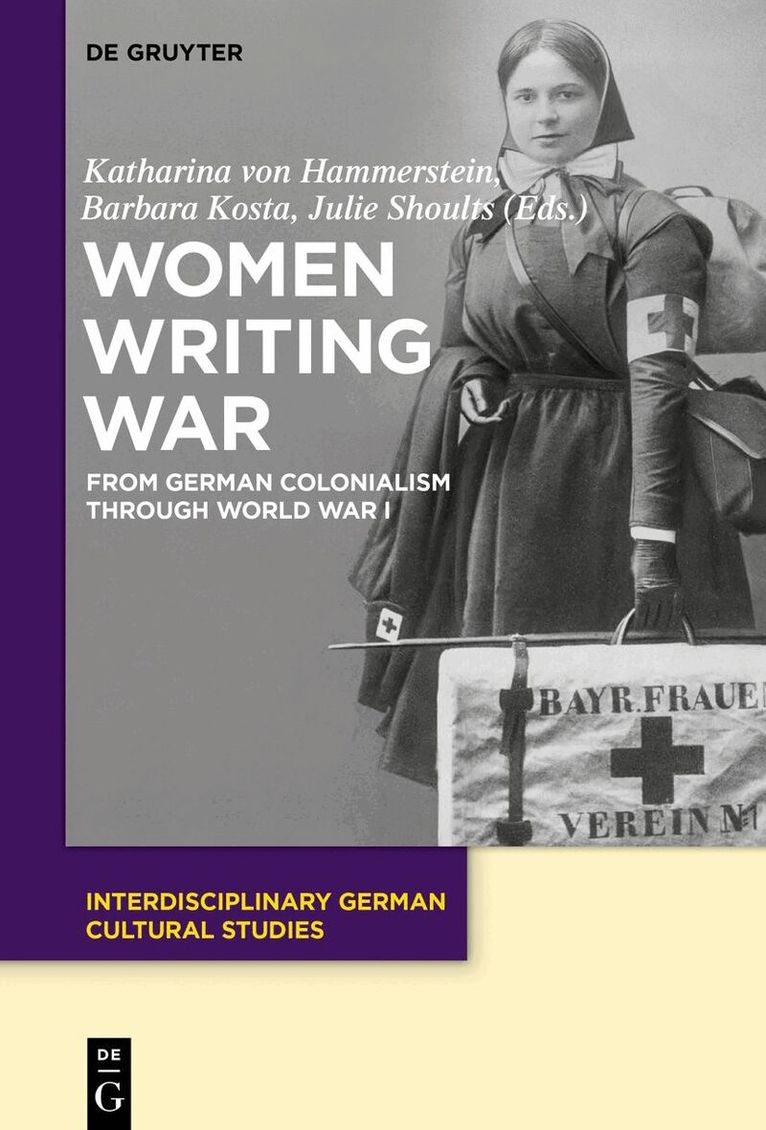
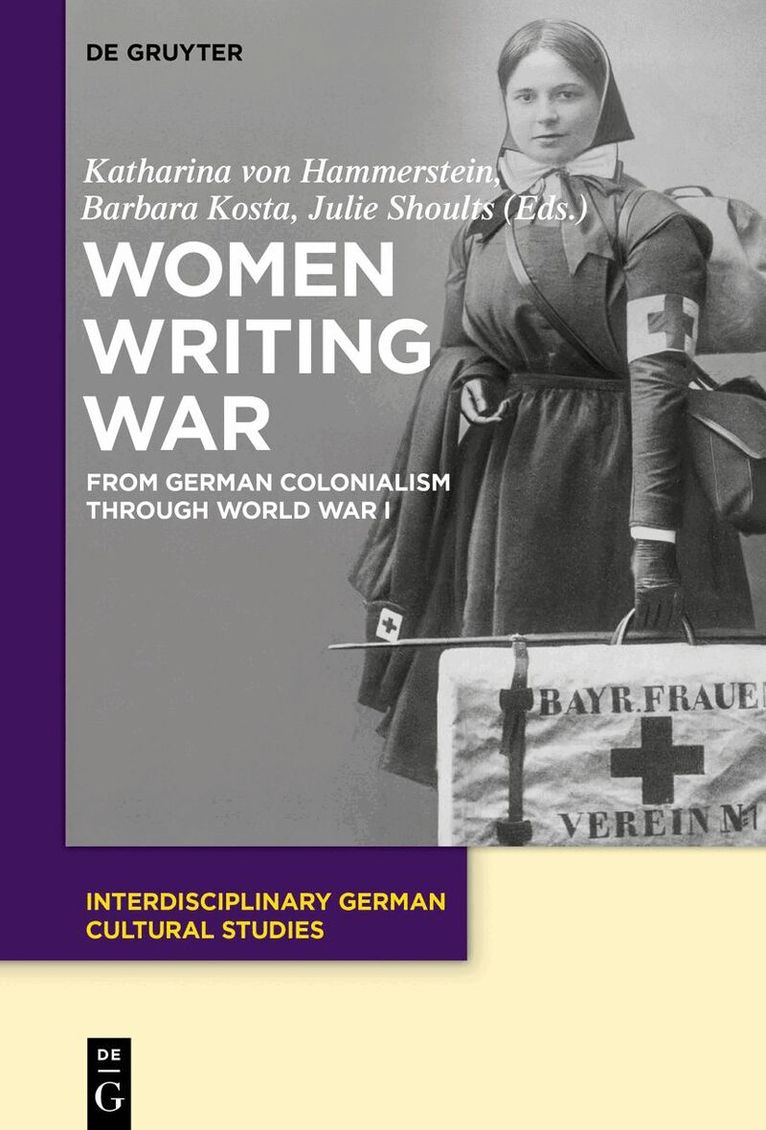
Recent scholarship has broadened definitions of war and shifted from the narrow focus on battles and power struggles to include narratives of the homefront and private sphere. To expand scholarship on textual representations of war means to shed light on the multiple theaters of war, and on the many voices who contributed to, were affected by, and/or critiqued German war efforts. Engaged women writers and artists commented on their nations' imperial and colonial ambitions and the events of the tumultuous beginning of the twentieth century. In an interdisciplinary investigation, this volume explores select female-authored, German-language texts focusing on German colonial wars and World War I and the discourses that promoted or critiqued their premises. They examine how colonial conflicts contributed to a persistent atmosphere of Kriegsbegeisterung (war enthusiasm) that eventually culminated in the outbreak of World War I, or a Kriegskritik (criticism of war) that resisted it. The span from German colonialism to World War I brings these explosive periods into relief and challenges readers to think about the intersection of nationalism, violence and gender and about the historical continuities and disruptions that shape such events.
328 kr
Skickas inom 5-8 vardagar
Recent scholarship has broadened definitions of war and shifted from the narrow focus on battles and power struggles to include narratives of the homefront and private sphere. To expand scholarship on textual representations of war means to shed light on the multiple theaters of war, and on the many voices who contributed to, were affected by, and/or critiqued German war efforts. Engaged women writers and artists commented on their nations' imperial and colonial ambitions and the events of the tumultuous beginning of the twentieth century. In an interdisciplinary investigation, this volume explores select female-authored, German-language texts focusing on German colonial wars and World War I and the discourses that promoted or critiqued their premises. They examine how colonial conflicts contributed to a persistent atmosphere of Kriegsbegeisterung (war enthusiasm) that eventually culminated in the outbreak of World War I, or a Kriegskritik (criticism of war) that resisted it. The span from German colonialism to World War I brings these explosive periods into relief and challenges readers to think about the intersection of nationalism, violence and gender and about the historical continuities and disruptions that shape such events.
Del 153 - Amsterdamer Publikationen zur Sprache und Literatur
Writing against Boundaries
Nationality, Ethnicity and Gender in the German-speaking Context
Häftad, Engelska, 2003
1 197 kr
Skickas inom 5-8 vardagar
Writing against Boundaries. Nationality, Ethnicity and Gender in the German-speaking Context presents a series of essays by prominent scholars who critically explore the intersection of nation and subjectivity, the production of national identities, and the tense negotiation of multiculturalism in German-speaking countries. By looking at a wide spectrum of texts that range from Richard Wagner's operas to Hans Bellmer's art, and to literature by Aras Ören, Irene Dische, Annette Kolb, Elizabeth Langgässer, Karin Reschke, Christa Wolf, to contemporary German theater by Bettina Fless, Elfriede Jelinek, Anna Langhoff, Emine Sevgi Özdamar, and to Monika Treut's films, the volume explores the intersection of gender, ethnicity and nation and examines concepts of national culture and the foreigner or so-called 'other.' Focusing on such issues as immigration, xenophobia, gender, and sexuality, the volume looks at narratives that sustain the myth of a homogeneous nation, and those that disrupt it. It responds to a growing concern with borders and identity in a time in which borders are tightening as the demands of globalization increase.