Barry Alan Shain - Böcker
Visar alla böcker från författaren Barry Alan Shain. Handla med fri frakt och snabb leverans.
3 produkter
3 produkter
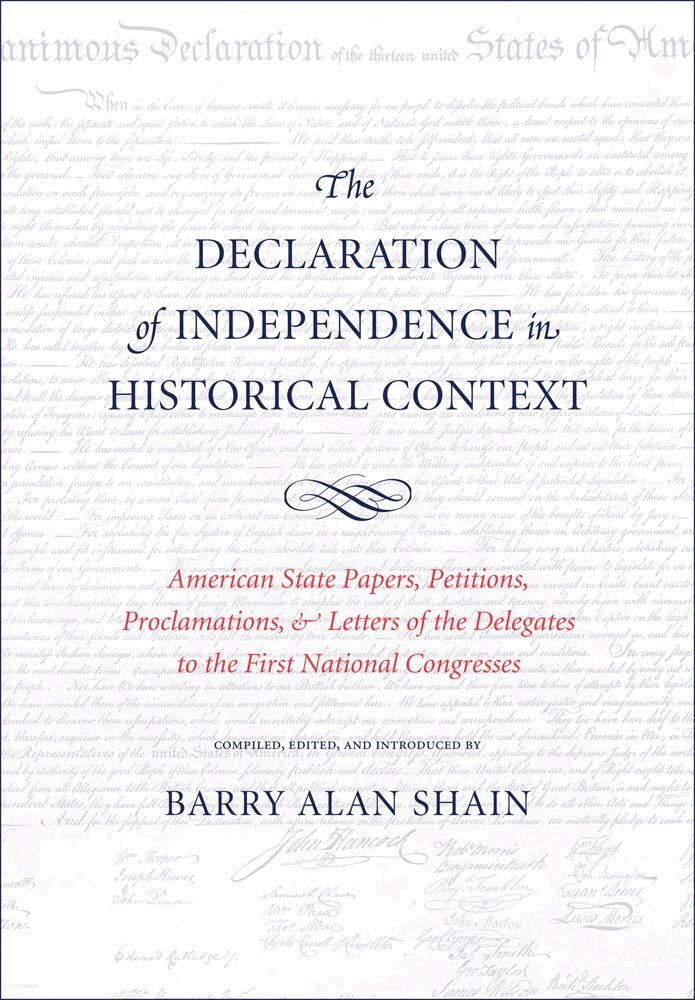
Declaration of Independence in Historical Context
American State Papers, Petitions, Proclamations, and Letters of the Delegates to the First National Congresses
Inbunden, Engelska, 2014
2 007 kr
Skickas inom 5-8 vardagar
Political science professor Barry Shain has collected 174 letters, papers, petitions, and proclamations from the years directly preceding the creation of the Declaration of Independence that challenge many of the dominant narratives that shape contemporary understanding of this all-important document. Rather than arising from strong philosophical convictions and a clearly perceived vision of the future, the Declaration, as these writings demonstrate, was more the result of chance occurrences and practical considerations, and reflective of a society less rebellion-minded and far more monarchically inclined than most Americans today have been taught to believe.
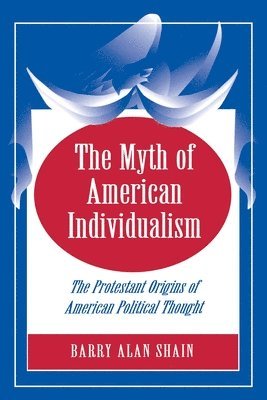
Myth of American Individualism
The Protestant Origins of American Political Thought
Häftad, Engelska, 1996
755 kr
Skickas inom 3-6 vardagar
Sharpening the debate over the values that formed America's founding political philosophy, Barry Alan Shain challenges us to reconsider what early Americans meant when they used such basic political concepts as the public good, liberty, and slavery. We have too readily assumed, he argues, that eighteenth-century Americans understood these and other terms in an individualistic manner. However, by exploring how these core elements of their political thought were employed in Revolutionary-era sermons, public documents, newspaper editorials, and political pamphlets, Shain reveals a very different understanding--one based on a reformed Protestant communalism. In this context, individual liberty was the freedom to order one's life in accord with the demanding ethical standards found in Scripture and confirmed by reason. This was in keeping with Americans' widespread acceptance of original sin and the related assumption that a well-lived life was only possible in a tightly knit, intrusive community made up of families, congregations, and local government bodies.Shain concludes that Revolutionary-era Americans defended a Protestant communal vision of human flourishing that stands in stark opposition to contemporary liberal individualism. This overlooked component of the American political inheritance, he further suggests, demands examination because it alters the historical ground upon which contemporary political alternatives often seek legitimation, and it facilitates our understanding of much of American history and of the foundational language still used in authoritative political documents.
474 kr
Skickas inom 10-15 vardagar
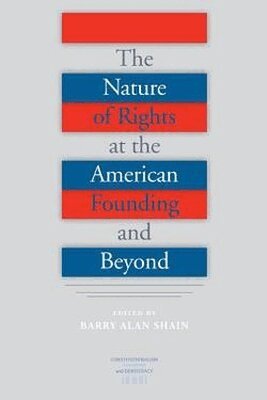
Americans have been claiming and defending rights since long before the nation achieved independence. But few Americans recognise how profoundly the nature of rights has changed over the past three hundred years. In The Nature of Rights at the American Founding and Beyond, Barry Alan Shain gathers together essays by some of the leading scholars in American constitutional law and history to examine the nature of rights claims in eighteenth-century America and how they differed, if at all, from today’s understandings. Was America at its founding predominantly individualistic or, in some important way, communal? Similarly, which understanding of rights was of greater centrality: the historical ""rights of Englishmen"" or abstract natural rights? And who enjoyed these rights, however understood? Everyone? Or only economically privileged and militarily responsible male heads of households?The contributors also consider how such concepts of rights have continued to shape and reshape the American experience of political liberty to this day. Beginning with the arresting transformation in the grounding of rights prompted by the American War of Independence, the volume moves through what the contributors describe as the ""Founders’ Bill of Rights"" to the ""second"" Bill of Rights that coincided with the Civil War, and ends with the language of rights erupting from the horrors of the Second World War and its aftermath in the Cold War. By asking what kind of nation the founding generation left us, or intended to leave us, the contributors are then able to compare that nation to the nation we have become. Most, if not all, of the essays demonstrate that the nature of rights in America has been anything but constant, and that the rights defended in the late eighteenth century stand at some distance from those celebrated today.