
Barry Eisenberg, Ph.D. – författare
Visar alla böcker från författaren Barry Eisenberg, Ph.D.. Handla med fri frakt och snabb leverans.
4 produkter
4 produkter
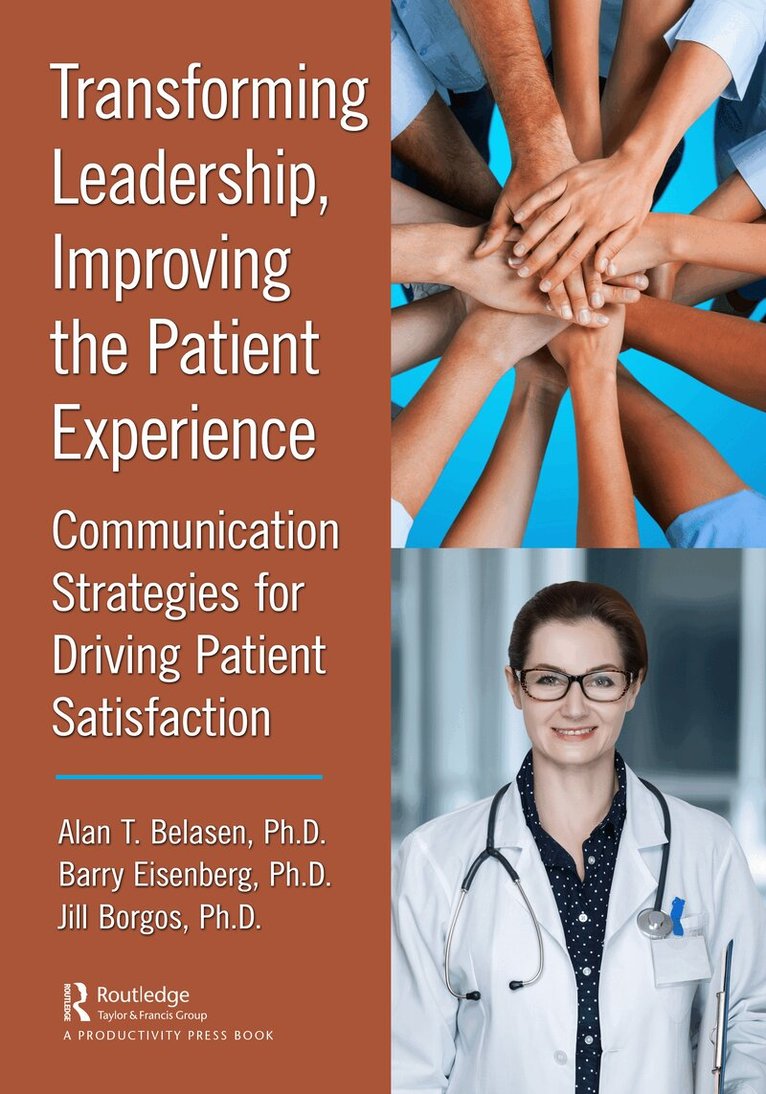
Transforming Leadership, Improving the Patient Experience
Communication Strategies for Driving Patient Satisfaction
Häftad, Engelska, 2024
665 kr
Skickas inom 10-15 vardagar
This book focuses on the patient experience as a leadership strategy. It explores the relationships between coordinated care, expert leadership, provider-patient communications, and the patient experience. When clinical and nonclinical staff collaborate effectively, healthcare teams can improve patient outcomes, prevent medical errors, improve efficiency, and increase patient satisfaction. Surprisingly, however, healthcare leaders tend to prioritize specific metrics to improve hospital performance and patient satisfaction even though patient experience and provider-patient communications are intertwined. Determining the most effective strategy for achieving higher levels of service quality and patient satisfaction can prove elusive for providers. Consider the evidence: a survey in 2012 of more than 17,000 healthcare leaders in North America, for example, found that leaders’ perceptions did not always match the data, and many hospital leaders overestimated the performance of their hospitals. Over 75% of the hospital leaders reported "quality of care" was something their hospital did well, while their patients, on average, rated them lower on perceived service quality. Ten years later, in 2022, only a few providers integrated best practices to achieve high patient satisfaction which severely impacted CMS Hospital Star Rating. This has significant effects on profit margins since patients consider the star rating differentials in their choices of hospitals and are willing to pay upward of 17% extra for treatments in 5-star hospitals, a revenue generating source of income at times when hospitals have seen falling revenues (down 4.8%) and rising labor (up 37%) from pre-COVID-19 pandemic levels. To reduce the gap between perception and reality, hospital leaders can consider the link between communication goals (e.g., responsiveness of hospital staff, pain management, communication about medicines) and outcomes (e.g., increased adherence and compliance, readmission, healthcare delivery costs, hospital overall ratings) as well as improve the patient experience. When intentions and outcomes are aligned, they create a powerful medium by which healthcare leaders can evaluate the gaps that exist between patient care measures and best practices and mitigate organizational or technological factors relevant to improving the patient experience. When the alignment is optimal, care teams develop a better sense of shared purpose, become more committed and accountable, and work together to improve the patient experience. When accomplished, patients participate more fully and actively in the exchange and are discharged with an enhanced commitment to carry out care management requirements. Key topics in this practical guide include provider-patient communications; demonstrating the value of patient-focused care; how physician and nurse executives use synergy as a strategy; engaging board members in promoting quality and safety goals and in developing hospital community partnerships; building bridges between physicians, administrators, trustees, and hospital staff; and developing a leadership pipeline.
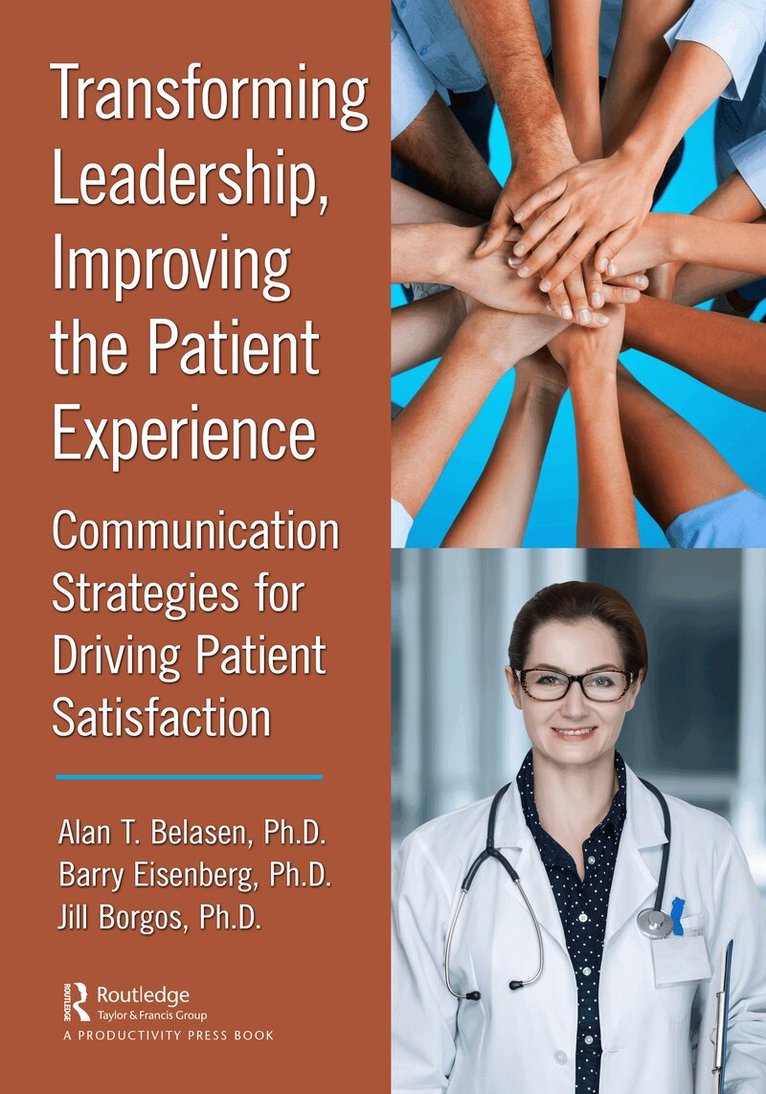
Transforming Leadership, Improving the Patient Experience
Communication Strategies for Driving Patient Satisfaction
Inbunden, Engelska, 2024
2 176 kr
Skickas inom 10-15 vardagar
This book focuses on the patient experience as a leadership strategy. It explores the relationships between coordinated care, expert leadership, provider-patient communications, and the patient experience. When clinical and nonclinical staff collaborate effectively, healthcare teams can improve patient outcomes, prevent medical errors, improve efficiency, and increase patient satisfaction. Surprisingly, however, healthcare leaders tend to prioritize specific metrics to improve hospital performance and patient satisfaction even though patient experience and provider-patient communications are intertwined. Determining the most effective strategy for achieving higher levels of service quality and patient satisfaction can prove elusive for providers. Consider the evidence: a survey in 2012 of more than 17,000 healthcare leaders in North America, for example, found that leaders’ perceptions did not always match the data, and many hospital leaders overestimated the performance of their hospitals. Over 75% of the hospital leaders reported "quality of care" was something their hospital did well, while their patients, on average, rated them lower on perceived service quality. Ten years later, in 2022, only a few providers integrated best practices to achieve high patient satisfaction which severely impacted CMS Hospital Star Rating. This has significant effects on profit margins since patients consider the star rating differentials in their choices of hospitals and are willing to pay upward of 17% extra for treatments in 5-star hospitals, a revenue generating source of income at times when hospitals have seen falling revenues (down 4.8%) and rising labor (up 37%) from pre-COVID-19 pandemic levels. To reduce the gap between perception and reality, hospital leaders can consider the link between communication goals (e.g., responsiveness of hospital staff, pain management, communication about medicines) and outcomes (e.g., increased adherence and compliance, readmission, healthcare delivery costs, hospital overall ratings) as well as improve the patient experience. When intentions and outcomes are aligned, they create a powerful medium by which healthcare leaders can evaluate the gaps that exist between patient care measures and best practices and mitigate organizational or technological factors relevant to improving the patient experience. When the alignment is optimal, care teams develop a better sense of shared purpose, become more committed and accountable, and work together to improve the patient experience. When accomplished, patients participate more fully and actively in the exchange and are discharged with an enhanced commitment to carry out care management requirements. Key topics in this practical guide include provider-patient communications; demonstrating the value of patient-focused care; how physician and nurse executives use synergy as a strategy; engaging board members in promoting quality and safety goals and in developing hospital community partnerships; building bridges between physicians, administrators, trustees, and hospital staff; and developing a leadership pipeline.
525 kr
Skickas inom 10-15 vardagar
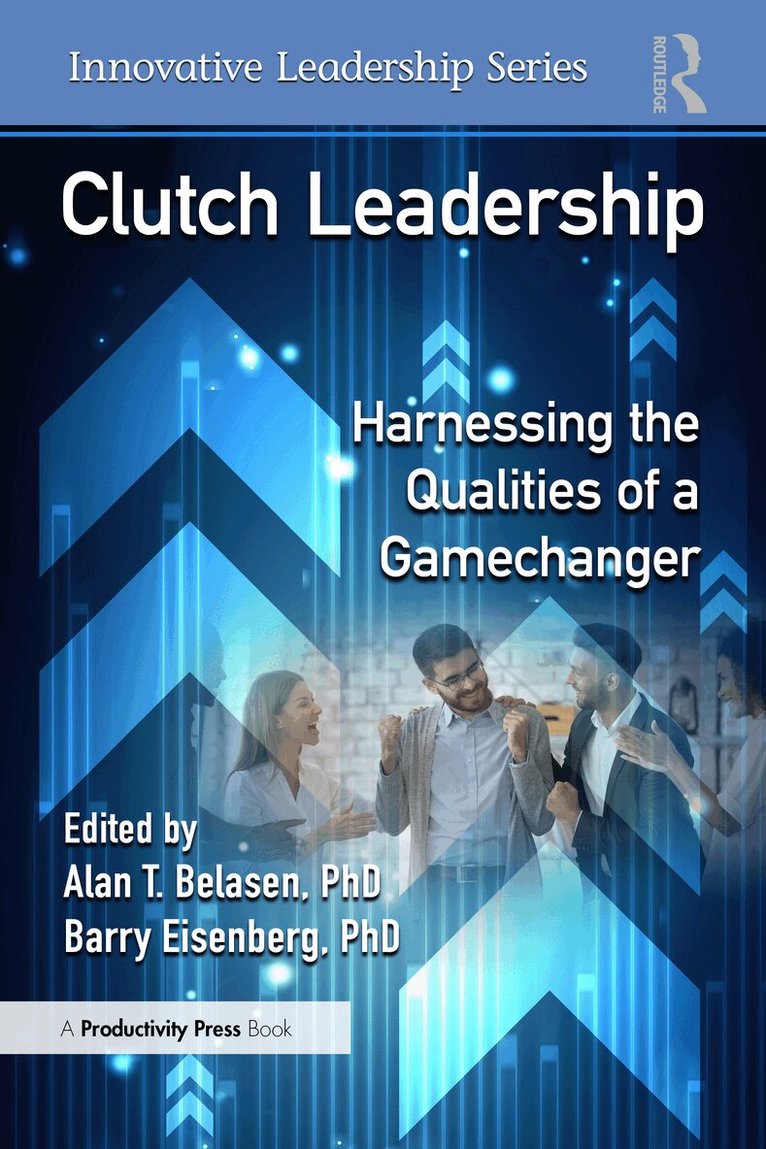
Today’s organizational leaders contend with a considerable array of potentially profound disruptive forces. Emerging information management and creation tools like AI and robotics, in conjunction with economic swings, global manufacturing shifts, and political instabilities, are creating immeasurable effects on business strategies and leadership practices. Transforming short-term challenges into long-term opportunities requires rising to the occasion, or what we call "clutch leadership." We believe that all leaders have it in them to be "clutch leaders!" Such is the thrust of this book.Clutch leaders have the skills to manage disruptions, break down silos, and align people around a compelling vision of success that represents a shift from "strategic fit" (matching resources and capabilities with opportunities) to "strategic stretch" (leveraging industry positioning to create competitive advantage). They create a productive and motivating sense of urgency and high aspiration in the organization during times of increased stakes. Clutch leaders build consensus in support of high-stakes decisions and model the way with a combination of confidence, capability, and conviction. Focusing on impact during disruptive times enables clutch leaders to harness the full potential of organizational resources beyond strategic fit, even if it requires a temporary push of skills and behaviors to extremes or taking on additional risks and opportunities (strategic stretch).What makes clutch leadership unique is the focus on "temporary imbalance" – the suspension of trade-offs between staying in the comfort zone versus playing to one’s tried and true strengths – until the gap is closed or until the new vision and reality are realigned through innovation and leverage. Clutch leaders’ distinctive ability to balance high-stress, big picture thinking with composure, agility, attention to detail, and strong logical reasoning with communication skills and empathy allows them to navigate fast-paced, challenging situations quickly and successfully.Numerous case studies are also included to illustrate innovative leadership techniques and applications.
2 036 kr
Skickas inom 10-15 vardagar
Today’s organizational leaders contend with a considerable array of potentially profound disruptive forces. Emerging information management and creation tools like AI and robotics, in conjunction with economic swings, global manufacturing shifts, and political instabilities, are creating immeasurable effects on business strategies and leadership practices. Transforming short-term challenges into long-term opportunities requires rising to the occasion, or what we call "clutch leadership." We believe that all leaders have it in them to be "clutch leaders!" Such is the thrust of this book.Clutch leaders have the skills to manage disruptions, break down silos, and align people around a compelling vision of success that represents a shift from "strategic fit" (matching resources and capabilities with opportunities) to "strategic stretch" (leveraging industry positioning to create competitive advantage). They create a productive and motivating sense of urgency and high aspiration in the organization during times of increased stakes. Clutch leaders build consensus in support of high-stakes decisions and model the way with a combination of confidence, capability, and conviction. Focusing on impact during disruptive times enables clutch leaders to harness the full potential of organizational resources beyond strategic fit, even if it requires a temporary push of skills and behaviors to extremes or taking on additional risks and opportunities (strategic stretch).What makes clutch leadership unique is the focus on "temporary imbalance" – the suspension of trade-offs between staying in the comfort zone versus playing to one’s tried and true strengths – until the gap is closed or until the new vision and reality are realigned through innovation and leverage. Clutch leaders’ distinctive ability to balance high-stress, big picture thinking with composure, agility, attention to detail, and strong logical reasoning with communication skills and empathy allows them to navigate fast-paced, challenging situations quickly and successfully.Numerous case studies are also included to illustrate innovative leadership techniques and applications.