Bartholomew H. Sparrow - Böcker
Visar alla böcker från författaren Bartholomew H. Sparrow. Handla med fri frakt och snabb leverans.
5 produkter
5 produkter
1 056 kr
Skickas inom 3-6 vardagar
From the Outside In examines the profound impact of World War II on American government. The book argues that the wartime and immediate postwar experiences of the 1940s transformed and redirected the policies and government institutions of the New Deal. In a work that makes significant contributions to the study of U.S. politics and history, Bartholomew Sparrow proposes a new model of the state and of "state-building." The author applies this model, which derives from the resource dependence perspective, to the historical record of four areas of public policy: social security, labor-management relations, public finance, and military procurement. This book is the first to use recently available archival materials documenting the consequences of World War II for the programs and political agendas of the welfare state. It is also the first to apply the resource dependency perspective to the U.S. federal government as a complex organization.The book will lead readers to reevaluate the impact of international factors on American political development, to reappraise the role of the New Deal in shaping the postwar federal government, and to reconsider the application of organizational theory to American government. From the Outside In will be of particular interest to political scientists, political sociologists, and historians. It will appeal to anyone with an interest in the comprehensive effects of the Second World War on domestic policies and U.S. government itself. Originally published in 1996. The Princeton Legacy Library uses the latest print-on-demand technology to again make available previously out-of-print books from the distinguished backlist of Princeton University Press. These editions preserve the original texts of these important books while presenting them in durable paperback and hardcover editions. The goal of the Princeton Legacy Library is to vastly increase access to the rich scholarly heritage found in the thousands of books published by Princeton University Press since its founding in 1905.
2 643 kr
Skickas inom 3-6 vardagar
From the Outside In examines the profound impact of World War II on American government. The book argues that the wartime and immediate postwar experiences of the 1940s transformed and redirected the policies and government institutions of the New Deal. In a work that makes significant contributions to the study of U.S. politics and history, Bartholomew Sparrow proposes a new model of the state and of "state-building." The author applies this model, which derives from the resource dependence perspective, to the historical record of four areas of public policy: social security, labor-management relations, public finance, and military procurement. This book is the first to use recently available archival materials documenting the consequences of World War II for the programs and political agendas of the welfare state. It is also the first to apply the resource dependency perspective to the U.S. federal government as a complex organization.The book will lead readers to reevaluate the impact of international factors on American political development, to reappraise the role of the New Deal in shaping the postwar federal government, and to reconsider the application of organizational theory to American government. From the Outside In will be of particular interest to political scientists, political sociologists, and historians. It will appeal to anyone with an interest in the comprehensive effects of the Second World War on domestic policies and U.S. government itself. Originally published in 1996. The Princeton Legacy Library uses the latest print-on-demand technology to again make available previously out-of-print books from the distinguished backlist of Princeton University Press. These editions preserve the original texts of these important books while presenting them in durable paperback and hardcover editions. The goal of the Princeton Legacy Library is to vastly increase access to the rich scholarly heritage found in the thousands of books published by Princeton University Press since its founding in 1905.
1 104 kr
Skickas inom 10-15 vardagar
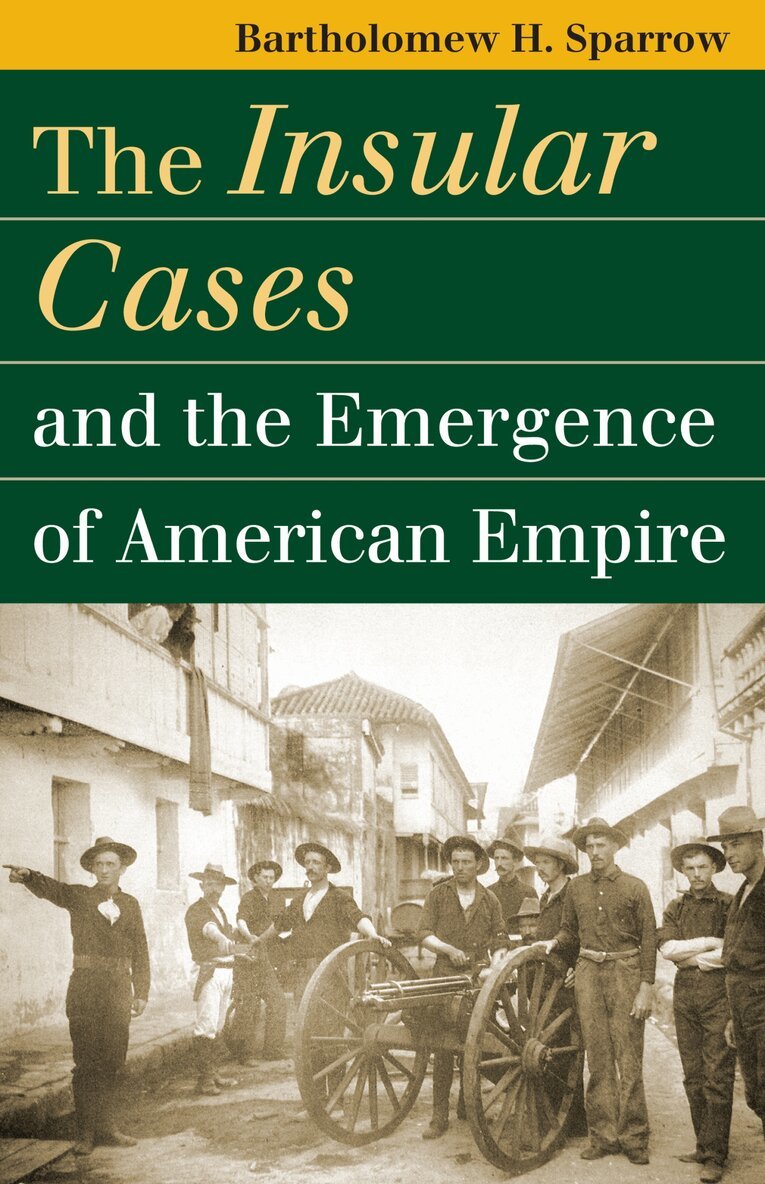
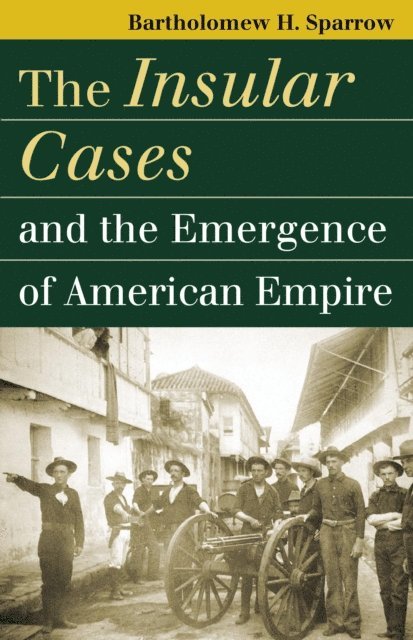
When the United States took control of Cuba, Puerto Rico, the Philippines, and Guam following the Spanish-American War, it was unclear to what degree these islands were actually part of the U.S. and, in particular, whether the Constitution applied fully, or even in part, to their citizens. By looking closely at what became known as the Insular Cases, Bartholomew Sparrow reveals how America resolved to govern these territories. Sparrow follows the Insular Cases from the controversial Downes v. Bidwell in 1901, which concerned tariffs on oranges shipped to New York from Puerto Rico and which introduced the distinction between incorporated and unincorporated territories, to Balzac v. Puerto Rico in 1922, in which the Court decided that Puerto Ricans, although officially U.S. citizens, could be denied trial by jury because Puerto Rico was ""unincorporated."" There were 35 Insular Cases in all, cases stretching across two decades, cases in which the Court ruled on matters as diverse as tariffs, double jeopardy, and the very meaning of U.S. citizenship as it applied to the inhabitants of the offshore territories. Providing a new look at the history and politics of U.S. expansion at the turn of the twentieth century, Sparrow's book also examines the effect the Court's decisions had on the creation of an American empire. It highlights crucial features surrounding the cases - the influence of racism on the justices, the need for naval stations to protect new international trade, and dramatic changes in tariff policy. It also tells how the Court sanctioned the emergence of two kinds of American empire: formal territories whose inhabitants could be U.S. citizens but still be denied full political rights, and an informal empire based on trade, cooperative foreign governments, and U.S. military bases rather than on territorial acquisitions. ""The Insular Cases and the Emergence of American Empire"" reveals how the United States handled its first major episode of globalization and how the Supreme Court, in these cases, crucially redirected the course of American history.
372 kr
Skickas inom 7-10 vardagar
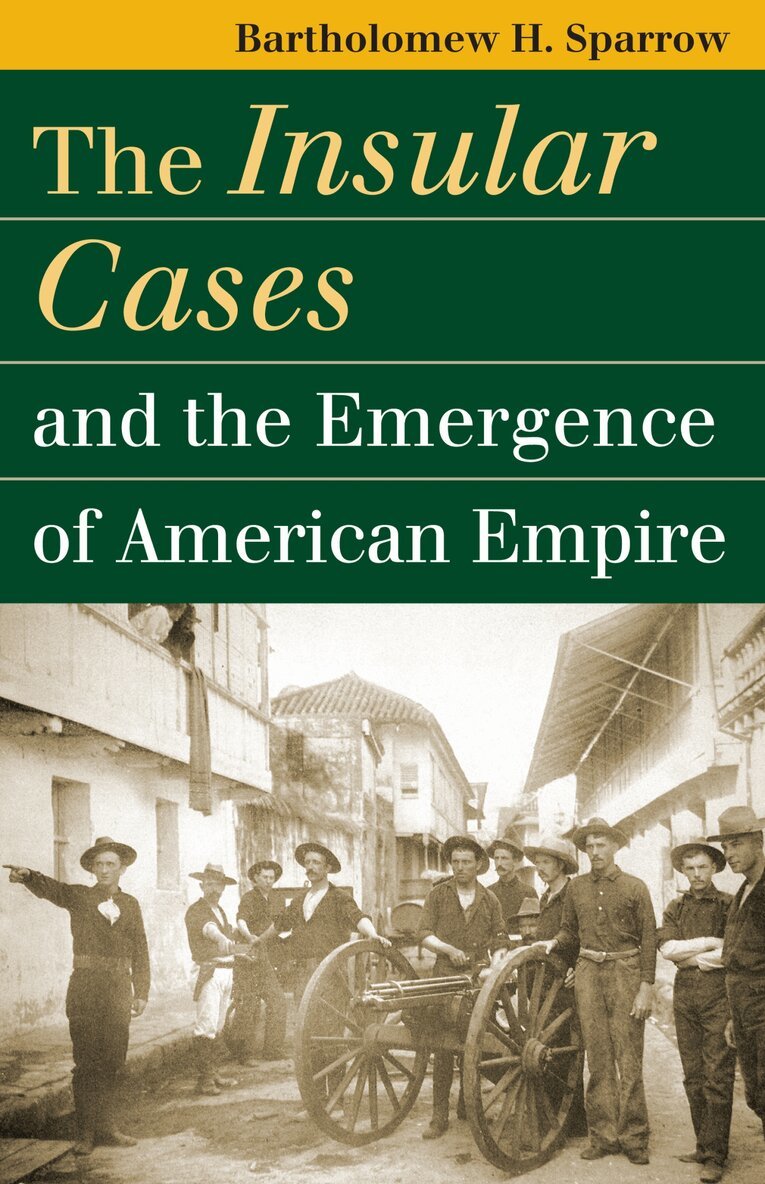
When the United States took control of Cuba, Puerto Rico, the Philippines, and Guam following the Spanish-American War, it was unclear to what degree these islands were actually part of the U.S. and, in particular, whether the Constitution applied fully, or even in part, to their citizens. By looking closely at what became known as the Insular Cases, Bartholomew Sparrow reveals how America resolved to govern these territories. Sparrow follows the Insular Cases from the controversial Downes v. Bidwell in 1901, which concerned tariffs on oranges shipped to New York from Puerto Rico and which introduced the distinction between incorporated and unincorporated territories, to Balzac v. Puerto Rico in 1922, in which the Court decided that Puerto Ricans, although officially U.S. citizens, could be denied trial by jury because Puerto Rico was ""unincorporated."" There were 35 Insular Cases in all, cases stretching across two decades, cases in which the Court ruled on matters as diverse as tariffs, double jeopardy, and the very meaning of U.S. citizenship as it applied to the inhabitants of the offshore territories. Providing a new look at the history and politics of U.S. expansion at the turn of the twentieth century, Sparrow's book also examines the effect the Court's decisions had on the creation of an American empire. It highlights crucial features surrounding the cases - the influence of racism on the justices, the need for naval stations to protect new international trade, and dramatic changes in tariff policy. It also tells how the Court sanctioned the emergence of two kinds of American empire: formal territories whose inhabitants could be U.S. citizens but still be denied full political rights, and an informal empire based on trade, cooperative foreign governments, and U.S. military bases rather than on territorial acquisitions. ""The Insular Cases and the Emergence of American Empire"" reveals how the United States handled its first major episode of globalization and how the Supreme Court, in these cases, crucially redirected the course of American history.
336 kr
Skickas inom 3-6 vardagar
The news media are often presumed to be a fourth estate, or fourth branch of government, serving as a check on the other three. In Uncertain Guardians, political scientist Bartholomew Sparrow argues that this is a mistaken notion. Instead, the media-print, radio, and television-affect policy making just as other political institutions do, whether the Congress, the electoral system, or public administration. The media decide what to report, when, and how, and these decisions affect both the processes and outcomes of the political system. But the routine production of the news demands that reporters, editors, publishers, and news executives work with the major political and economic actors of the political system in order to get the news and sell the news, and thus ensure the livelihoods of their news organizations. Because of this dependence, however, the news media are highly constrained in their reportage. Blending original interview material with his own institutional analysis, Sparrow shows how the major U.S. news organizations can act contrary to the interests of the American public and democratic government.Because individual journalists and news organizations face serious and similar uncertainties with respect to their political credibility, access to news sources, and commercial performance, they rely regularly on the same practices to report the news. But these shared practices enable both journalists and politicians to manipulate political communication, government officials to mislead the public, and advertising and other business factors to have significant influence on the news; they also cause journalists to regret the damage done to democratic government. Sparrow investigates important recent examples in foreign policy, economic policy, and health policy in which the news media were unable to serve as guardians of the public interest. He also offers proposals to revitalize the news media to better serve the American public and the cause of representative government. By providing an in-depth analysis of the news media's role in the American political system, Uncertain Guardians challenges us to re-evaluate much of what we take for granted as news consumers and to think about how to improve political communication.