B.B. Hicks - Böcker
Visar alla böcker från författaren B.B. Hicks. Handla med fri frakt och snabb leverans.
4 produkter
4 produkter
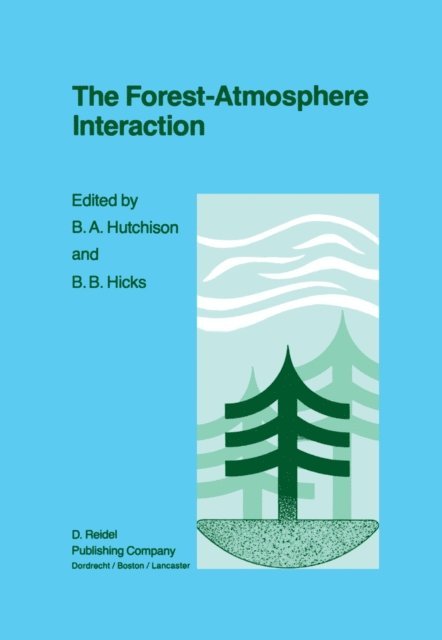
Forest-Atmosphere Interaction
Proceedings of the Forest Environmental Measurements Conference held at Oak Ridge, Tennessee, October 23–28, 1983
Inbunden, Engelska, 1985
1 578 kr
Skickas inom 10-15 vardagar
The effects of meteorological phenomena upon forest produc tivity and forestry operations have been of concern for many years. With the evolution of system-level studies of forest eco system structure and function in the International Biological Program and elsewhere, more fundamental interactions between forest ecosystems and the atmosphere received scientific atten tion but the emphasis on meteorological and climatological effects on forest processes remained. More recently, as recogni tion has developed of potential and actual problems associated with the atmospheric transport, dispersion, and deposition of airborne pollutants, the effects of forest canopies upon boundary-layer meteorological phenomena has come under scientific scrutiny. Looking to the future, with rising atmospheric con centrations of C02 and increasing competition for the finite fresh-water resources of the earth, interest in the role of forests in global C02 and water balances can also be expected to intensify. Thus, the nature of forest canopy-atmosphere interac tions, that is to say, the meteorological phenomena occurring in and above forest canopies, are of importance to a wide variety of scientific and social-issues. Demands for forest meteorological information currently exceed levels of knowledge and given the economic constraints of science in general and environmental sciences in particular, chances for major improvements in scien tific support in the near future are slim. Unfortunately, studies of environmental phenomena in and above forests are costly and logistically difficult. Trees, the ecological dominants of forest ecosystems, are the largest of all terrestrial organisms.

1 064 kr
Skickas inom 10-15 vardagar
In the micrometeorological literature, reference is sometimes made to the 'Businger-Dyer Profiles' or the 'Dyer-Businger profiles/relations' without referring to the origin of these relations. For example, in the textbook on 'Atmospheric Turbulence' by Panofsky and Dutton (1984) on p. 134, reference is made to the 'Businger-Dyer formula'. To add to the mystery, these authors refer on p. 141 to the Businger-Dyer-Pandolfo empirical result (Businger, 1966; Pandolfo, 1966) that in unstable air • Z r (1) Ri=-== ... L So it seemed to me that it would be appropriate for this issue of Boundary-Layer Meteorology which is dedicated to Arch Dyer, to go back to 1965 and describe the circumstances that led to the above mentioned profiles as I remember them. 2. Aspendale, 1965 In the academic year 1965-1966 I found myself in Australia on a sabbatical leave. The first part of this leave was spent at the CSIRO Division of Meteorological Physics in Aspendale, Victoria. It was in many ways a good choice. The fall is exchanged for spring, SE Australia is a pleasant place to be in spring and summer, and the scientists in the division were hospitable and stimulating. Priestley, Swinbank, Dyer, Webb, McIlroy, Taylor, Clarke, Deacon and several others carried out an active research program.
1 064 kr
Skickas inom 10-15 vardagar
In the micrometeorological literature, reference is sometimes made to the 'Businger-Dyer Profiles' or the 'Dyer-Businger profiles/relations' without referring to the origin of these relations.
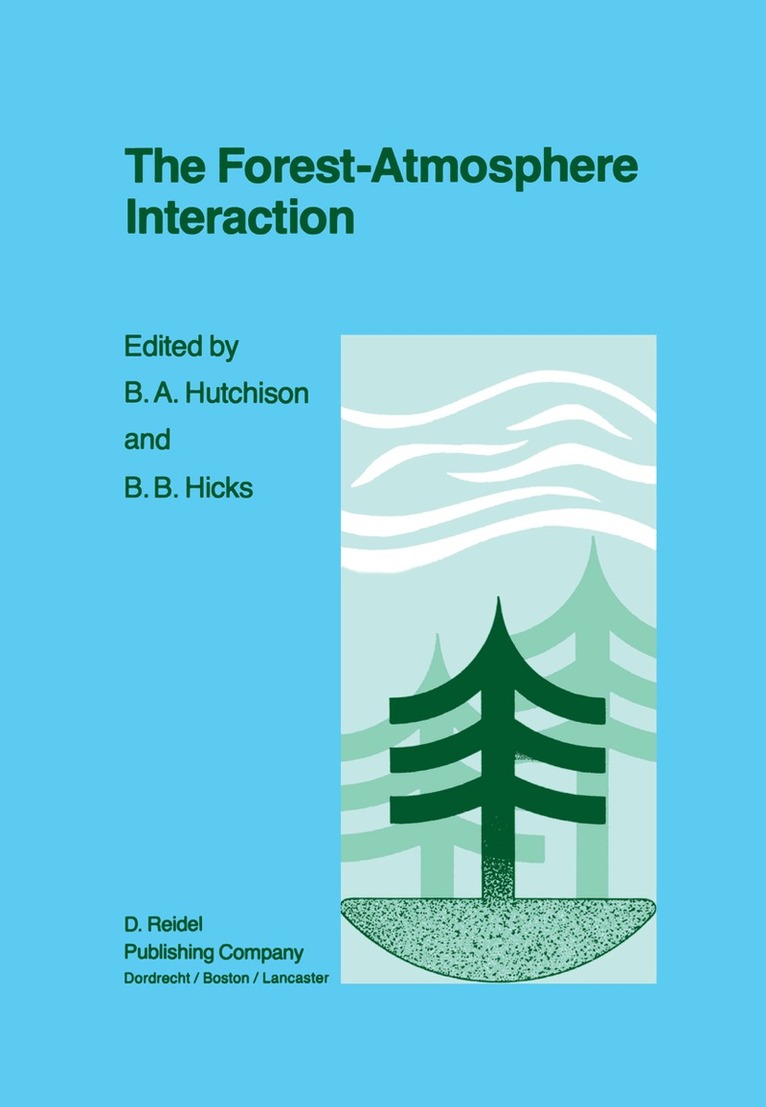
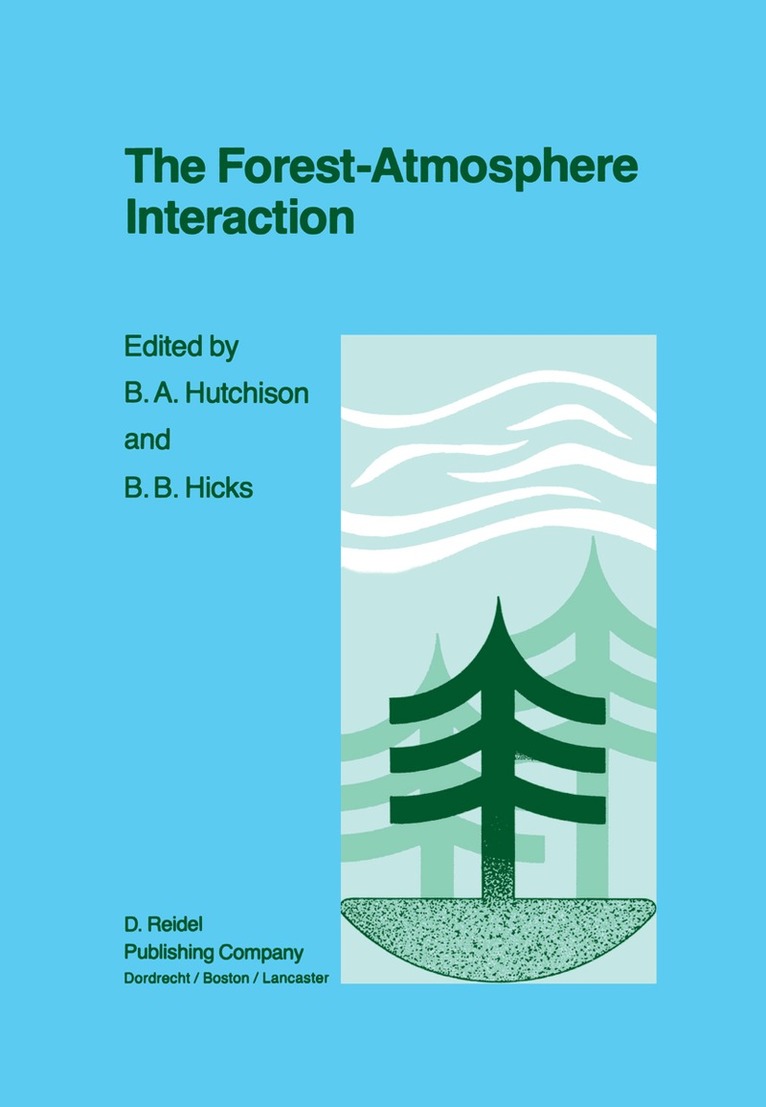
Forest-Atmosphere Interaction
Proceedings of the Forest Environmental Measurements Conference held at Oak Ridge, Tennessee, October 23–28, 1983
Häftad, Engelska, 2011
1 578 kr
Skickas inom 10-15 vardagar
The effects of meteorological phenomena upon forest produc tivity and forestry operations have been of concern for many years. With the evolution of system-level studies of forest eco system structure and function in the International Biological Program and elsewhere, more fundamental interactions between forest ecosystems and the atmosphere received scientific atten tion but the emphasis on meteorological and climatological effects on forest processes remained. More recently, as recogni tion has developed of potential and actual problems associated with the atmospheric transport, dispersion, and deposition of airborne pollutants, the effects of forest canopies upon boundary-layer meteorological phenomena has come under scientific scrutiny. Looking to the future, with rising atmospheric con centrations of C02 and increasing competition for the finite fresh-water resources of the earth, interest in the role of forests in global C02 and water balances can also be expected to intensify. Thus, the nature of forest canopy-atmosphere interac tions, that is to say, the meteorological phenomena occurring in and above forest canopies, are of importance to a wide variety of scientific and social-issues. Demands for forest meteorological information currently exceed levels of knowledge and given the economic constraints of science in general and environmental sciences in particular, chances for major improvements in scien tific support in the near future are slim. Unfortunately, studies of environmental phenomena in and above forests are costly and logistically difficult. Trees, the ecological dominants of forest ecosystems, are the largest of all terrestrial organisms.