Beatriz Pichel - Böcker
Visar alla böcker från författaren Beatriz Pichel. Handla med fri frakt och snabb leverans.
4 produkter
4 produkter
1 192 kr
Skickas inom 7-10 vardagar
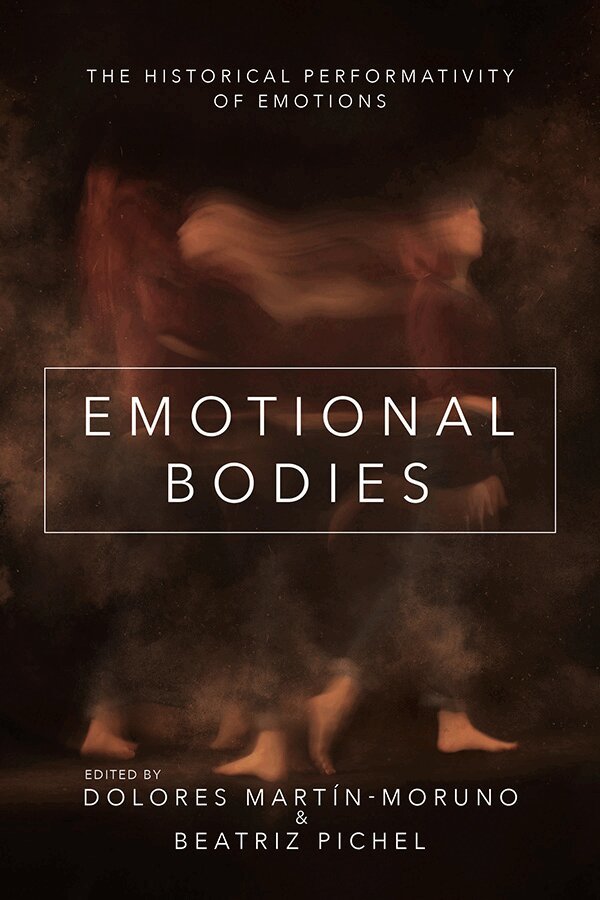
What do emotions actually do? Recent work in the history of emotions and its intersections with cultural studies and new materialism has produced groundbreaking revelations around this fundamental question. In Emotional Bodies, contributors pick up these threads of inquiry to propose a much-needed theoretical framework for further study of materiality of emotions, with an emphasis on emotions' performative nature. Drawing on diverse sources and wide-ranging theoretical approaches, they illuminate how various persons and groups-patients, criminals, medieval religious communities, revolutionary crowds, and humanitarian agencies-perform emotional practices. A section devoted to medical history examines individual bodies while a section on social and political histories studies the emergence of collective bodies. Contributors: Jon Arrizabalaga, Rob Boddice, Leticia FernÁndez-Fontecha, Emma Hutchison, Dolores MartÍn-Moruno, Piroska Nagy, Beatriz Pichel, MarÍa RosÓn, Pilar LeÓn-Sanz, Bertrand Taithe, and Gian Marco Vidor.
330 kr
Skickas inom 7-10 vardagar
What do emotions actually do? Recent work in the history of emotions and its intersections with cultural studies and new materialism has produced groundbreaking revelations around this fundamental question. In Emotional Bodies, contributors pick up these threads of inquiry to propose a much-needed theoretical framework for further study of materiality of emotions, with an emphasis on emotions' performative nature. Drawing on diverse sources and wide-ranging theoretical approaches, they illuminate how various persons and groups-patients, criminals, medieval religious communities, revolutionary crowds, and humanitarian agencies-perform emotional practices. A section devoted to medical history examines individual bodies while a section on social and political histories studies the emergence of collective bodies. Contributors: Jon Arrizabalaga, Rob Boddice, Leticia FernÁndez-Fontecha, Emma Hutchison, Dolores MartÍn-Moruno, Piroska Nagy, Beatriz Pichel, MarÍa RosÓn, Pilar LeÓn-Sanz, Bertrand Taithe, and Gian Marco Vidor.
Picturing the Western Front
Photography, Practices and Experiences in First World War France
Inbunden, Engelska, 2021
1 202 kr
Skickas inom 5-8 vardagar
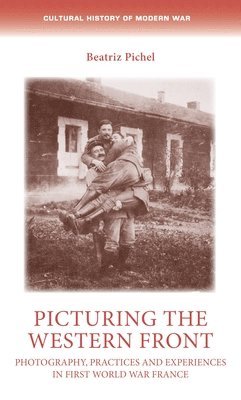
Between 1914 and 1918, military, press and amateur photographers produced thousands of pictures. Either classified in military archives specially created with this purpose in 1915, collected in personal albums or circulated in illustrated magazines, photographs were supposed to tell the story of the war. Picturing the Western Front argues that photographic practices also shaped combatants and civilians’ war experiences. Doing photography (taking pictures, posing for them, exhibiting, cataloguing and looking at them) allowed combatants and civilians to make sense of what they were living through. Photography mattered because it enabled combatants and civilians to record events, establish or reinforce bonds with one another, represent bodies, place people and events in imaginative geographies and making things visible, while making others, such as suicide, invisible. Photographic practices became, thus, frames of experience.
Picturing the Western Front
Photography, practices and experiences in First World War France
Häftad, Engelska, 2023
287 kr
Skickas
Between 1914 and 1918, military, press and amateur photographers produced thousands of pictures. Either classified in military archives specially created with this purpose in 1915, collected in personal albums or circulated in illustrated magazines, photographs were supposed to tell the story of the war. Picturing the Western Front argues that photographic practices also shaped combatants and civilians’ war experiences. Doing photography (taking pictures, posing for them, exhibiting, cataloguing and looking at them) allowed combatants and civilians to make sense of what they were living through. Photography mattered because it enabled combatants and civilians to record events, establish or reinforce bonds with one another, represent bodies, place people and events in imaginative geographies and making things visible, while making others, such as suicide, invisible. Photographic practices became, thus, frames of experience.