Benedicte Brøgger - Böcker
Visar alla böcker från författaren Benedicte Brøgger. Handla med fri frakt och snabb leverans.
3 produkter
3 produkter
2 167 kr
Skickas inom 10-15 vardagar
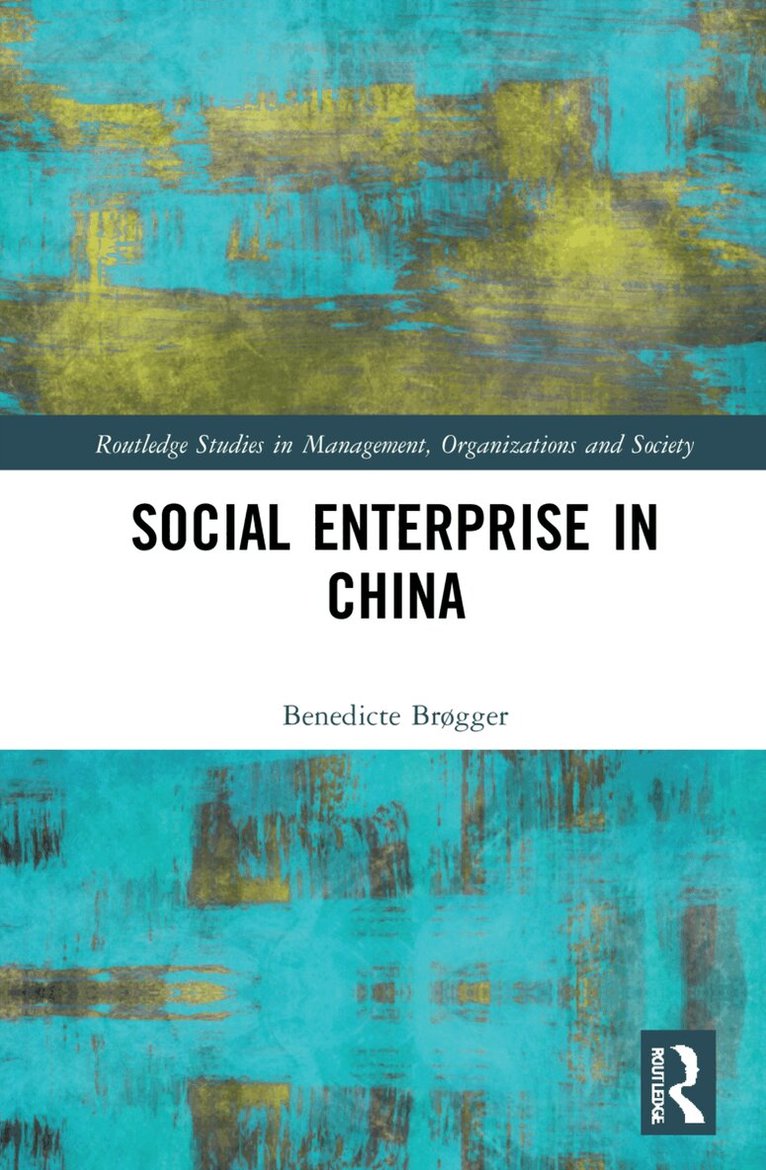
This book explores social innovation and entrepreneurship in China. Focusing on selected social enterprises and processes, it addresses the question of "why China?", not in terms of military, economic or political ambitions, but in the terms of social innovation and welfare policies. The analyses range from detailed ethnography to discussions of broad global trends. Despite vastly improved social conditions in the country, there are still unresolved issues that social enterprises address. The study elaborates on the complexities involved in their positioning between the state and their beneficiaries. Adding to the complexity is China’s dual system of circulation and the moral economy of ethnic minorities. The theoretical foundation of the study is the Durkheimian concept of the social contract. Its content is viewed as comprised of Maussian total social facts or guanxi, a similar Chinese framing, operationalised to particular socio-cultural configurations. The empirical cases document how social enterprises reposition elements in the various configurations in order to mobilise resources from their stakeholders. The book concludes that the discursive topology is altered in the process and the social contract is renewed in culturally meaningful, if paradoxical, ways.This book will be of interest to researchers, students and academics in the fields of business and social entrepreneurship, especially to those with a particular interest in the Chinese case.
634 kr
Skickas inom 10-15 vardagar
This book explores social innovation and entrepreneurship in China. Focusing on selected social enterprises and processes, it addresses the question of "why China?", not in terms of military, economic or political ambitions, but in the terms of social innovation and welfare policies. The analyses range from detailed ethnography to discussions of broad global trends. Despite vastly improved social conditions in the country, there are still unresolved issues that social enterprises address. The study elaborates on the complexities involved in their positioning between the state and their beneficiaries. Adding to the complexity is China’s dual system of circulation and the moral economy of ethnic minorities. The theoretical foundation of the study is the Durkheimian concept of the social contract. Its content is viewed as comprised of Maussian total social facts or guanxi, a similar Chinese framing, operationalised to particular socio-cultural configurations. The empirical cases document how social enterprises reposition elements in the various configurations in order to mobilise resources from their stakeholders. The book concludes that the discursive topology is altered in the process and the social contract is renewed in culturally meaningful, if paradoxical, ways.This book will be of interest to researchers, students and academics in the fields of business and social entrepreneurship, especially to those with a particular interest in the Chinese case.
Del 15 - Arbeit, Bildung und Gesellschaft / Labour, Education and Society
Turning to Practice with Action Research
Inbunden, Engelska, 2010
1 114 kr
Skickas inom 5-8 vardagar
Since the turn of the millennium, various ways of «turning to practice» have resurfaced as major concerns of organisational researchers. And once again, the call is out for relevant and actionable knowledge among management and organisational researchers. This book shows how action research and related approaches have turned to practice by developing knowledge both from practice and for practice without giving up on theoretical and methodological ambitions. Contributions from Norway, Ireland, France, and the USA are included, relating action based approaches to other more mainstream methodological and theoretical approaches. How can practical alternatives to both explanatory and interpretative approaches be developed? How can we devise methods that actually support both practical change and creation of valid knowledge? How can we include local knowledge in the research process? The authors – all organisation researchers – present different answers but are united in addressing and discussing urgent questions like these.