Benjamin Arnold – författare
Visar alla böcker från författaren Benjamin Arnold. Handla med fri frakt och snabb leverans.
8 produkter
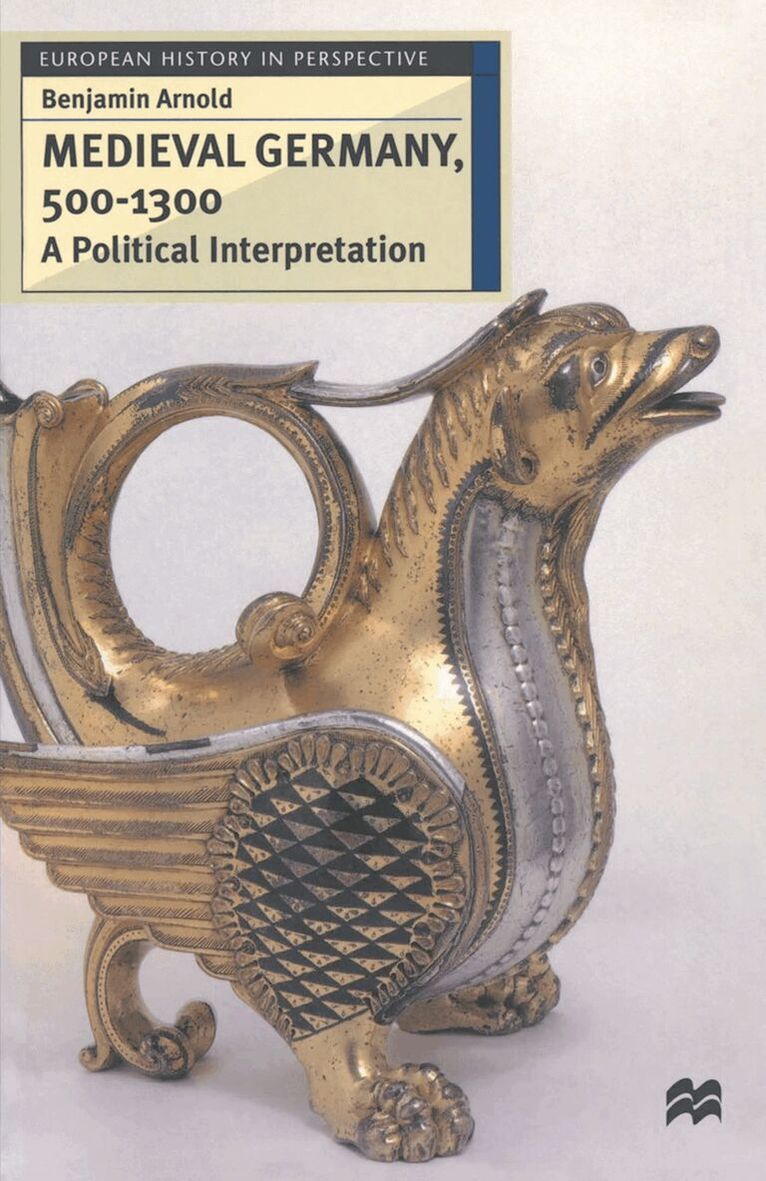
Medieval Germany, 500–1300
A Political Interpretation
Häftad, 1997
501 kr
Lägg i varukorg
Medieval Germany, 500-1300 is an interpretation of the foundation of Germany based upon the three most outstanding characteristics of the medieval polity: its division into several distinct peoples with their own customs, dialects, and economic interests from whom the later 'Germans' would be …
Power and Property in Medieval Germany
Economic and Social Change c.900-1300
Inbunden, 2004
3697 kr
Lägg i varukorg
In Power and Property in Medieval Germany Professor Arnold takes a fresh look at the problems posed by power and property in a medieval society, in this case the German kingdom. In a series of interrelated studies covering the period 700-1500, but concentrating on the tenth to thirteenth centuries, …
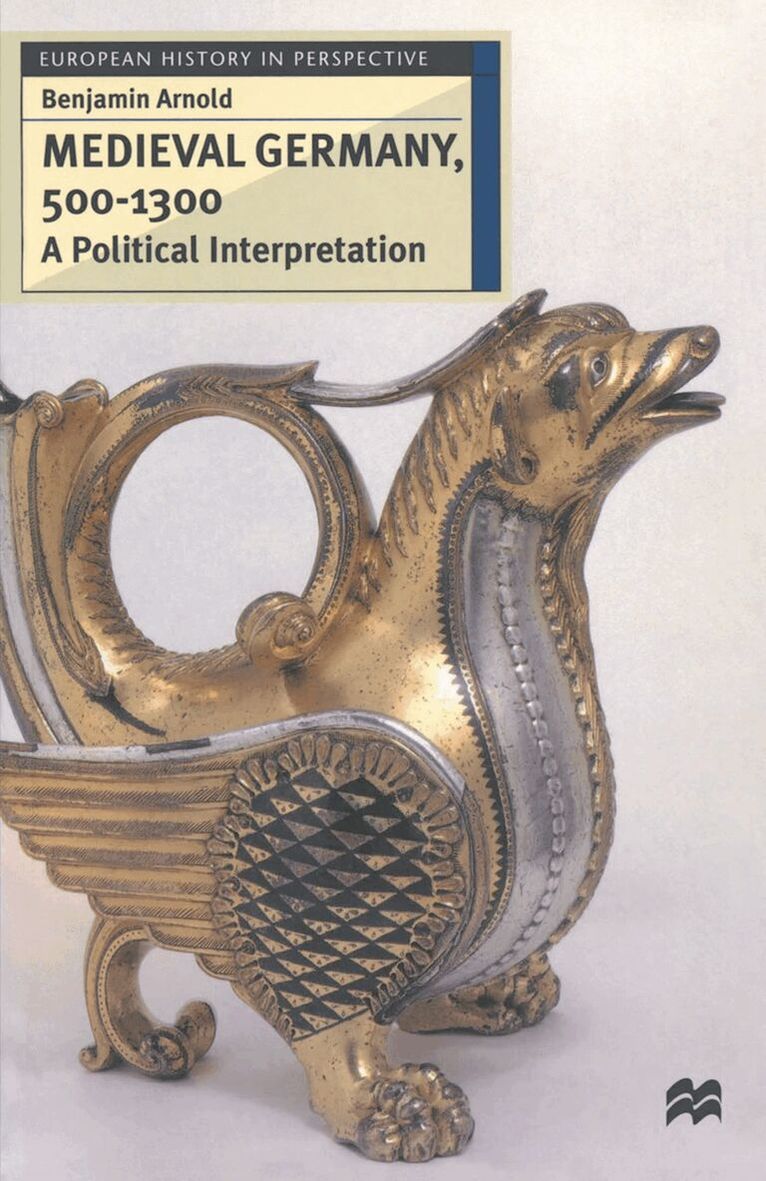
Medieval Germany, 500–1300
A Political Interpretation
Inbunden, 1997
1607 kr
Lägg i varukorg
Medieval Germany, 500-1300 is an interpretation of the foundation of Germany based upon the three most outstanding characteristics of the medieval polity: its division into several distinct peoples with their own customs, dialects, and economic interests from whom the later 'Germans' would be …
Princes and Territories in Medieval Germany
Inbunden, 1991
1610 kr
Lägg i varukorg
This book addresses the most important question in pre-modern German political history: why did a multiplicity of states and territories emerge by the end of the Middle Ages instead of an incipient 'nation state' under the crown? The answer is found not in the supposed failures of German kingship, …
Princes and Territories in Medieval Germany
Häftad, 2004
754 kr
Lägg i varukorg
This book addresses the most important question in pre-modern German political history: why did a multiplicity of states and territories emerge by the end of the Middle Ages instead of an incipient 'nation state' under the crown? The answer is found not in the supposed failures of German kingship, …
Count and Bishop in Medieval Germany
A Study of Regional Power, 11-135
Inbunden, 1991
996 kr
Lägg i varukorg
In this examination of the functions of lordship in a medieval society, Benjamin Arnold seeks answers to some of the most fundamental questions for the period of political and institutional history: How did the lords maintain control over the people, land, and resources? How was their rule …
Medieval Germany, 500–1300
A Political Interpretation
E-bok, 1997
546 kr
Lägg i varukorg
Medieval Germany, 500-1300 is an interpretation of the foundation of Germany based upon the three most outstanding characteristics of the medieval polity: its division into several distinct peoples with their own customs, dialects, and economic interests from whom the later ''Germans'' would be …
Count and Bishop in Medieval Germany
A Study of Regional Power, 11-135
E-bok, 2016
1192 kr
Lägg i varukorg
In this examination of the functions of lordship in a medieval society, Benjamin Arnold seeks answers to some of the most fundamental questions for the period of political and institutional history: How did the lords maintain control over the people, land, and resources? How was their rule …