Benjamin Baez – författare
Visar alla böcker från författaren Benjamin Baez. Handla med fri frakt och snabb leverans.
12 produkter
Affirmative Action, Hate Speech, and Tenure
Narratives About Race and Law in the Academy
Inbunden, 2001
2439 kr
Lägg i varukorg
Uniquely positioned as both a scholar and an attorney, Benjamin Baez provides a thought-provoking exploration on the current debate surrounding race and academic institutions.
Affirmative Action, Hate Speech, and Tenure
Narratives About Race and Law in the Academy
Häftad, 2001
714 kr
Lägg i varukorg
Uniquely positioned as both a scholar and an attorney, Benjamin Baez provides a thought-provoking exploration on the current debate surrounding race and academic institutions.
Affirmative Action, Hate Speech, and Tenure
Narratives About Race and Law in the Academy
E-bok, 2013
797 kr
Lägg i varukorg
Uniquely positioned as both a scholar and an attorney, Benjamin Baez provides a thought-provoking exploration on the current debate surrounding race and academic institutions.
Affirmative Action, Hate Speech, and Tenure
Narratives About Race and Law in the Academy
E-bok, 2013
797 kr
Lägg i varukorg
Uniquely positioned as both a scholar and an attorney, Benjamin Baez provides a thought-provoking exploration on the current debate surrounding race and academic institutions.
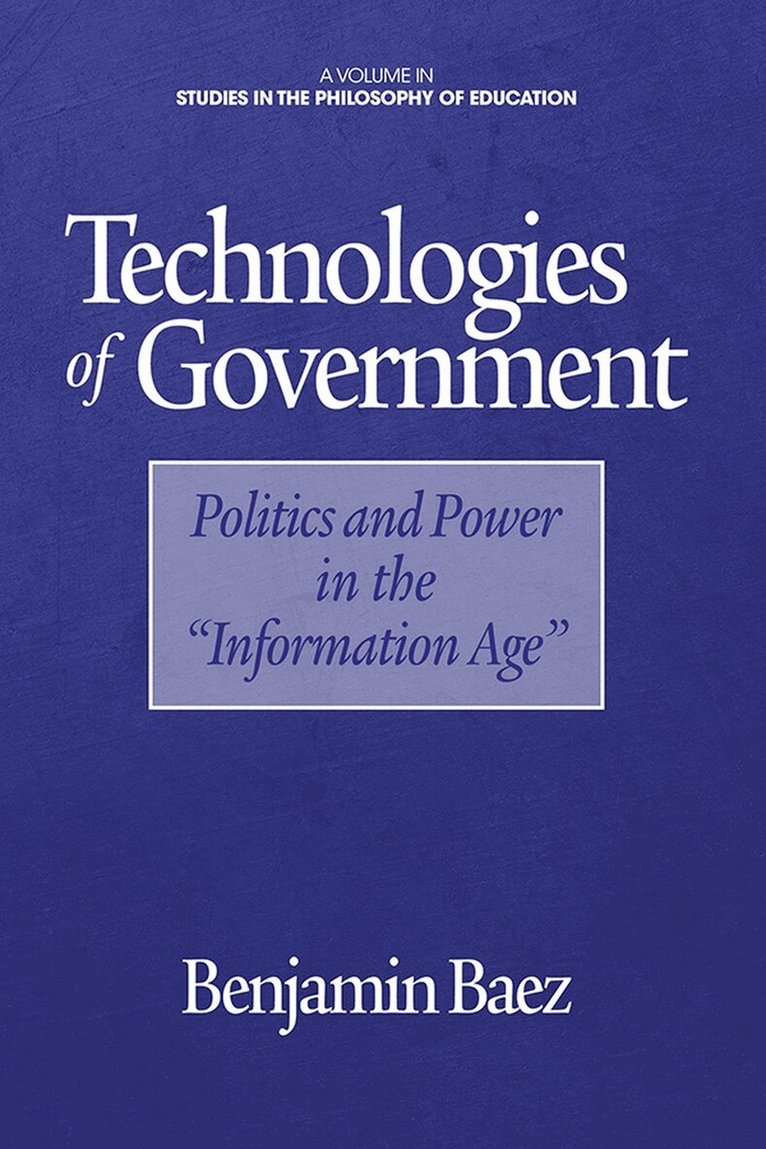
Technologies of Government
Politics and Power in the "Information Age"
Häftad, 2014
551 kr
Lägg i varukorg
In this book, Baez examines a series of governmental “technologies” that he believes strongly characterize our present. The technologies that he addresses in this book are information, statistics, databases, economy, and accountability. He offers arguments about the role these technologies play in …
Technologies of Government
Politics and Power in the "Information Age"
Inbunden, 2014
1026 kr
Lägg i varukorg
In this book, Baez examines a series of governmental “technologies” that he believes strongly characterize our present. The technologies that he addresses in this book are information, statistics, databases, economy, and accountability. He offers arguments about the role these technologies play in …
Technologies of Government
Politics and Power in the "Information Age"
E-bok, 2014
388 kr
Lägg i varukorg
In this book, Baez examines a series of governmental “technologies” that he believes strongly characterize our present. The technologies that he addresses in this book are information, statistics, databases, economy, and accountability. He offers arguments about the role these technologies play in …
Technologies of Government
Politics and Power in the "e;Information Age"e;
E-bok, 2014
594 kr
Lägg i varukorg
In this book, Baez examines a series of governmental "e;technologies"e; that he believes strongly characterize our present. The technologies that he addresses in this book are information, statistics, databases, economy, and accountability. He offers arguments about the role these …
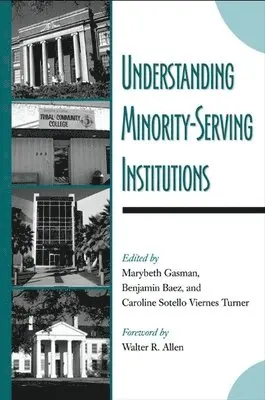
Understanding Minority-Serving Institutions
Av Marybeth Gasman, Benjamin Baez m. fl.
Inbunden, 2008
1080 kr
Tillfälligt slut
Explores the particulars of minority-serving institutions while also highlighting their interconnectedness.Understanding Minority-Serving Institutions explores these important institutions while also highlighting their interconnectedness, with the hope of sparking collaboration among the various …
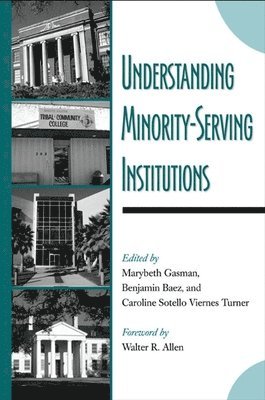
Understanding Minority-Serving Institutions
Av Marybeth Gasman, Benjamin Baez m. fl.
Häftad, 2008
411 kr
Tillfälligt slut
Explores the particulars of minority-serving institutions while also highlighting their interconnectedness.Understanding Minority-Serving Institutions explores these important institutions while also highlighting their interconnectedness, with the hope of sparking collaboration among the various …
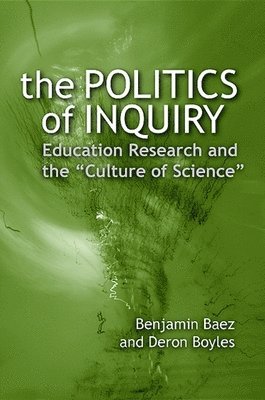
Politics of Inquiry
Education Research and the "Culture of Science"
Av Benjamin Baez, Deron Boyles
Inbunden, 2009
1080 kr
Tillfälligt slut
Argues against the "culture of science" currently dominating education discourse and in favor of a more critical understanding of various modes of inquiry.Winner of the 2010 Critics' Choice Award presented by the American Educational Studies Association2009 CHOICE Outstanding Academic Title In The …
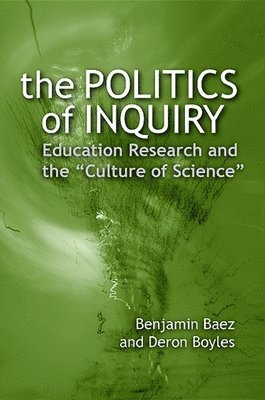
Politics of Inquiry
Education Research and the "Culture of Science"
Av Benjamin Baez, Deron Boyles
Häftad, 2010
390 kr
Tillfälligt slut
Argues against the "culture of science" currently dominating education discourse and in favor of a more critical understanding of various modes of inquiry.Winner of the 2010 Critics' Choice Award presented by the American Educational Studies Association2009 CHOICE Outstanding Academic Title In The …