Benjamin Brower - Böcker
Visar alla böcker från författaren Benjamin Brower. Handla med fri frakt och snabb leverans.
4 produkter
4 produkter
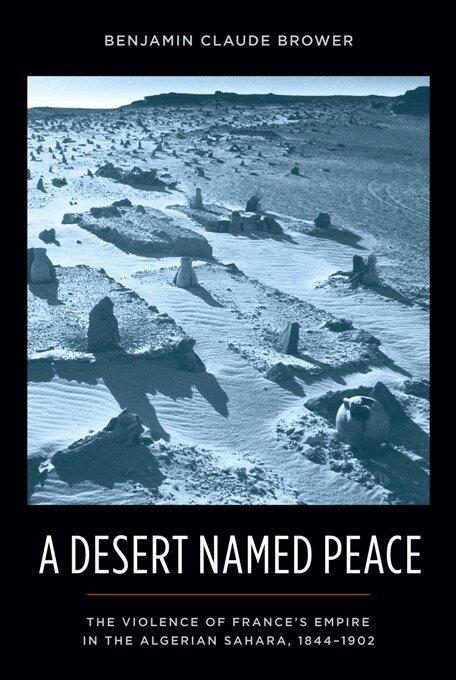
Desert Named Peace
The Violence of France's Empire in the Algerian Sahara, 1844-1902
Inbunden, Engelska, 2009
1 309 kr
Skickas inom 7-10 vardagar
In the mid-nineteenth century, French colonial leaders in Algeria started southward into the Sahara, beginning a fifty-year period of violence. Lying in the shadow of the colonization of northern Algeria, which claimed the lives of over a million people, French empire in the Sahara sought power through physical force as it had elsewhere; yet violence in the Algerian Sahara followed a more complicated logic than the old argument that it was simply a way to get empire on the cheap. A Desert Named Peace examines colonial violence through multiple stories and across several fields of research. It presents four cases: the military conquests of the French army in the oases and officers' predisposition to use extreme violence in colonial conflicts; a spontaneous nighttime attack made by Algerian pastoralists on a French village, as notable for its brutality as for its obscure causes; the violence of indigenous forms of slavery and the colonial accommodations that preserved it during the era of abolition; and the struggles of French Romantics whose debates about art and politics arrived from Paris with disastrous consequences.Benjamin Claude Brower uses these different perspectives to reveal the unexpected causes of colonial violence, such as France's troubled revolutionary past and its influence on the military's institutional culture, the aesthetics of the sublime and its impact on colonial thinking, the ecological crises suffered by Saharan pastoralists under colonial rule, and the conflicting paths to authority inherent in Algerian Sufism. Directly engaging a controversial history, A Desert Named Peace offers an important backdrop to understanding the Algerian war for independence (1954-1962) and Algeria's ongoing internal war, begun in 1992, between the government and armed groups that claim to fight for an Islamist revolution.
Desert Named Peace
The Violence of France's Empire in the Algerian Sahara, 1844-1902
Häftad, Engelska, 2011
333 kr
Skickas inom 7-10 vardagar
In the mid-nineteenth century, French colonial leaders in Algeria started southward into the Sahara, beginning a fifty-year period of violence. Lying in the shadow of the colonization of northern Algeria, which claimed the lives of over a million people, French empire in the Sahara sought power through physical force as it had elsewhere; yet violence in the Algerian Sahara followed a more complicated logic than the old argument that it was simply a way to get empire on the cheap. A Desert Named Peace examines colonial violence through multiple stories and across several fields of research. It presents four cases: the military conquests of the French army in the oases and officers' predisposition to use extreme violence in colonial conflicts; a spontaneous nighttime attack made by Algerian pastoralists on a French village, as notable for its brutality as for its obscure causes; the violence of indigenous forms of slavery and the colonial accommodations that preserved it during the era of abolition; and the struggles of French Romantics whose debates about art and politics arrived from Paris with disastrous consequences.Benjamin Claude Brower uses these different perspectives to reveal the unexpected causes of colonial violence, such as France's troubled revolutionary past and its influence on the military's institutional culture, the aesthetics of the sublime and its impact on colonial thinking, the ecological crises suffered by Saharan pastoralists under colonial rule, and the conflicting paths to authority inherent in Algerian Sufism. Directly engaging a controversial history, A Desert Named Peace offers an important backdrop to understanding the Algerian war for independence (1954-1962) and Algeria's ongoing internal war, begun in 1992, between the government and armed groups that claim to fight for an Islamist revolution.
292 kr
Skickas inom 7-10 vardagar
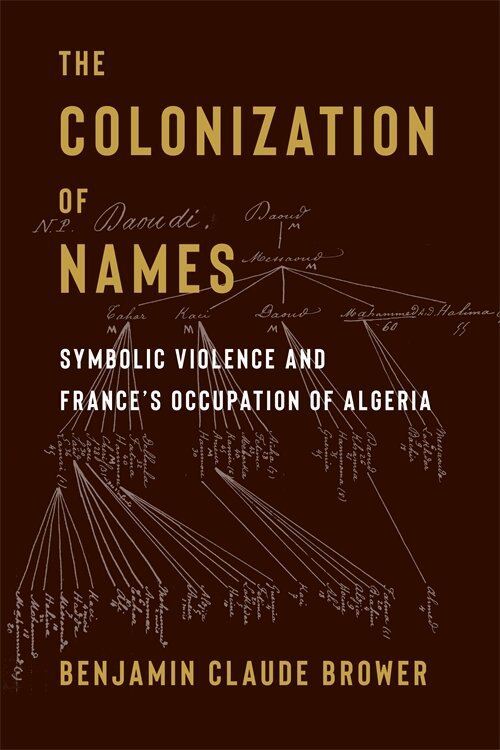
French colonization dismantled Algerian names. Under the occupation that began in 1830, not only were Algerian towns and streets renamed in honor of French figures, but personal names were forced to follow French conventions and norms. Colonial authorities simplified and transformed Algerian names to suit their administrative and legal purposes, crudely transcribing and transliterating Arabic and Berber. They imposed a two-part name and surname model that stripped away the extended family ties and social context inherent to precolonial naming practices.This groundbreaking history of personal names in nineteenth-century Algeria sheds new light on the symbolic violence of renaming and the relationship between language and colonialism. Benjamin Claude Brower traces the changes Algerians’ personal names suffered during the colonial era and the consequences for individuals and society. France’s imposition of new names, he argues, destabilized Algerians’ sense of self and place in the community, distorted local identities, and compromised institutions such as the family. Drawing on previously unstudied records, Brower examines different northwestern African naming traditions and how colonialism changed them. With the aid of literary and critical theory, he develops new insights into the name and its relationship to power and subjectivity. A rigorous theoretical and historical account of symbolic violence, The Colonization of Names unveils many unseen forms of harm under colonial rule.
The Colonization of Names
Symbolic Violence and France’s Occupation of Algeria
Inbunden, Engelska, 2025
1 147 kr
Skickas inom 7-10 vardagar
French colonization dismantled Algerian names. Under the occupation that began in 1830, not only were Algerian towns and streets renamed in honor of French figures, but personal names were forced to follow French conventions and norms. Colonial authorities simplified and transformed Algerian names to suit their administrative and legal purposes, crudely transcribing and transliterating Arabic and Berber. They imposed a two-part name and surname model that stripped away the extended family ties and social context inherent to precolonial naming practices.This groundbreaking history of personal names in nineteenth-century Algeria sheds new light on the symbolic violence of renaming and the relationship between language and colonialism. Benjamin Claude Brower traces the changes Algerians’ personal names suffered during the colonial era and the consequences for individuals and society. France’s imposition of new names, he argues, destabilized Algerians’ sense of self and place in the community, distorted local identities, and compromised institutions such as the family. Drawing on previously unstudied records, Brower examines different northwestern African naming traditions and how colonialism changed them. With the aid of literary and critical theory, he develops new insights into the name and its relationship to power and subjectivity. A rigorous theoretical and historical account of symbolic violence, The Colonization of Names unveils many unseen forms of harm under colonial rule.