Benjamin D. Crowe - Böcker
Visar alla böcker från författaren Benjamin D. Crowe. Handla med fri frakt och snabb leverans.
7 produkter
7 produkter
262 kr
Skickas inom 10-15 vardagar
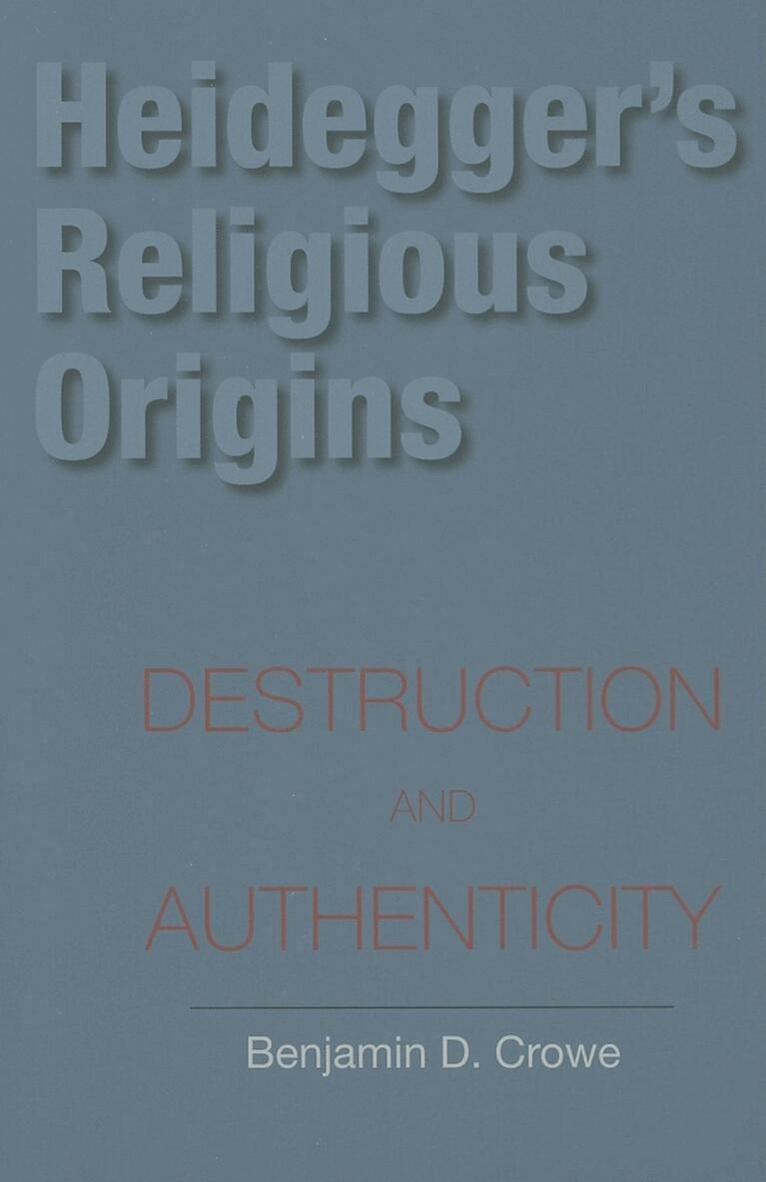
In Heidegger's Religious Origins, Benjamin D. Crowe explores the meaning and relevance of Heidegger's early theological development, especially his intellectual ties with Martin Luther. Devoting particular attention to Heidegger's philosophy of religion in the turbulent aftermath of World War I, Crowe shows Heidegger tightening his focus and searching his philosophical practice for ideas on how one cultivates an "authentic" life beyond the "destruction" of Europe. This penetrating work reveals Heidegger wrestling and coming to grips with his religious upbringing, his theological education, and his religious convictions. While developing Heidegger's notion of destruction up to the publication of Being and Time, Crowe advances a new way to think about the relationship between destruction and authenticity that confirms the continuing importance of Heidegger's early theological training.
232 kr
Skickas inom 7-10 vardagar
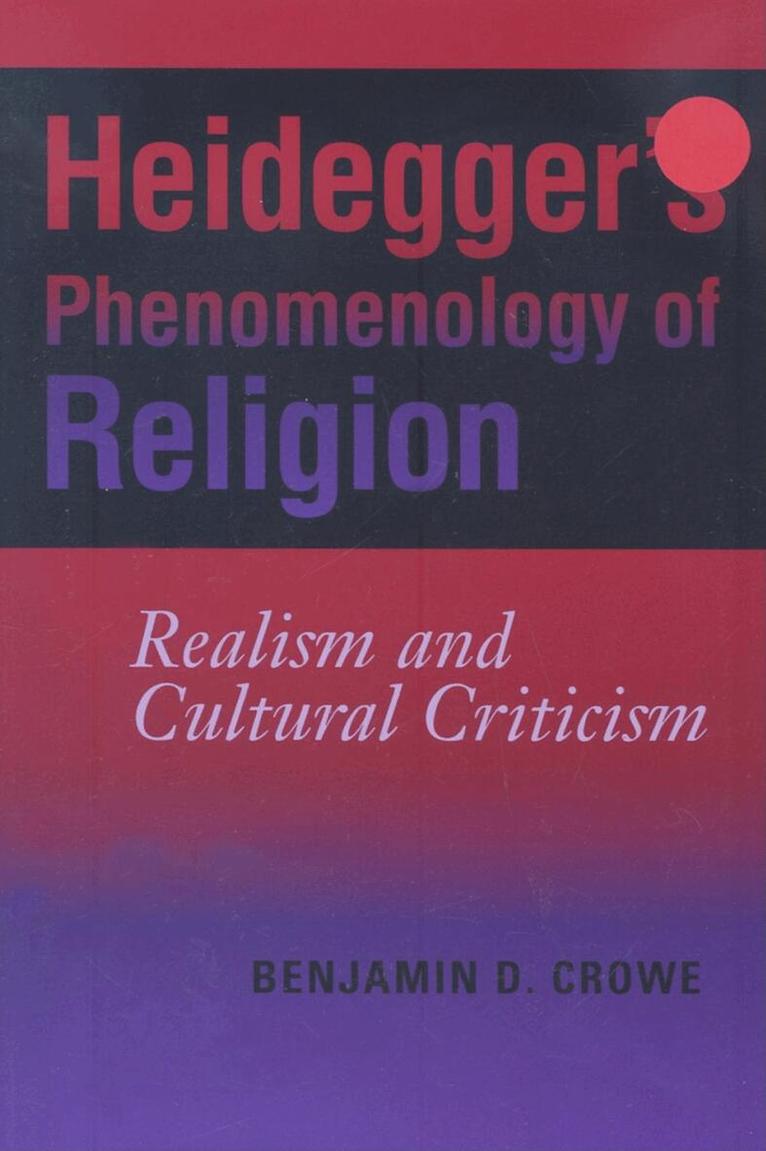
Throughout his long and controversial career, Martin Heidegger developed a substantial contribution to the phenomenology of religion. In Heidegger's Phenomenology of Religion, Benjamin D. Crowe examines the key concepts and developmental phases that characterized Heidegger's work. Crowe shows that Heidegger's account of the meaning and structure of religious life belongs to his larger project of exposing and criticizing the fundamental assumptions of late modern culture. He reveals Heidegger as a realist through careful readings of his views on religious attitudes and activities. Crowe challenges interpretations of Heidegger's early efforts in the phenomenology of religion and later writings on religion, including discussions of Greek religion and Hölderlin's poetry. This book is sure to spark discussion and debate as Heidegger's work in religion and the philosophy of religion becomes increasingly important to scholars and beyond.
753 kr
Skickas inom 7-10 vardagar
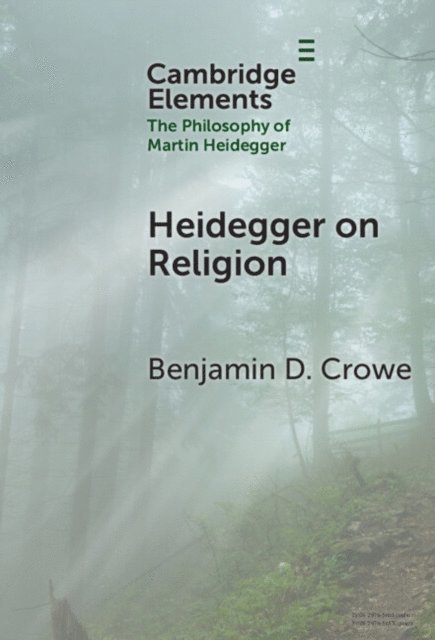
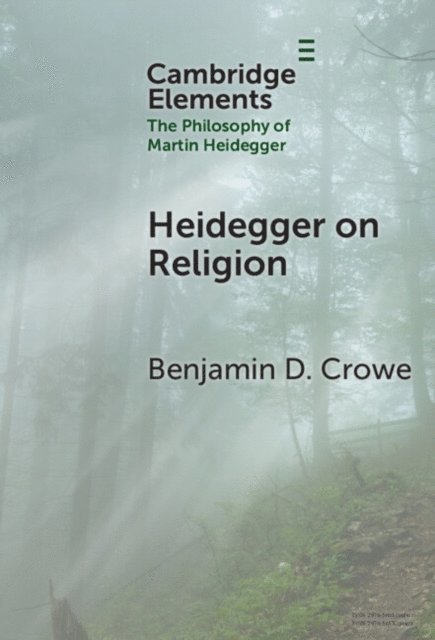
Throughout his career, Heidegger explored the religious sides of life in ways that had far-reaching impacts on the thought of his contemporaries and successors. This Element examines three important stops along Heidegger's ways of thinking about religion as the risky performance of life in new spaces of possibility. Section 1 examines Heidegger's 1920–1921 lectures on Paul, while Section 2 turns to the darker period of the late 1930s, exploring how Heidegger reconfigures religion in the context of his “new inception” of thought beyond metaphysics. Finally, Section 3 takes up Heidegger's challenging discussions of the divine in several postwar addresses and essays. In each case, Heidegger argues that we must suspend, bracket, or rescind from our tendencies to order, classify, define, and explain things in order to carry out a venture into a situation of indeterminacy and thereby recast religion in a new light.
234 kr
Skickas inom 7-10 vardagar
Throughout his career, Heidegger explored the religious sides of life in ways that had far-reaching impacts on the thought of his contemporaries and successors. This Element examines three important stops along Heidegger's ways of thinking about religion as the risky performance of life in new spaces of possibility. Section 1 examines Heidegger's 1920–1921 lectures on Paul, while Section 2 turns to the darker period of the late 1930s, exploring how Heidegger reconfigures religion in the context of his “new inception” of thought beyond metaphysics. Finally, Section 3 takes up Heidegger's challenging discussions of the divine in several postwar addresses and essays. In each case, Heidegger argues that we must suspend, bracket, or rescind from our tendencies to order, classify, define, and explain things in order to carry out a venture into a situation of indeterminacy and thereby recast religion in a new light.
353 kr
Skickas inom 11-20 vardagar
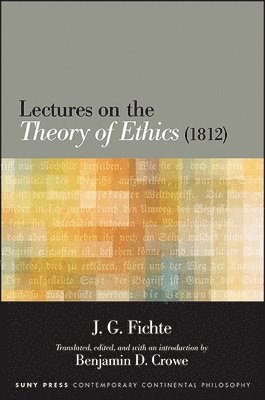
Lectures from the late period of Fichte's career, never before available in English.Translated here for the first time into English, this text furnishes a new window into the final phase of Fichte's career. Delivered in the summer of 1812 at the newly founded University of Berlin, Fichte's lectures on ethics explore some of the key concepts and issues in his evolving system of radical idealism. Addressing moral theory, the theory of education, the philosophy of history, and the philosophy of religion, Fichte engages both directly and indirectly with some of his most important contemporaries and philosophical rivals, including Kant, Schelling, and Hegel. Benjamin D. Crowe's translation includes extensive annotations and a German-English glossary. His introduction situates the text systematically, historically, and institutionally within an era of cultural ferment and intellectual experimentation, and includes a bibliography of recent scholarship on Fichte's moral theory and on the final period of his career.
608 kr
Skickas inom 3-6 vardagar
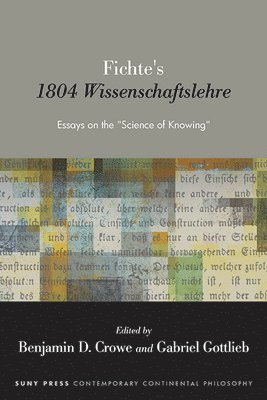
Illuminating new essays on Fichte's 1804 Wissenschaftslehre, or The Science of Knowing.Fichte's 1804 Wissenschaftslehre, or The Science of Knowing, consists of a series of lectures he delivered in his Berlin home to members of the city's political and cultural elite in 1804. The lectures mark a dramatic shift in the terminology and methodology he uses to explore the nature of knowledge and reality as presented in his philosophical system, the Wissenschaftslehre. Although not published during his lifetime, Fichte's 1804 lectures provide a systematic update to his philosophy of knowledge and being, which was only hinted at in print in popular presentations like Characteristics of the Present Age (1805) and The Way Towards the Blessed Life (1806). In fact, these lectures contain Fichte's first public articulation of his philosophical position in the wake of the professional disaster of the "atheism controversy." This volume of new essays not only offers readers novel interpretations of the lectures but also introduces and clarifies key concepts, debates the relationship of the lectures to Fichte's Jena presentation of the Wissenschaftslehre, and examines issues related to his method and system of idealism.
1 138 kr
Skickas inom 5-8 vardagar
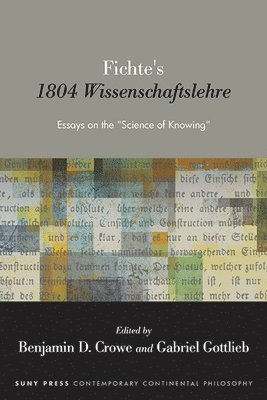
Illuminating new essays on Fichte's 1804 Wissenschaftslehre, or The Science of Knowing.Fichte's 1804 Wissenschaftslehre, or The Science of Knowing, consists of a series of lectures he delivered in his Berlin home to members of the city's political and cultural elite in 1804. The lectures mark a dramatic shift in the terminology and methodology he uses to explore the nature of knowledge and reality as presented in his philosophical system, the Wissenschaftslehre. Although not published during his lifetime, Fichte's 1804 lectures provide a systematic update to his philosophy of knowledge and being, which was only hinted at in print in popular presentations like Characteristics of the Present Age (1805) and The Way Towards the Blessed Life (1806). In fact, these lectures contain Fichte's first public articulation of his philosophical position in the wake of the professional disaster of the "atheism controversy." This volume of new essays not only offers readers novel interpretations of the lectures but also introduces and clarifies key concepts, debates the relationship of the lectures to Fichte's Jena presentation of the Wissenschaftslehre, and examines issues related to his method and system of idealism.