Benjamin Kutsyuruba - Böcker
Visar alla böcker från författaren Benjamin Kutsyuruba. Handla med fri frakt och snabb leverans.
13 produkter
13 produkter
476 kr
Skickas inom 3-6 vardagar
368 kr
Skickas inom 5-8 vardagar
646 kr
Skickas inom 7-10 vardagar
Most educators will agree that they would love to see each student and staff member in schools flourish. Furthermore, it would be great to see entire communities experience the transformative power of circumstances that feature happy and vibrant learning. However, what does it mean to experience flourishing in schools? What is the role of positive leadership in this process? What can we learn from inquiring into the positive emotional and social aspects of the work of school leaders? Building on our research on flourishing in schools, this book highlights the stories and perspectives of educators and school leaders at all levels of the school system and demonstrate the intricacies of how positive leadership contributes to well-being in schools and encourages flourishing in these schools.This book aligns with a growing shift in psychology and organizational studies to frame research using phenomena and constructs such as resilience, compassion, hope, efficacy, self-determination and meaningfulness at work and in other areas of life. Research findings from the disciplines of both positive psychology and positive organization studies bring these positive research intelligences into the field of education to study what works in school leadership practices, what goes well, what supports growth, and what brings vitality to people in school organizations. Research in positive psychology contends that attending to the strengths, positive outlooks, habits and mental models, as opposed to a deficit-oriented perspective, is beneficial to increasing subjective wellbeing, by increasing resilience, vitality, and happiness and decreasing stress, anxiety, and depression. How we imagine leading, teaching and learning in schools are implicated in these understandings and help us to contemplate the benefits of focus positive leadership in school organizations. Powerful insights into human inquiry and positive psychology are gained through qualitative study and most of the chapters of this book are grounded in such research.Importantly, chapters in this book provide a varied repertoire of answers to the question that underpins this shift in research toward a positive organizational perspective: How does positive leadership leverage what works well to instill in each community member a sense of their value and capacity to contribute, encourage wellbeing for all and create school contexts of flourishing? This edited collection provides many examples, invitations, and inspiration for readers to notice in their own contexts in ways that encourage them to shift and grow through moving toward appreciative, strengths-based, positive approaches to teaching, learning, and, especially, leading in all school contexts.
1 093 kr
Skickas inom 7-10 vardagar
Most educators will agree that they would love to see each student and staff member in schools flourish. Furthermore, it would be great to see entire communities experience the transformative power of circumstances that feature happy and vibrant learning. However, what does it mean to experience flourishing in schools? What is the role of positive leadership in this process? What can we learn from inquiring into the positive emotional and social aspects of the work of school leaders? Building on our research on flourishing in schools, this book highlights the stories and perspectives of educators and school leaders at all levels of the school system and demonstrate the intricacies of how positive leadership contributes to well-being in schools and encourages flourishing in these schools.This book aligns with a growing shift in psychology and organizational studies to frame research using phenomena and constructs such as resilience, compassion, hope, efficacy, self-determination and meaningfulness at work and in other areas of life. Research findings from the disciplines of both positive psychology and positive organization studies bring these positive research intelligences into the field of education to study what works in school leadership practices, what goes well, what supports growth, and what brings vitality to people in school organizations. Research in positive psychology contends that attending to the strengths, positive outlooks, habits and mental models, as opposed to a deficit-oriented perspective, is beneficial to increasing subjective wellbeing, by increasing resilience, vitality, and happiness and decreasing stress, anxiety, and depression. How we imagine leading, teaching and learning in schools are implicated in these understandings and help us to contemplate the benefits of focus positive leadership in school organizations. Powerful insights into human inquiry and positive psychology are gained through qualitative study and most of the chapters of this book are grounded in such research.Importantly, chapters in this book provide a varied repertoire of answers to the question that underpins this shift in research toward a positive organizational perspective: How does positive leadership leverage what works well to instill in each community member a sense of their value and capacity to contribute, encourage wellbeing for all and create school contexts of flourishing? This edited collection provides many examples, invitations, and inspiration for readers to notice in their own contexts in ways that encourage them to shift and grow through moving toward appreciative, strengths-based, positive approaches to teaching, learning, and, especially, leading in all school contexts.
633 kr
Skickas inom 7-10 vardagar
Featuring voices from academics, practitioners, school system leaders, school administrators, and graduate students from across Canada and abroad, this unique edited collection offers conceptual discussions and empirical examples of leadership for flourishing in a variety of educational contexts. This volume affirms that by fostering positive leadership, striving for well-being, and encouraging flourishing for all, significant benefits and new potentials will be felt throughout the learning communities. Grounded in theoretical approaches of positive leadership, positive psychology, and positive organizational scholarship, the accounts from K–12, post-secondary, and professional contexts explore the impacts and influences of leadership at all levels of education. Editors and chapter authors describe their research findings and first-hand experiences of supporting educators and school leaders in learning how to grow their agentic role for fostering well-being among all members of the community. The book is divided into three sections: stories of school-level flourishing, stories of personal professional flourishing, and stories of the impacts and influences of positive leadership in various educational contexts.Engaging and practical, this book encourages readers to reflect on the topics through discussion questions and to apply the learning to their own educational and organizational settings. This positively oriented volume will be invaluable for students of educational leadership, education administration, and organizational studies in education, in North America and beyond.
1 627 kr
Skickas inom 7-10 vardagar
Understanding the dynamics of trust is an imperative undertaking for educational leaders. In this book, using an ecological perspective of the lifecycle, the authors situate trust as an essential ingredient of school leaders’ moral agency and ethical decision making.Based on their 15 years of research on trust in education, the authors describe the nature and dimensions of trust, its importance and imperative, and its fragility and usefulness for school leaders, positioning them as trust brokers in school organizations. The book offers a detailed description of trust’s lifecycle stages, namely establishing, maintaining, sustaining, breaking, and restoring, as pertinent to educational settings. It discusses leaders' trust brokering in relation to social capital and psychological contract and interconnected hosting virtues of compassion, hope, and trust. The authors conclude with the role of maturing vision of moral agency, the subjective and objective responsibilities of educational leaders, and the necessary ethical commitments and courage to enact transformative practices in order to provide trustworthy leadership.With its theoretical and empirical basis, this book is an excellent resource for scholars in the fields of education, business, and leadership. It is also a valuable resource as required or supplementary reading for graduate courses in educational administration, leadership, and policy studies. Practitioners in these areas will find valuable insights that they can incorporate into their work.
1 157 kr
Skickas inom 7-10 vardagar
Mentoring for Wellbeing Across the Professions and Disciplines offers invaluable insights into how mentorship can enhance wellbeing across various fields and professional settings. By focusing on the dual aims of personal support and professional learning, this book highlights the often-overlooked positive impact of mentoring on both mentors and mentees. The authors provide practical advice and theoretical perspectives on how developmental relationships foster mutual trust and benefit all parties involved, ultimately helping mentees flourish in their roles and develop essential skills. The book delves into the connection between mentorship and wellbeing and explores how mentoring can promote mental health, build resilience, and sustain emotional, psychological, and social wellbeing in different organizational settings. Through the collection of chapters from international authors, the book examines the theory and practice of mentorship, offering a comprehensive understanding of how mentoring can enhance wellbeing in K-12 schools, higher education, business, healthcare, pastoral care, and even aviation. The chapter authors present stories and perspectives that deepen our understanding of the multifaceted benefits of mentoring. By addressing various dimensions of wellbeing—physical, social, emotional, financial, intellectual, spiritual, environmental, cultural, and occupational—this volume provides a holistic view of the positive impact of mentoring. It discusses developmental relationships, program initiatives, and strategies that foster positive organizational cultures and personal growth. Mentoring for Wellbeing Across the Professions and Disciplines is a must-read for anyone interested in the transformative power of mentoring, offering practical applications and new avenues for future research and study.
710 kr
Skickas inom 7-10 vardagar
Mentoring for Wellbeing Across the Professions and Disciplines offers invaluable insights into how mentorship can enhance wellbeing across various fields and professional settings. By focusing on the dual aims of personal support and professional learning, this book highlights the often-overlooked positive impact of mentoring on both mentors and mentees. The authors provide practical advice and theoretical perspectives on how developmental relationships foster mutual trust and benefit all parties involved, ultimately helping mentees flourish in their roles and develop essential skills. The book delves into the connection between mentorship and wellbeing and explores how mentoring can promote mental health, build resilience, and sustain emotional, psychological, and social wellbeing in different organizational settings. Through the collection of chapters from international authors, the book examines the theory and practice of mentorship, offering a comprehensive understanding of how mentoring can enhance wellbeing in K-12 schools, higher education, business, healthcare, pastoral care, and even aviation. The chapter authors present stories and perspectives that deepen our understanding of the multifaceted benefits of mentoring. By addressing various dimensions of wellbeing—physical, social, emotional, financial, intellectual, spiritual, environmental, cultural, and occupational—this volume provides a holistic view of the positive impact of mentoring. It discusses developmental relationships, program initiatives, and strategies that foster positive organizational cultures and personal growth. Mentoring for Wellbeing Across the Professions and Disciplines is a must-read for anyone interested in the transformative power of mentoring, offering practical applications and new avenues for future research and study.
Emerald Handbook of Wellbeing in Higher Education
Global Perspectives on Students, Faculty, Leaders, and Institutions
Inbunden, Engelska, 2024
1 589 kr
Skickas inom 7-10 vardagar
There has been an increased focus on the need to address the wellbeing and mental health challenges that affect humans across organizational settings, including the higher education sector.This comprehensive Handbook is organized into three sections: student wellbeing, faculty and leader wellbeing, and wellbeing initiatives at institutional or systems-level. Scholars from around the globe discuss initiatives, practices, and structures that provide a positive outlook on individual and organizational flourishing in higher learning and offer lessons from efforts to promote positive emotional and social aspects for students, leaders, and faculty. Topics include student resilience and leadership, supervisory relationships, appreciative mentoring, student thriving, issues of mental and physical health, faculty and leader wellbeing, development of wellbeing interventions and health promotion frameworks, and international student wellbeing.The interventions and experiences presented in The Emerald Handbook of Wellbeing in Higher Education are aimed at enhancing flourishing among students, faculty and staff, and across institutions. This Handbook will be helpful to higher education leaders and managers as they consider ways to promote and implement wellbeing strategies within their institutions, whilst encouraging all readers to adopt an appreciative, strengths-based, positive approach to teaching, learning, and leading in higher education contexts.
646 kr
Skickas inom 7-10 vardagar
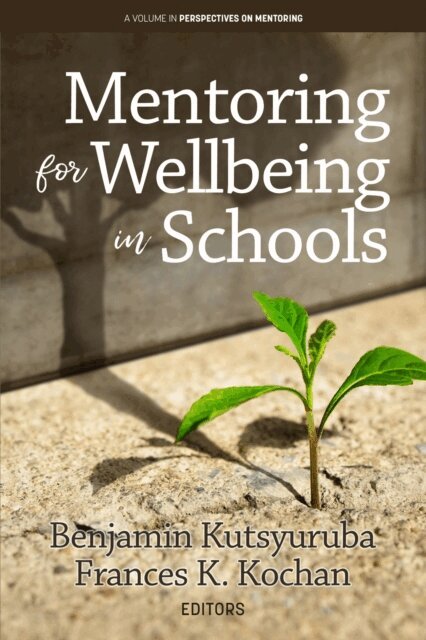
This volume of the Perspectives on Mentoring Series explores the role of mentoring in promoting wellbeing of both mentees or proteges and mentors in K-12 school settings. At its core, mentoring is about helping, advising, supporting, and guiding mentees and proteges to gain a wide variety of skills, abilities, and/or attributes. Another outcome of mentoring, less often discussed, is the positive impact it can have on the mental health and wellbeing of both the mentor and mentee. Of particular interest for this edited volume is how mentoring can promote mental health, build resilience, and develop capacity to maintain and sustain emotional, psychological, and social wellbeing for all in the K-12 school settings. The notion of wellbeing, in general, includes both hedonic aspects of feeling good (positive emotions) and eudemonic (conducive to happiness) aspects of living well that entail experiences of positive relationships, meaningfulness in life and work, senses of mastery and personal growth, autonomy, and achievement.This edited volume expands and adds to the existing literature on mentoring in schools, by offering a collection of works that examine the connection between mentorship and wellbeing. This volume includes chapters that describe effective mentoring for wellbeing, detail positive approaches to mentoring youth, offer recommendations for growing the wellbeing of pre-service teachers, early career teachers, and mid-late career teachers, illustrate approaches to growing a community of educators through mentoring and developing teacher leaders as agents of change and facilitators of wellbeing, and discuss studies and models for nurturing and promoting wellbeing among and through school leaders in national and international settings. Through these chapters, authors advocate for greater attention to how to support and nurture wellbeing as central to mentorship efforts in K-12 school settings.
1 093 kr
Skickas inom 7-10 vardagar
This volume of the Perspectives on Mentoring Series explores the role of mentoring in promoting wellbeing of both mentees or proteges and mentors in K-12 school settings. At its core, mentoring is about helping, advising, supporting, and guiding mentees and proteges to gain a wide variety of skills, abilities, and/or attributes. Another outcome of mentoring, less often discussed, is the positive impact it can have on the mental health and wellbeing of both the mentor and mentee. Of particular interest for this edited volume is how mentoring can promote mental health, build resilience, and develop capacity to maintain and sustain emotional, psychological, and social wellbeing for all in the K-12 school settings. The notion of wellbeing, in general, includes both hedonic aspects of feeling good (positive emotions) and eudemonic (conducive to happiness) aspects of living well that entail experiences of positive relationships, meaningfulness in life and work, senses of mastery and personal growth, autonomy, and achievement.This edited volume expands and adds to the existing literature on mentoring in schools, by offering a collection of works that examine the connection between mentorship and wellbeing. This volume includes chapters that describe effective mentoring for wellbeing, detail positive approaches to mentoring youth, offer recommendations for growing the wellbeing of pre-service teachers, early career teachers, and mid-late career teachers, illustrate approaches to growing a community of educators through mentoring and developing teacher leaders as agents of change and facilitators of wellbeing, and discuss studies and models for nurturing and promoting wellbeing among and through school leaders in national and international settings. Through these chapters, authors advocate for greater attention to how to support and nurture wellbeing as central to mentorship efforts in K-12 school settings.
646 kr
Skickas inom 7-10 vardagar
This volume of the Perspectives on Mentoring Series focuses on the connections between mentoring and wellbeing in organizational cultures within higher education institutions. Increasing competition, societal pressures, and the changing nature of the cultures within the United States and Canada, the countries represented in this volume’s chapters, have created complex personal, social, and institutional problems that have negatively affected the wellbeing of individuals, and subsequently institutional success. As a result, higher education institutions need to become more actively engaged in creating initiatives, programs, activities, and organizational cultures that support the wellbeing of students, faculty, staff, and administrators. The notion of wellbeing, in general, includes both hedonic aspects of feeling good (positive emotions) and eudemonic (conducive to happiness) aspects of living well that entail experiences of positive relationships, meaningfulness in life and work, senses of mastery and personal growth, autonomy, and achievement. This book proposes that one of the key avenues for fostering wellbeing in institutions of higher education is through mentoring. However, the research on the positive impact that mentoring can have on the mental health and wellbeing of both the mentor and mentee in higher education is fairly limited.This edited volume expands and adds to the existing literature on mentoring in higher education, by offering a collection of works that examine the connection between mentorship and wellbeing in relation to potential students, undergraduate and graduate students, and faculty and leaders. Of particular interest for this edited volume is how mentoring can promote mental health, build resilience, and develop capacity to maintain and sustain emotional, psychological, and social wellbeing for all in the higher education settings. Chapters in this volume describe mentoring of emerging adults and students through positive relationships, illustrate the impact of peer mentoring, mindfulness, resilience-growing, capacity building, and leadership development initiatives on undergraduate students, detail positive and effective mentoring strategies to growing wellbeing and thriving of graduate students, and discuss studies and models for nurturing and promoting wellbeing among faculty and leaders in higher education institutions. Through their chapters, authors present stories and perspectives regarding higher education endeavors or research studies to foster a greater understanding of how mentoring can enhance the wellbeing of varied constituencies in higher education. In addition, there are common themes about fostering wellbeing in higher education institutions that permeate these hapters, provide ideas for reflection, and create a body of knowledge and new avenues for future research and study.
1 093 kr
Skickas inom 7-10 vardagar
This volume of the Perspectives on Mentoring Series focuses on the connections between mentoring and wellbeing in organizational cultures within higher education institutions. Increasing competition, societal pressures, and the changing nature of the cultures within the United States and Canada, the countries represented in this volume’s chapters, have created complex personal, social, and institutional problems that have negatively affected the wellbeing of individuals, and subsequently institutional success. As a result, higher education institutions need to become more actively engaged in creating initiatives, programs, activities, and organizational cultures that support the wellbeing of students, faculty, staff, and administrators. The notion of wellbeing, in general, includes both hedonic aspects of feeling good (positive emotions) and eudemonic (conducive to happiness) aspects of living well that entail experiences of positive relationships, meaningfulness in life and work, senses of mastery and personal growth, autonomy, and achievement. This book proposes that one of the key avenues for fostering wellbeing in institutions of higher education is through mentoring. However, the research on the positive impact that mentoring can have on the mental health and wellbeing of both the mentor and mentee in higher education is fairly limited.This edited volume expands and adds to the existing literature on mentoring in higher education, by offering a collection of works that examine the connection between mentorship and wellbeing in relation to potential students, undergraduate and graduate students, and faculty and leaders. Of particular interest for this edited volume is how mentoring can promote mental health, build resilience, and develop capacity to maintain and sustain emotional, psychological, and social wellbeing for all in the higher education settings. Chapters in this volume describe mentoring of emerging adults and students through positive relationships, illustrate the impact of peer mentoring, mindfulness, resilience-growing, capacity building, and leadership development initiatives on undergraduate students, detail positive and effective mentoring strategies to growing wellbeing and thriving of graduate students, and discuss studies and models for nurturing and promoting wellbeing among faculty and leaders in higher education institutions. Through their chapters, authors present stories and perspectives regarding higher education endeavors or research studies to foster a greater understanding of how mentoring can enhance the wellbeing of varied constituencies in higher education. In addition, there are common themes about fostering wellbeing in higher education institutions that permeate these hapters, provide ideas for reflection, and create a body of knowledge and new avenues for future research and study.