727 kr
Läs direkt efter köp
727 kr
Läs direkt efter köp
1 478 kr
Läs direkt efter köp
The SAGE Handbook of Mentoring provides a scholarly, comprehensive and critical overview of mentoring theory, research and practice across the world. Internationally renowned authors map out the key historical and contemporary research, before considering modern case study examples and future directions for the field. The chapters are organised into four areas:
The Landscape of Mentoring The Practice of Mentoring The Context of Mentoring Case Studies of Mentoring Around the GlobeThis Handbook is a resource for mentoring academics, students and practitioners across a range of disciplines including business and management, education, health, psychology, counselling, and social work.
436 kr
Läs direkt efter köp
436 kr
Läs direkt efter köp
485 kr
Läs direkt efter köp
This book will examine mentoring from a global perspective in an effort to discover the commonalties and differences, not only in diverse fields of practice, but across a wide range of contextual Place your subscription or standing order today! settings. Each chapter of the book will contain an overview of the program, problems encountered and solutions to them, benefits, outcomes, impact, and thoughts for reflection and consideration. The editor will examine common themes and explore their cross cultural implications. The volume is intended for those interested in the concept of mentoring in any professional setting and culture. It will provide important insights into how to create a mentoring program, strategies for overcoming problems, and methods for assessing outcomes and impact.
684 kr
Skickas inom 5-8 vardagar
1 158 kr
Skickas inom 5-8 vardagar
485 kr
Läs direkt efter köp
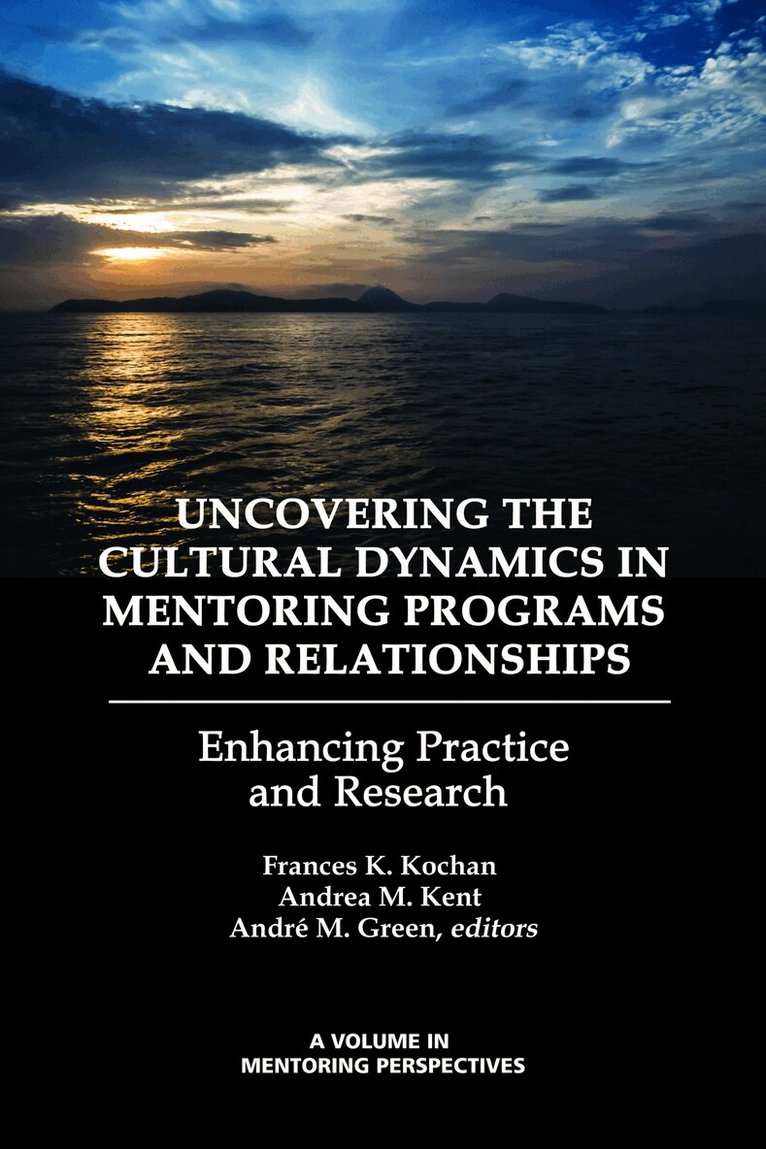
Although cultural issues have a powerful influence on the failure and success of mentoring programs and relationships, there is scant research on this area and little in the way of guidelines that practitioners can use to help assure mentoring success. This book seeks to expand our knowledge and understanding of this topic and to foster the use of this information to enhance practice and research.
The book is unique in a number of ways and will be an important resource for all those engaged in mentoring endeavors and for those conducting research in this area. First, it presents research findings on the cultural impact of mentoring at the individual relational level, at the organizational level, and within the structures of the society. Secondly, the chapters describe mentoring from an international perspective including programs from Africa, Australia, Canada, Finland, India, Ireland, Korea, Scotland, Sweden and the United States. Third, the book is research based and yet, can be easily applied to practice. Chapters provide information on lessons learned and also include reflective questions to enable the reader to delve more deeply into the constructs and findings in order to apply them to their own practice and research. This makes the book an ideal resource for training mentors and mentees, for designing mentoring programs, for teaching about mentoring, and for establishing and maintaining mentoring relationships. It also will be of value to those who are engaged in conducting research on how to create and maintain successful mentoring relationships and programs.
549 kr
Skickas inom 5-8 vardagar
1 015 kr
Skickas inom 5-8 vardagar
477 kr
Läs direkt efter köp
School partnerships have a long history in the United States. The inception of public schooling was a type of partnership with the community. The concept of local school boards and local control was integral to the establishment of schools and the idea that public education was a public good has deep roots in the country. Partnerships denote relationships which are mutually beneficial to the parties involved and which result in joint benefits for those who create and engage in them. The partnerships presented in this book provide ample evidence of the value and benefits of these arrangements.
The book contains stories and research about school partnerships from a variety of groups and perspectives, which are focused upon multiple issues within educational institutions and communities within the United States. The final chapter, presents an analysis across all the partnerships to identify the elements that fostered and hindered their success and the primary lessons learned. This analysis should provide meaningful information for those engaged in developing and operating similar partnerships or those involved in conducting research on or about them. Although the cases presented in this book occur within the United States, the findings may also have relevance for similar initiatives in other countries.
616 kr
Skickas inom 5-8 vardagar
1 091 kr
Skickas inom 5-8 vardagar
567 kr
Läs direkt efter köp
There is a large body of research that supports the reality that school leaders make a significant contribution to the success of schools and the students in them. Additionally, there is strong agreement among and between researchers and state and national educational leadership associations that educational leadership preparation and development should be created and implemented within university/school partnerships. Although institutions engage in forming university/school partnerships for varied reasons, research on the extent to which these partnerships exist; their organizational structures and processes; their implementation and effectiveness; and elements that foster and hinder their success is limited.
Perhaps more importantly, there is not a widely accepted, research-based model of such partnerships that practitioners and researchers can use to guide the development and assessment of these partnership endeavors and upon which they can conduct effective research. This book seeks to fill these gaps. It presents the purposes, processes, practices and outcomes of eleven university/school partnerships focused on school leadership preparation and/or development.
Each chapter presents an overview of the partnership, elements that fostered and hindered partnership success, and lessons learned. The book concludes with a chapter that summarizes findings across all chapters and presents a school/university partnership model that can be used by those interested in forming, improving or researching similar partnership endeavors. There are no similar resources available in the field. Thus, this book makes an important contribution to the literature and to the world of practice and research.
719 kr
Läs direkt efter köp
727 kr
Läs direkt efter köp
654 kr
Läs direkt efter köp
550 kr
Läs direkt efter köp
727 kr
Läs direkt efter köp
654 kr
Läs direkt efter köp
654 kr
Läs direkt efter köp
616 kr
Skickas inom 5-8 vardagar
1 091 kr
Skickas inom 5-8 vardagar
877 kr
Skickas inom 5-8 vardagar
1 496 kr
Skickas inom 5-8 vardagar
634 kr
Skickas inom 5-8 vardagar
1 122 kr
Skickas inom 5-8 vardagar
684 kr
Skickas inom 5-8 vardagar
1 158 kr
Skickas inom 5-8 vardagar
630 kr
Läs direkt efter köp
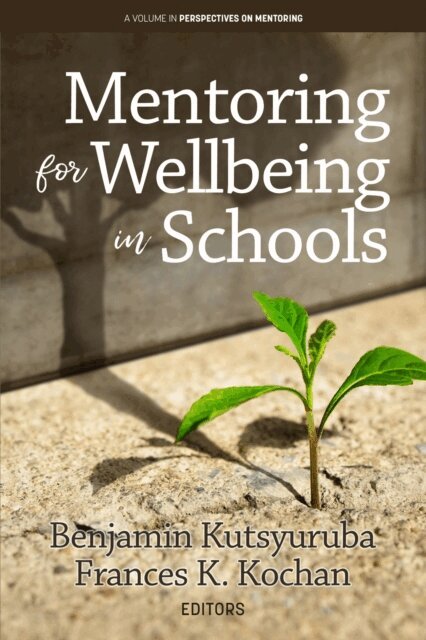
This volume of the Perspectives on Mentoring Series explores the role of mentoring in promoting wellbeing of both mentees or proteges and mentors in K-12 school settings. At its core, mentoring is about helping, advising, supporting, and guiding mentees and proteges to gain a wide variety of skills, abilities, and/or attributes. Another outcome of mentoring, less often discussed, is the positive impact it can have on the mental health and wellbeing of both the mentor and mentee. Of particular interest for this edited volume is how mentoring can promote mental health, build resilience, and develop capacity to maintain and sustain emotional, psychological, and social wellbeing for all in the K-12 school settings. The notion of wellbeing, in general, includes both hedonic aspects of feeling good (positive emotions) and eudemonic (conducive to happiness) aspects of living well that entail experiences of positive relationships, meaningfulness in life and work, senses of mastery and personal growth, autonomy, and achievement.
This edited volume expands and adds to the existing literature on mentoring in schools, by offering a collection of works that examine the connection between mentorship and wellbeing. This volume includes chapters that describe effective mentoring for wellbeing, detail positive approaches to mentoring youth, offer recommendations for growing the wellbeing of pre-service teachers, early career teachers, and mid-late career teachers, illustrate approaches to growing a community of educators through mentoring and developing teacher leaders as agents of change and facilitators of wellbeing, and discuss studies and models for nurturing and promoting wellbeing among and through school leaders in national and international settings. Through these chapters, authors advocate for greater attention to how to support and nurture wellbeing as central to mentorship efforts in K-12 school settings.