
Benjamin Morgan – författare
Visar alla böcker från författaren Benjamin Morgan. Handla med fri frakt och snabb leverans.
8 produkter
8 produkter
1 006 kr
Skickas inom 5-8 vardagar
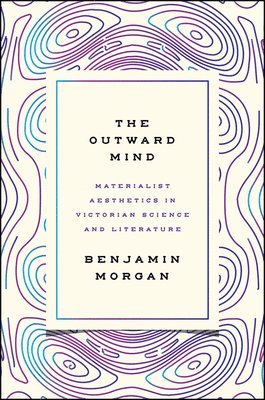
Though underexplored in contemporary scholarship, the Victorian attempts to turn aesthetics into a science remains one of the more fascinating aspects of that era. As mind and emotion were increasingly understood in terms of biology, aesthetic experience began to be thought of less as abstract judgment and more as an interaction between the nervous system and the materiality of art. In The Outward Mind, Benjamin Morgan approaches this period of innovation as an important origin point for current attempts to understand art or beauty using the tools of the sciences. Moving chronologically from natural theology in the early nineteenth century to laboratory psychology in the early twentieth, Morgan draws on little-known archives of Victorian intellectuals such as William Morris, Walter Pater, John Ruskin, and others, to argue that scientific studies of mind and emotion transformed the way that nineteenth-century writers and artists understood the experience of beauty and effectively redescribed aesthetic judgment as a biological adaptation.Looking beyond the Victorian period to humanistic critical theory today, he also shows how the historical relationship between science and aesthetics could be a vital resource for rethinking aspects of contemporary literary and cultural criticism such as materialism, empathy, practice, and form. At a moment when the tumultuous relationship between the sciences and the humanities is the subject of ongoing debate, Morgan argues for the importance of understanding the arts and sciences as being incontrovertibly intertwined.
311 kr
Skickas inom 5-8 vardagar
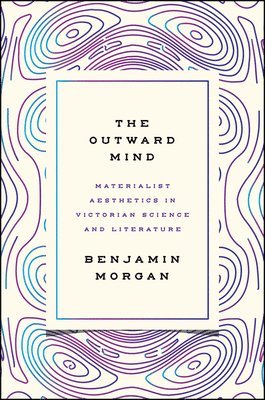
Though underexplored in contemporary scholarship, the Victorian attempts to turn aesthetics into a science remains one of the more fascinating aspects of that era. As mind and emotion were increasingly understood in terms of biology, aesthetic experience began to be thought of less as abstract judgment and more as an interaction between the nervous system and the materiality of art. In The Outward Mind, Benjamin Morgan approaches this period of innovation as an important origin point for current attempts to understand art or beauty using the tools of the sciences. Moving chronologically from natural theology in the early nineteenth century to laboratory psychology in the early twentieth, Morgan draws on little-known archives of Victorian intellectuals such as William Morris, Walter Pater, John Ruskin, and others, to argue that scientific studies of mind and emotion transformed the way that nineteenth-century writers and artists understood the experience of beauty and effectively redescribed aesthetic judgment as a biological adaptation.Looking beyond the Victorian period to humanistic critical theory today, he also shows how the historical relationship between science and aesthetics could be a vital resource for rethinking aspects of contemporary literary and cultural criticism such as materialism, empathy, practice, and form. At a moment when the tumultuous relationship between the sciences and the humanities is the subject of ongoing debate, Morgan argues for the importance of understanding the arts and sciences as being incontrovertibly intertwined.

1 442 kr
Kommande
An innovative account of how literature has helped bridge the gap between ordinary human experience and the vast scale of the natural world.Is it possible to connect our lived experience of time to the vast eons of the planet’s history? This question has perplexed writers and scientists for more than two hundred years, from Darwin’s account of natural selection through contemporary writing about climate change. Benjamin Morgan’s insightful study shows how literature of the nineteenth century helped readers leap from their everyday sense of time and space to the vast, inhuman scales of the natural world. Through writings that range from Arctic voyage narratives to Thomas Hardy’s novels, utopian fiction of the 1880s, H. G. Wells’s The Time Machine, and beyond, Morgan helps us understand scalar incommensurability in its deeper intellectual and cultural contexts. Victorians struggled to grasp senses of proportion not only through time scales but also through scales of aesthetic magnitude, of relative value, of social totality, and of the planet’s future. Morgan argues that a scale is not just a timeline; it is a way of finding order and proportion through many kinds of comparative measurement. His literary history of scale illuminates both the challenge of imagining the vastness of planetary time and the history of creating a human sense of proportion.

380 kr
Kommande
An innovative account of how literature has helped bridge the gap between ordinary human experience and the vast scale of the natural world.Is it possible to connect our lived experience of time to the vast eons of the planet’s history? This question has perplexed writers and scientists for more than two hundred years, from Darwin’s account of natural selection through contemporary writing about climate change. Benjamin Morgan’s insightful study shows how literature of the nineteenth century helped readers leap from their everyday sense of time and space to the vast, inhuman scales of the natural world. Through writings that range from Arctic voyage narratives to Thomas Hardy’s novels, utopian fiction of the 1880s, H. G. Wells’s The Time Machine, and beyond, Morgan helps us understand scalar incommensurability in its deeper intellectual and cultural contexts. Victorians struggled to grasp senses of proportion not only through time scales but also through scales of aesthetic magnitude, of relative value, of social totality, and of the planet’s future. Morgan argues that a scale is not just a timeline; it is a way of finding order and proportion through many kinds of comparative measurement. His literary history of scale illuminates both the challenge of imagining the vastness of planetary time and the history of creating a human sense of proportion.

527 kr
Skickas inom 5-8 vardagar

454 kr
Skickas inom 3-6 vardagar

Klinisches Risikomanagement auf der Basis des Critical Incident Reporting Systems
Häftad, Tyska, 2014
826 kr
Skickas inom 3-6 vardagar

Critical Incident Reporting System. Chancen und Grenzen für das klinische Risikomanagement
Häftad, Tyska, 2016
626 kr
Skickas inom 5-8 vardagar