Benjamin Reilly - Böcker
Visar alla böcker från författaren Benjamin Reilly. Handla med fri frakt och snabb leverans.
12 produkter
12 produkter
729 kr
Skickas inom 5-8 vardagar
Is there an Asia-Pacific model of democracy? Over the past two decades, more than a dozen Asian and Pacific states have made the transition to democratic rule. But many of these states are also ethnically, linguistically, and regionally diverse, creating real challenges for effective government. This book explains how the Asia-Pacific's political reformers responded to the twin challenges of democracy and diversity through ambitious and often innovative political engineering. Far-reaching reforms to electoral, parliamentary, and party systems have seen the emergence of a distinctive regional model of democracy. Benjamin Reilly analyses this new approach to the design of political institutions, and its consequences for democratic governance in the Asia-Pacific and other world regions.Oxford Studies in Democratization is a series for scholars and students of comparative politics and related disciplines. Volumes concentrate on the comparative study of the democratization process that accompanied the decline and termination of the cold war. The geographical focus of the series is primarily Latin America, the Caribbean, Southern and Eastern Europe, and relevant experiences in Africa and Asia. The series editor is Laurence Whitehead, Official Fellow, Nuffield College, University of Oxford.
744 kr
Skickas inom 7-10 vardagar
Democracy is inherently difficult in societies divided along deep ethnic cleavages. Elections in such societies will often encourage 'centrifugal' politics which reward extremist ethnic appeals, zero-sum political behaviour and ethnic conflict, and which consequently often lead to the breakdown of democracy. Reilly examines the potential of 'electoral engineering' as a mechanism of conflict management in divided societies. He focuses on the little-known experience of a number of divided societies which have used preferential, vote-pooling electoral systems - such as Papua New Guinea, Sri Lanka, Northern Ireland and Fiji. Examination of these cases shows that electoral systems which encourage bargaining between rival political actors, which promote the development of broad-based, aggregative political parties and which present campaigning politicians with incentives to attract votes from a range of ethnic groups can, under certain conditions, encourage the development of moderate, accommodatory political competition in divided societies.
428 kr
Skickas inom 7-10 vardagar
Democracy is inherently difficult in societies divided along deep ethnic cleavages. Elections in such societies will often encourage 'centrifugal' politics which reward extremist ethnic appeals, zero-sum political behaviour and ethnic conflict, and which consequently often lead to the breakdown of democracy. Reilly examines the potential of 'electoral engineering' as a mechanism of conflict management in divided societies. He focuses on the little-known experience of a number of divided societies which have used preferential, vote-pooling electoral systems - such as Papua New Guinea, Sri Lanka, Northern Ireland and Fiji. Examination of these cases shows that electoral systems which encourage bargaining between rival political actors, which promote the development of broad-based, aggregative political parties and which present campaigning politicians with incentives to attract votes from a range of ethnic groups can, under certain conditions, encourage the development of moderate, accommodatory political competition in divided societies.
884 kr
Skickas inom 10-15 vardagar
In Slavery, Agriculture, and Malaria in the Arabian Peninsula, Benjamin Reilly illuminates a previously unstudied phenomenon: the large-scale employment of people of African ancestry as slaves in agricultural oases within the Arabian Peninsula. The key to understanding this unusual system, Reilly argues, is the prevalence of malaria within Arabian Peninsula oases and drainage basins, which rendered agricultural lands in Arabia extremely unhealthy for people without genetic or acquired resistance to malarial fevers. In this way, Arabian slave agriculture had unexpected similarities to slavery as practiced in the Caribbean and Brazil.This book synthesizes for the first time a body of historical and ethnographic data about slave-based agriculture in the Arabian Peninsula. Reilly uses an innovative methodology to analyze the limited historical record and a multidisciplinary approach to complicate our understandings of the nature of work in an area that is popularly thought of solely as desert. This work makes significant contributions both to the global literature on slavery and to the environmental history of the Middle East—an area that has thus far received little attention from scholars.
350 kr
Skickas inom 10-15 vardagar
In Slavery, Agriculture, and Malaria in the Arabian Peninsula, Benjamin Reilly illuminates a previously unstudied phenomenon: the large-scale employment of people of African ancestry as slaves in agricultural oases within the Arabian Peninsula. The key to understanding this unusual system, Reilly argues, is the prevalence of malaria within Arabian Peninsula oases and drainage basins, which rendered agricultural lands in Arabia extremely unhealthy for people without genetic or acquired resistance to malarial fevers. In this way, Arabian slave agriculture had unexpected similarities to slavery as practiced in the Caribbean and Brazil.This book synthesizes for the first time a body of historical and ethnographic data about slave-based agriculture in the Arabian Peninsula. Reilly uses an innovative methodology to analyze the limited historical record and a multidisciplinary approach to complicate our understandings of the nature of work in an area that is popularly thought of solely as desert. This work makes significant contributions both to the global literature on slavery and to the environmental history of the Middle East—an area that has thus far received little attention from scholars.
564 kr
Skickas inom 10-15 vardagar
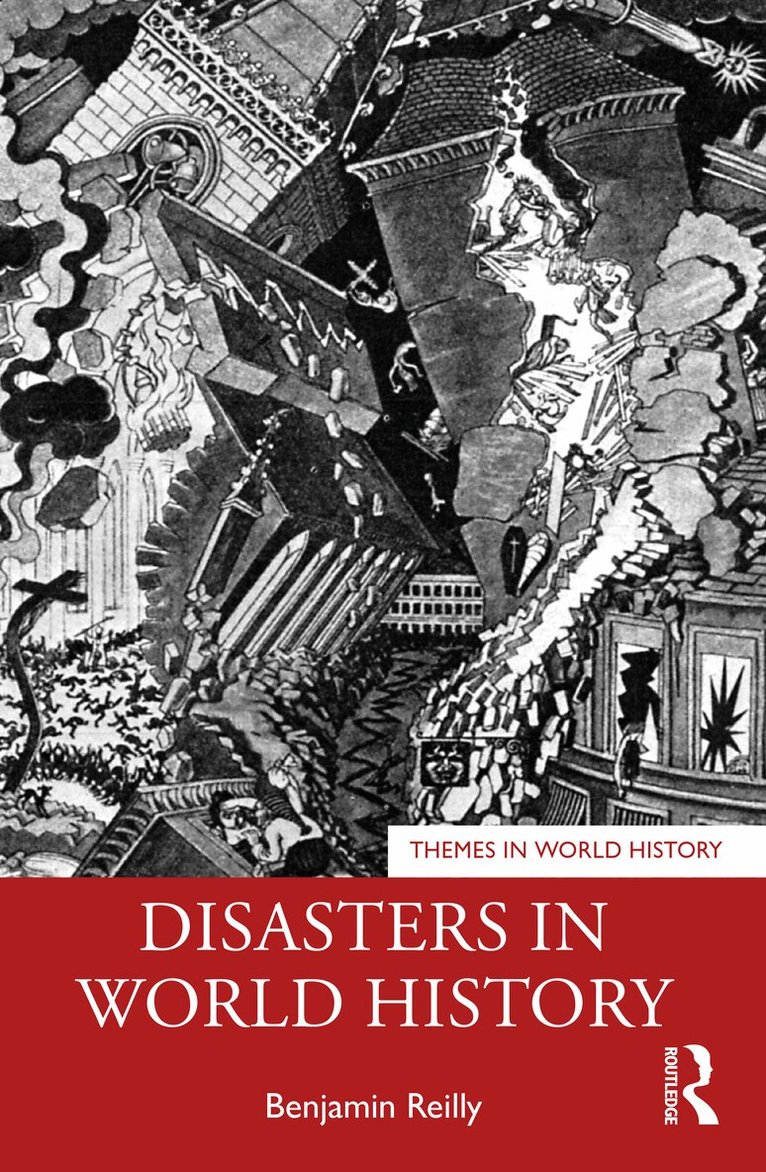
Disasters in World History surveys the development of disaster studies as a discipline as well as presenting historical case studies and theories used by historians to understand disasters. Disasters, here defined as the complex interaction between natural hazards and specific human vulnerabilities, have frequently left a mark on human history. Cataclysms have toppled dynasties, fueled massacres, and shaped the culture of societies frequently affected by natural hazards. This volume fosters understanding of such events by considering both social science theory and the natural science concepts relevant to disaster studies. In addition, the text makes heavy use of an emerging psychological theory relevant to disaster studies: the behavioral immune system, which helps to explain why xenophobic behavior and even violence often erupt in the aftermath of disasters. Chapters consider specific examples of disasters: earthquakes, tsunamis, volcanic eruptions, climate change (including modern anthropogenic climate change or global warming), and tropical cyclones.This book is an accessible resource, ideal for undergraduates and instructors in world history, environmental history, and disaster studies courses.
2 166 kr
Skickas inom 10-15 vardagar
Disasters in World History surveys the development of disaster studies as a discipline as well as presenting historical case studies and theories used by historians to understand disasters. Disasters, here defined as the complex interaction between natural hazards and specific human vulnerabilities, have frequently left a mark on human history. Cataclysms have toppled dynasties, fueled massacres, and shaped the culture of societies frequently affected by natural hazards. This volume fosters understanding of such events by considering both social science theory and the natural science concepts relevant to disaster studies. In addition, the text makes heavy use of an emerging psychological theory relevant to disaster studies: the behavioral immune system, which helps to explain why xenophobic behavior and even violence often erupt in the aftermath of disasters. Chapters consider specific examples of disasters: earthquakes, tsunamis, volcanic eruptions, climate change (including modern anthropogenic climate change or global warming), and tropical cyclones.This book is an accessible resource, ideal for undergraduates and instructors in world history, environmental history, and disaster studies courses.
592 kr
Skickas inom 10-15 vardagar
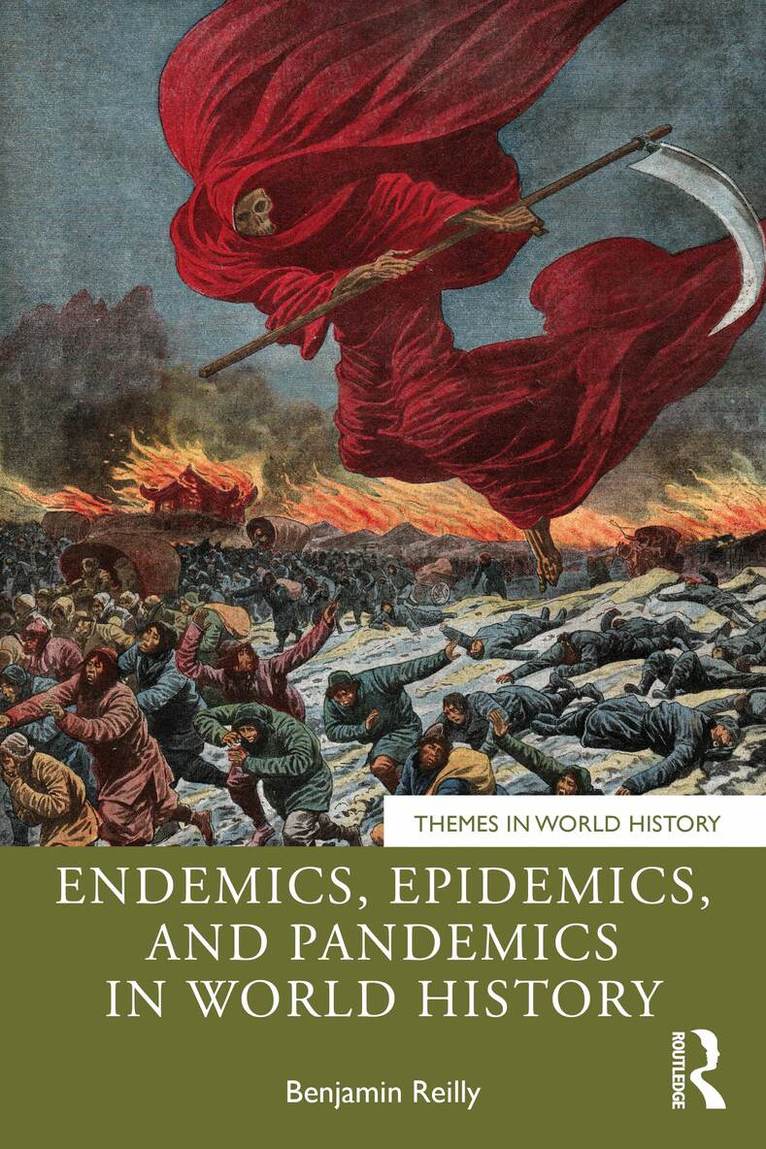
Epidemics, Endemics, and Pandemics in World History provides a comprehensive account of human interactions with diseases from the stone age to COVID-19. It takes a thematic approach, exploring the two-way relationship between pathogens and human development throughout history.This book argues that changing patterns of human activity, including the adoption of agriculture, warfare, long-distance exchange and globalization, industrialization, and imperialism created new opportunities for the proliferation of pathogens. It shows how disease threats in prehistory drove the evolution of the behavioral immune system and inspired human populations to develop disease “constructs” of culturally specific beliefs for defining, explaining, and combating dangerous diseases. The volume also explores how endemic diseases contribute to impoverishment and how poverty can be an exacerbating factor for infectious disease.With suggested readings and discussion questions, this book is a valuable tool for all students interested in the history of disease across the world including those in global health.
2 166 kr
Skickas inom 10-15 vardagar
Epidemics, Endemics, and Pandemics in World History provides a comprehensive account of human interactions with diseases from the stone age to COVID-19. It takes a thematic approach, exploring the two-way relationship between pathogens and human development throughout history.This book argues that changing patterns of human activity, including the adoption of agriculture, warfare, long-distance exchange and globalization, industrialization, and imperialism created new opportunities for the proliferation of pathogens. It shows how disease threats in prehistory drove the evolution of the behavioral immune system and inspired human populations to develop disease “constructs” of culturally specific beliefs for defining, explaining, and combating dangerous diseases. The volume also explores how endemic diseases contribute to impoverishment and how poverty can be an exacerbating factor for infectious disease.With suggested readings and discussion questions, this book is a valuable tool for all students interested in the history of disease across the world including those in global health.
478 kr
Skickas inom 5-8 vardagar
During the last 1500 years, Rome was the inspiration of artists, the coronation stage of German emperors, the distant desire of pilgrims, and the seat of the Roman popes. Yet Rome also lies within the northern range of P. falciparum malaria, the deadliest strain of the disease, against which northern Europeans had no intrinsic or acquired defenses. As a result, Rome lured a countless number of unacclimated transalpine Europeans to their deaths in the period from 500 to 1850 AD. This book examines how Rome's allure to European visitors and its resident malaria species impacted the historical development of Europe. It covers the environmental and biological factors at play and focuses on two of the periods when malaria potentially had the greatest impact on the continent: the heyday of the medieval German Empire and its conflicts with the papacy (c. 800-1300) and the Protestant Reformation (c.1500). Through explorations into the history of religion, empire, disease, and culture, this book tells the story of how the veritable capital of the world became the graveyard of nations.
Disaster and Human History
Case Studies in Nature, Society and Catastrophe, 2d ed.
Häftad, Engelska, 2022
478 kr
Skickas inom 5-8 vardagar
Human history is periodically punctuated by natural disasters, from Vesuvius' eruption to the modern-day Covid-19 pandemic. Volcanoes have buried entire cities, earthquakes have reduced structures to smoldering ruins. Floods and cyclones have wreaked havoc on river valleys and coastlines, and desertification and climate change have weakened society's underpinnings. Death tolls are often escalated by starvation and illness, which frequently occur in tandem.This second edition assesses natural disasters on human society and the effect of strategies developed to reduce their impact. This book addresses the interconnectivity of disaster and human responsibility through 23 updated case studies, including a new chapter on the 2011 Tōhoku tsunami and the ensuing Fukushima nuclear disaster.
254 kr
Skickas inom 5-8 vardagar