Benjamin T. Smith – författare
Visar alla böcker från författaren Benjamin T. Smith. Handla med fri frakt och snabb leverans.
22 produkter
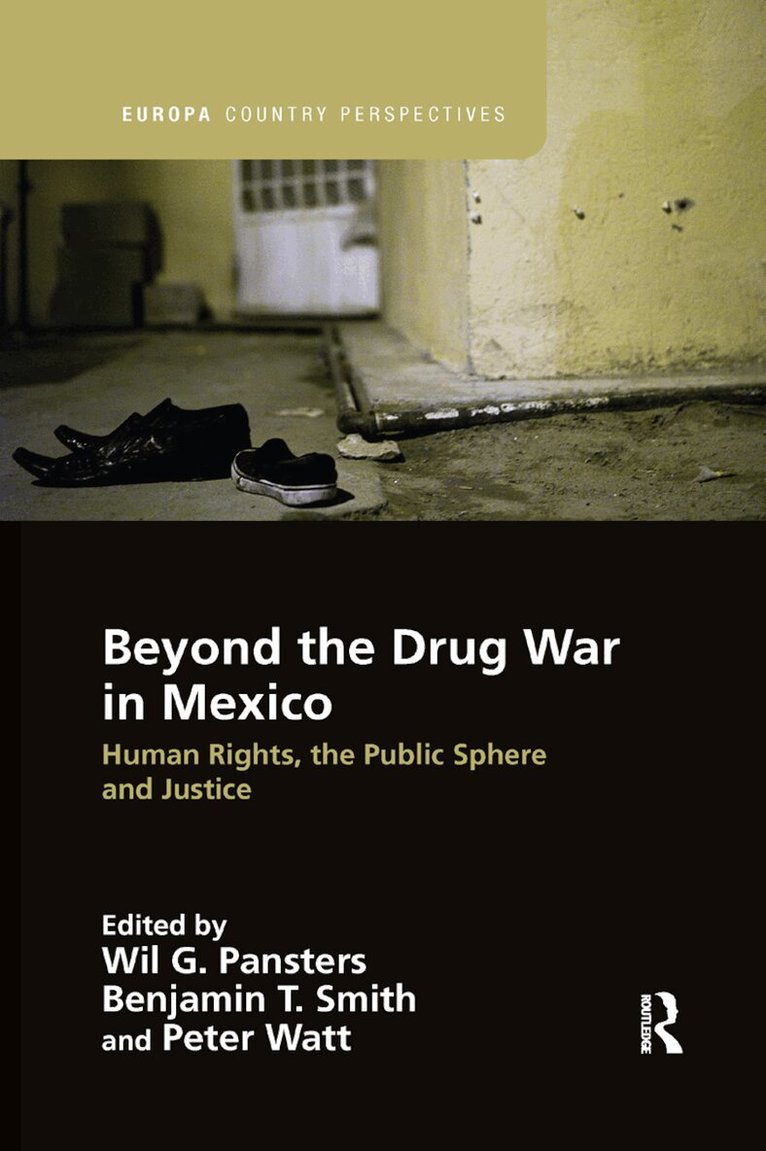
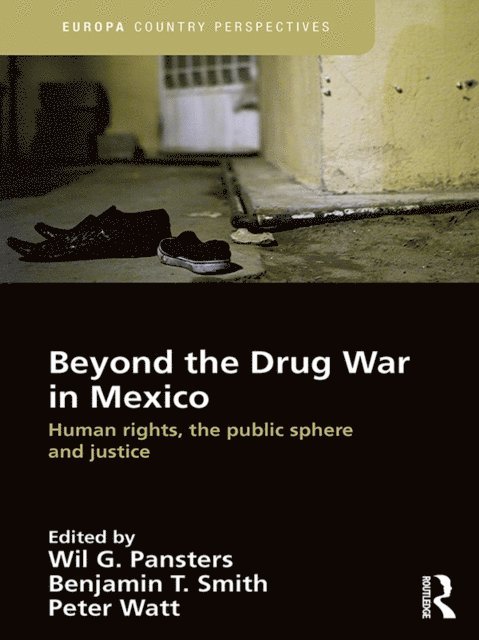
Beyond the Drug War in Mexico
Human rights, the public sphere and justice
Av Wil G. Pansters, Benjamin T. Smith m. fl.
Häftad, 2019
621 kr
Lägg i varukorg
This volume aims to go beyond the study of developments within Mexico’s criminal world and their relationship with the state and law enforcement. It focuses instead on the nature and consequences of what we call the ‘totalization of the drug war’, and its projection on other domains which are key …
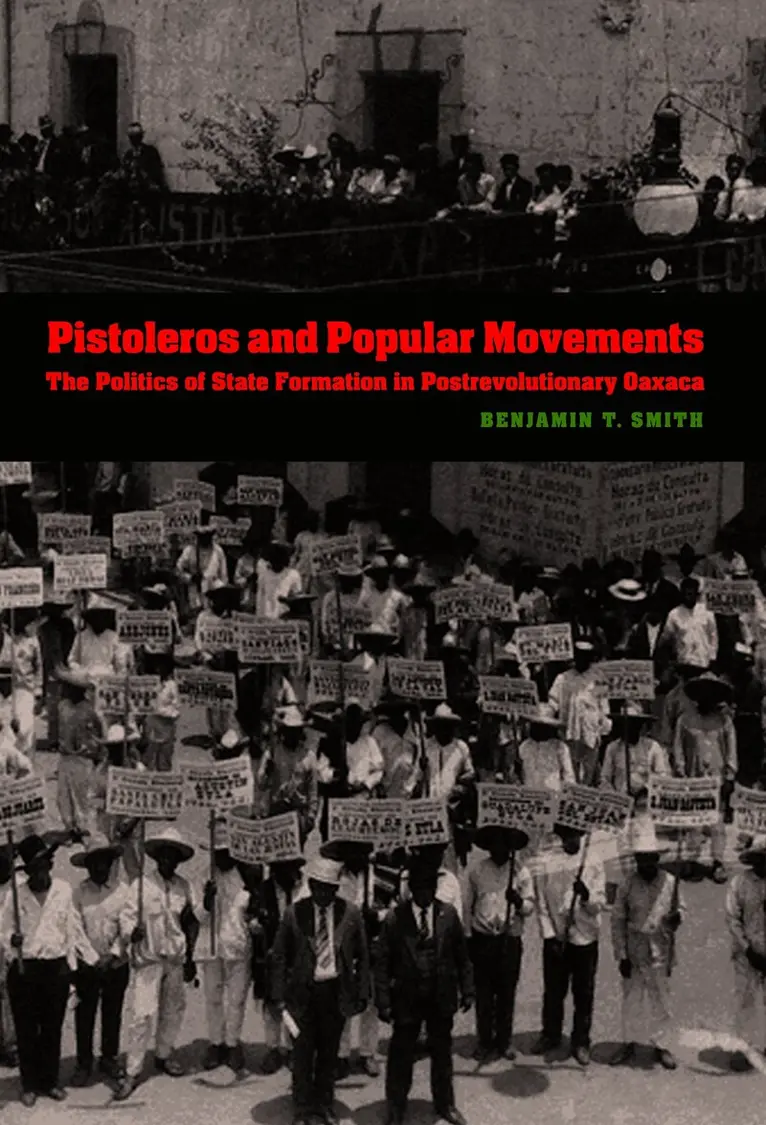
Pistoleros and Popular Movements
The Politics of State Formation in Postrevolutionary Oaxaca
Häftad, 2009
459 kr
Lägg i varukorg
The postrevolutionary reconstruction of the Mexican government did not easily or immediately reach all corners of the country. At every level, political intermediaries negotiated, resisted, appropriated, or ignored the dictates of the central government. National policy reverberated through …
Pistoleros and Popular Movements
The Politics of State Formation in Postrevolutionary Oaxaca
E-bok, 2009
420 kr
Lägg i varukorg
The postrevolutionary reconstruction of the Mexican government did not easily or immediately reach all corners of the country. At every level, political intermediaries negotiated, resisted, appropriated, or ignored the dictates of the central government. National policy reverberated through …
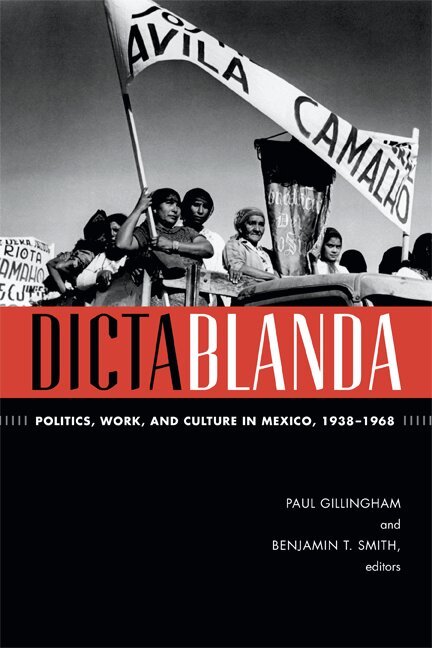
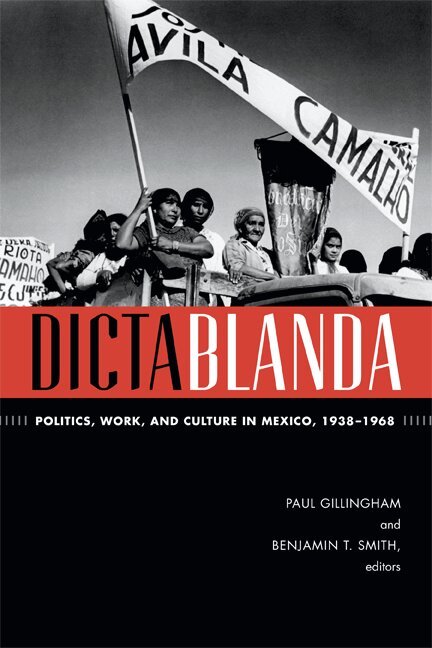
Dictablanda
Politics, Work, and Culture in Mexico, 1938–1968
Av Paul Gillingham, Benjamin T. Smith
Inbunden, 2014
1855 kr
Lägg i varukorg
In 1910 Mexicans rebelled against an imperfect dictatorship; after 1940 they ended up with what some called the perfect dictatorship. A single party ruled Mexico for over seventy years, holding elections and talking about revolution while overseeing one of the world's most inequitable economies. …
Dictablanda
Politics, Work, and Culture in Mexico, 1938–1968
Av Paul Gillingham, Benjamin T. Smith
Häftad, 2014
455 kr
Lägg i varukorg
In 1910 Mexicans rebelled against an imperfect dictatorship; after 1940 they ended up with what some called the perfect dictatorship. A single party ruled Mexico for over seventy years, holding elections and talking about revolution while overseeing one of the world's most inequitable economies. …
Dictablanda
Politics, Work, and Culture in Mexico, 1938–1968
Av Benjamin T. Smith, Paul Gillingham
E-bok, 2014
671 kr
Lägg i varukorg
In 1910 Mexicans rebelled against an imperfect dictatorship; after 1940 they ended up with what some called the perfect dictatorship. A single party ruled Mexico for over seventy years, holding elections and talking about revolution while overseeing one of the world''s most inequitable economies. …
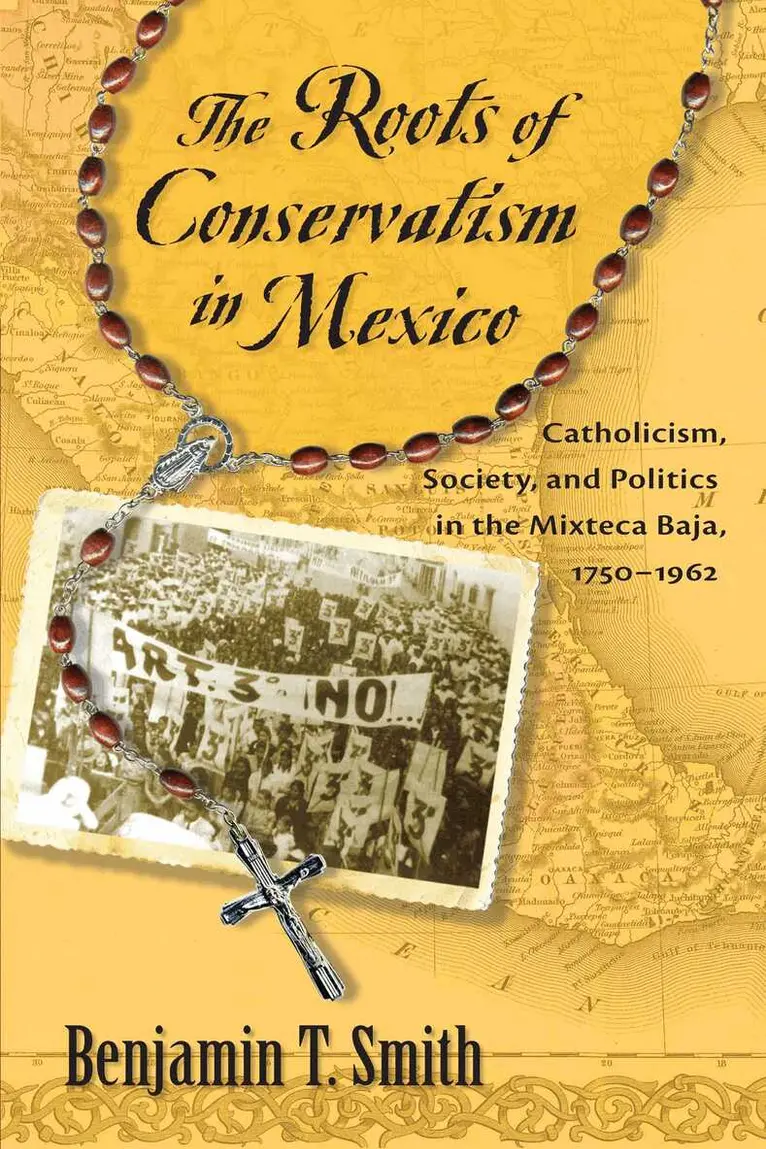
Roots of Conservatism in Mexico
Catholicism, Society, and Politics in the Mixteca Baja, 1750-1962
Häftad, 2012
714 kr
Lägg i varukorg
The Roots of Conservatism is the first attempt to ask why over the past two centuries so many Mexican peasants have opted to ally with conservative groups rather than their radical counterparts. Blending socioeconomic history, cultural analysis, and political narrative, Smith’s study begins with …
Roots of Conservatism in Mexico
Catholicism, Society, and Politics in the Mixteca Baja, 1750-1962
E-bok, 2012
553 kr
Lägg i varukorg
The Roots of Conservatism is the first attempt to ask why over the past two centuries so many Mexican peasants have opted to ally with conservative groups rather than their radical counterparts. Blending socioeconomic history, cultural analysis, and political narrative, Smith’s study begins with …
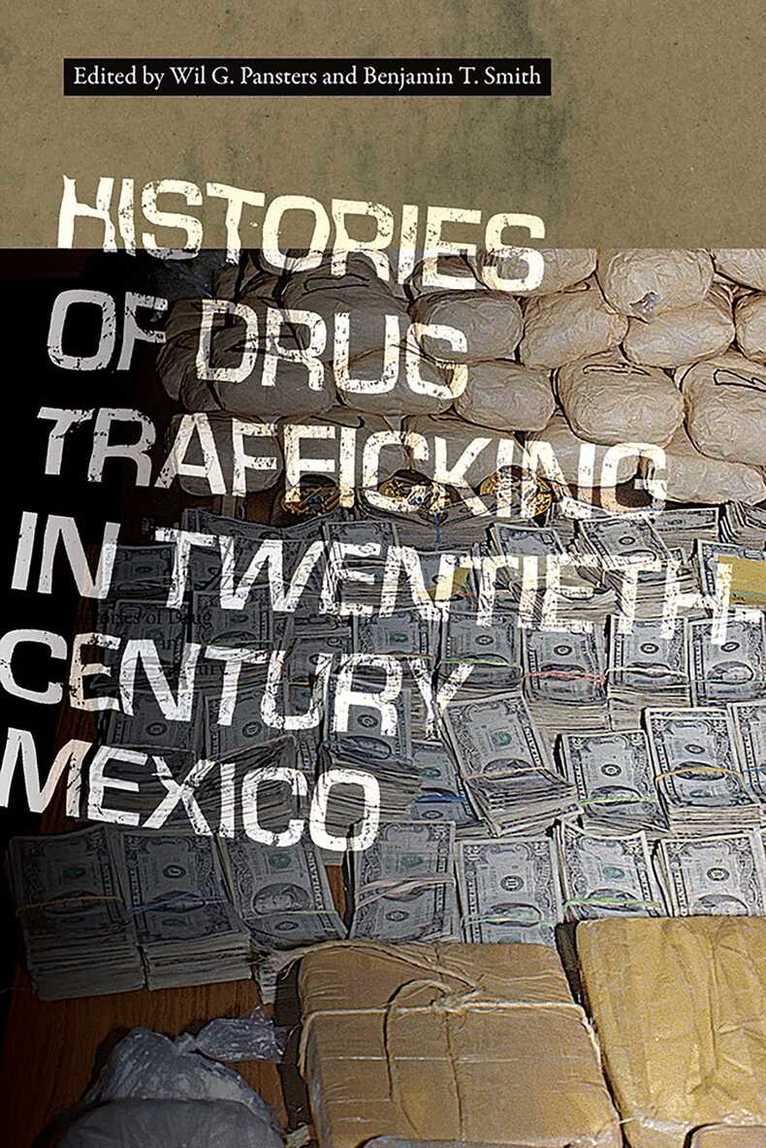
Histories of Drug Trafficking in Twentieth-Century Mexico
Av Wil G. Pansters, Benjamin T. Smith
Inbunden, 2022
873 kr
Lägg i varukorg
This work brings together a new generation of drug historians and new historical sources to uncover the history of the drug trade and its regulations. While the US and Mexican governments developed anti-drug discourses and policies, which criminalized both high-profile traffickers and small-time …
Histories of Drug Trafficking in Twentieth-Century Mexico
Av Wil G. Pansters, Benjamin T. Smith
Häftad, 2024
369 kr
Lägg i varukorg
This work brings together a new generation of drug historians and new historical sources to uncover the history of the drug trade and its regulations. While the US and Mexican governments developed anti-drug discourses and policies, which criminalized both high-profile traffickers and small-time …
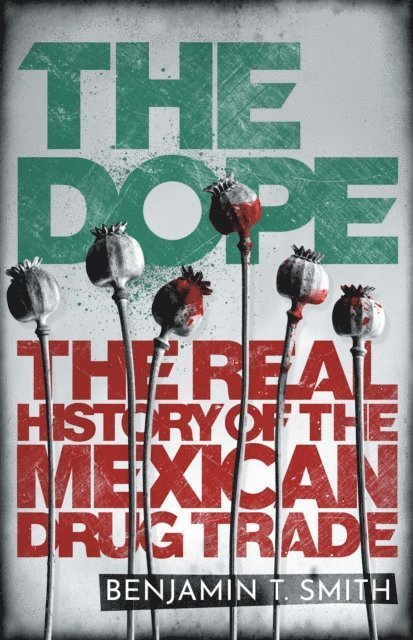
Dope – The Real History of the Mexican Drug Trade
The Real History of the Mexican Drug Trade
Inbunden, 2026
345 kr
Kommande
The Mexican drug trade has inspired prejudiced narratives of a war between north and south, white and brown; between noble cops and vicious kingpins, corrupt politicians and powerful cartels. In this first comprehensive history of the trade, historian Benjamin T. Smith tells the real story of how …
Dope – The Real History of the Mexican Drug Trade
The Real History of the Mexican Drug Trade
Häftad, 2026
274 kr
Lägg i varukorg
The Mexican drug trade has inspired prejudiced narratives of a war between north and south, white and brown; between noble cops and vicious kingpins, corrupt politicians and powerful cartels. In this first comprehensive history of the trade, historian Benjamin T. Smith tells the real story of how …
Beyond the Drug War in Mexico
Human rights, the public sphere and justice
Av Peter Watt, Benjamin T. Smith m. fl.
E-bok, 2017
727 kr
Lägg i varukorg
This volume aims to go beyond the study of developments within Mexico’s criminal world and their relationship with the state and law enforcement. It focuses instead on the nature and consequences of what we call the ‘totalization of the drug war’, and its projection on other domains which are key …
Beyond the Drug War in Mexico
Human rights, the public sphere and justice
Av Peter Watt, Benjamin T. Smith m. fl.
E-bok, 2017
727 kr
Lägg i varukorg
This volume aims to go beyond the study of developments within Mexico’s criminal world and their relationship with the state and law enforcement. It focuses instead on the nature and consequences of what we call the ‘totalization of the drug war’, and its projection on other domains which are key …
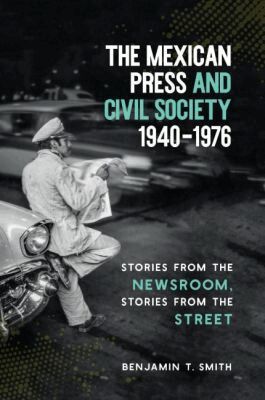
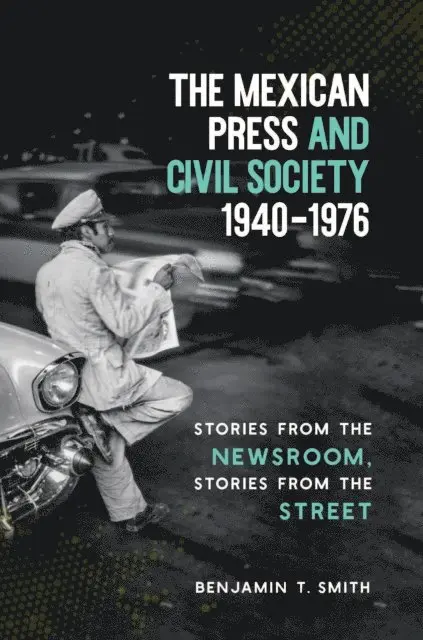
Mexican Press and Civil Society, 1940–1976
Stories from the Newsroom, Stories from the Street
Inbunden, 2018
1234 kr
Lägg i varukorg
Mexico today is one of the most dangerous places in the world to report the news, and Mexicans have taken to the street to defend freedom of expression. As Benjamin T. Smith demonstrates in this history of the press and civil society, the cycle of violent repression and protest over journalism is …
Mexican Press and Civil Society, 1940–1976
Stories from the Newsroom, Stories from the Street
Häftad, 2018
460 kr
Lägg i varukorg
Mexico today is one of the most dangerous places in the world to report the news, and Mexicans have taken to the street to defend freedom of expression. As Benjamin T. Smith demonstrates in this history of the press and civil society, the cycle of violent repression and protest over journalism is …
Mexican Press and Civil Society, 1940-1976
Stories from the Newsroom, Stories from the Street
E-bok, 2018
1934 kr
Lägg i varukorg
Mexico today is one of the most dangerous places in the world to report the news, and Mexicans have taken to the street to defend freedom of expression. As Benjamin T. Smith demonstrates in this history of the press and civil society, the cycle of violent repression and protest over journalism is …
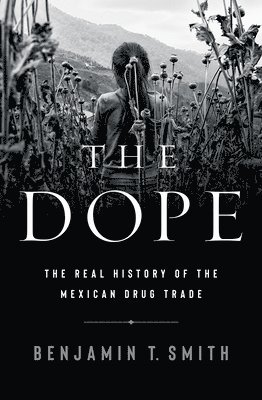
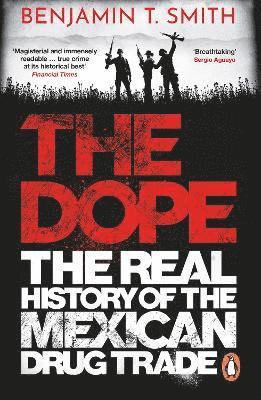
Dope
The Real History of the Mexican Drug Trade
E-bok, 2021
108 kr
Lägg i varukorg
Discover the secret history behind the headlines.The Mexican drug wars have inspired countless articles, TV shows and movies. From Breaking Bad to Sicario, El Chapo’s escapes to Trump’s tirades, this is a story we think we know. But there’s a hidden history to the biggest story of the twenty-first …
Dope
The Real History of the Mexican Drug Trade
Häftad, 2022
126 kr
Lägg i varukorg
Discover the secret history behind the headlines.The Mexican drug wars have inspired countless articles, TV shows and movies. From Breaking Bad to Sicario, El Chapo’s escapes to Trump’s tirades, this is a story we think we know. But there’s a hidden history to the biggest story of the twenty-first …
Beyond the Drug War in Mexico
Human rights, the public sphere and justice
Av Wil G. Pansters, Benjamin T. Smith m. fl.
Inbunden, 2017
2272 kr
Lägg i varukorg
This volume aims to go beyond the study of developments within Mexico’s criminal world and their relationship with the state and law enforcement. It focuses instead on the nature and consequences of what we call the ‘totalization of the drug war’, and its projection on other domains which are key …
Mexican Press and Civil Society, 1940-1976
Stories from the Newsroom, Stories from the Street
E-bok, 2018
370 kr
Lägg i varukorg
Mexico today is one of the most dangerous places in the world to report the news, and Mexicans have taken to the street to defend freedom of expression. As Benjamin T. Smith demonstrates in this history of the press and civil society, the cycle of violent repression and protest over journalism is …
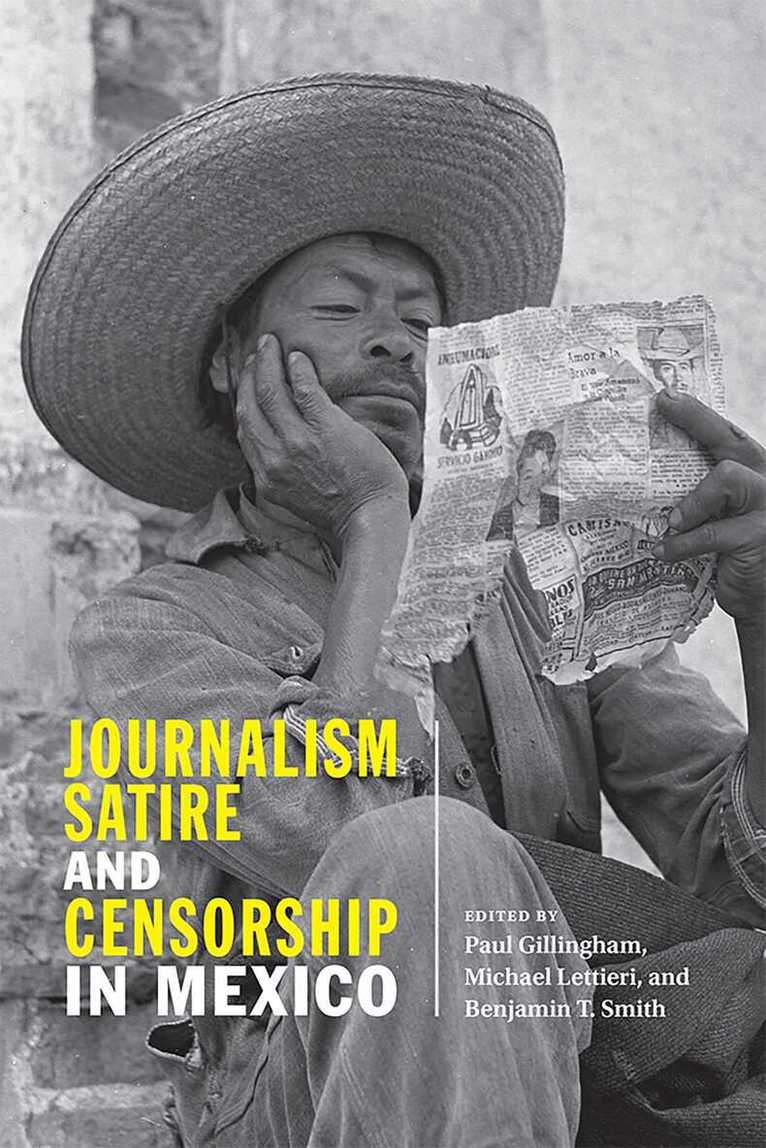
Journalism, Satire, and Censorship in Mexico
Av Paul Gillingham, Michael Lettieri m. fl.
Häftad, 2018
456 kr
Tillfälligt slut
Since the 2000 elections toppled the PRI, over 150 Mexican journalists have been murdered. Failed assassinations and threats have silenced thousands more. Such high levels of violence and corruption question one of the fundamental assumptions of modern societies, that democracy and press freedom …