Paul Gillingham - Böcker
Visar alla böcker från författaren Paul Gillingham. Handla med fri frakt och snabb leverans.
8 produkter
8 produkter
214 kr
Kommande
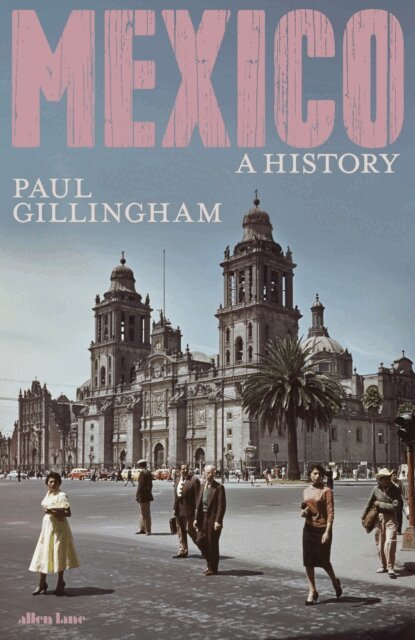
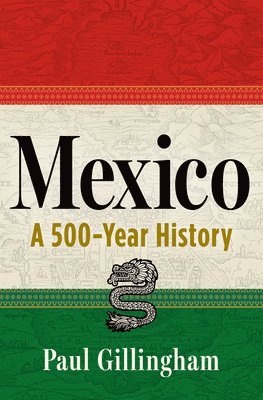
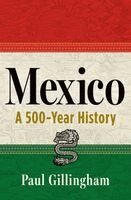
This sweeping new history of Mexico spans 500 dramatic years of conquest, innovation and revolution 'Magisterial... This fine account does well to remind that the best history is about fact, not fiction' - Peter Frankopan, The TelegraphIt begins in 1511 with the shipwreck of two Spanish sailors in Yucatán. Only ten years later, an army of European adventurers and indigenous rebels seized the island city of Tenochtitlán, seat of one of the world’s great empires. It would become Mexico City, and marked the collision of two radically different worlds. Spaniards discovered tomatoes, chocolate and the most sophisticated city they had ever seen. For Mexicans the encounter brought horses, wheels, but also lethal germs – sparking a cataclysmic century of disease that would kill a majority of the indigenous population.Paul Gillingham’s superb history chronicles how this convulsion led to a startling recombination of cultures. He shows how the industrial mining of Mexico’s silver transformed the wealth and trade of the world, making it the centre of the first truly global economy. We then see how independence from Spain went on to bring calamitous wars with the United States and France. One of the world’s great social revolutions then remade Mexico and ushered in a one-party state that, whatever its shortcomings, brought peace throughout many of the global horrors of the twentieth century – before the country collapsed into violence in the drug wars of the 2000s.Mexico: A History uses the latest research to dazzling effect, showing how often Mexico has been one of the world’s great innovators; a dynamic and vital shaper of world affairs.
473 kr
This sweeping new history of Mexico spans 500 dramatic years of conquest, innovation and revolution'Magisterial... This fine account does well to remind that the best history is about fact, not fiction' - Peter Frankopan, The TelegraphIt begins in 1511 with the shipwreck of two Spanish sailors in Yucatán. Only ten years later, an army of European adventurers and indigenous rebels seized the island city of Tenochtitlán, seat of one of the world’s great empires. It would become Mexico City, and marked the collision of two radically different worlds. Spaniards discovered tomatoes, chocolate and the most sophisticated city they had ever seen. For Mexicans the encounter brought horses, wheels, but also lethal germs – sparking a cataclysmic century of disease that would kill a majority of the indigenous population.Paul Gillingham’s superb history chronicles how this convulsion led to a startling recombination of cultures. He shows how the industrial mining of Mexico’s silver transformed the wealth and trade of the world, making it the centre of the first truly global economy. We then see how independence from Spain went on to bring calamitous wars with the United States and France. One of the world’s great social revolutions then remade Mexico and ushered in a one-party state that, whatever its shortcomings, brought peace throughout many of the global horrors of the twentieth century – before the country collapsed into violence in the drug wars of the 2000s.Mexico: A History uses the latest research to dazzling effect, showing how often Mexico has been one of the world’s great innovators; a dynamic and vital shaper of world affairs.
389 kr
Skickas inom 3-6 vardagar
301 kr
Kommande
1 724 kr
Skickas inom 7-10 vardagar
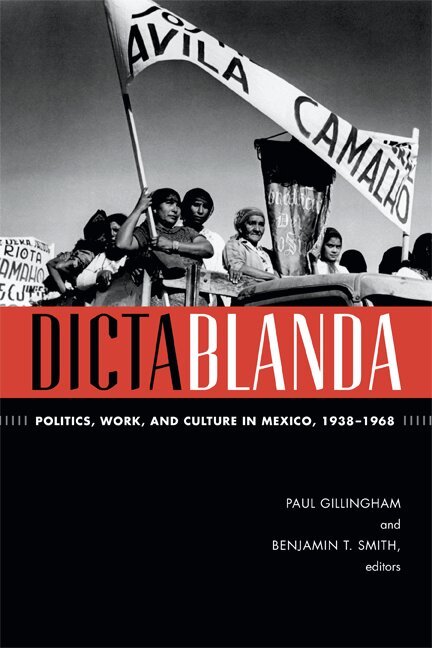
In 1910 Mexicans rebelled against an imperfect dictatorship; after 1940 they ended up with what some called the perfect dictatorship. A single party ruled Mexico for over seventy years, holding elections and talking about revolution while overseeing one of the world's most inequitable economies. The contributors to this groundbreaking collection revise earlier interpretations, arguing that state power was not based exclusively on hegemony, corporatism, or violence. Force was real, but it was also exercised by the ruled. It went hand-in-hand with consent, produced by resource regulation, political pragmatism, local autonomies and a popular veto. The result was a dictablanda: a soft authoritarian regime.This deliberately heterodox volume brings together social historians, anthropologists, sociologists, and political scientists to offer a radical new understanding of the emergence and persistence of the modern Mexican state. It also proposes bold, multidisciplinary approaches to critical problems in contemporary politics. With its blend of contested elections, authoritarianism, and resistance, Mexico foreshadowed the hybrid regimes that have spread across much of the globe. Dictablanda suggests how they may endure.Contributors. Roberto Blancarte, Christopher R. Boyer, Guillermo de la PeÑa, MarÍa Teresa FernÁndez Aceves, Paul Gillingham, Rogelio HernÁndez RodrÍguez, Alan Knight, Gladys McCormick, TanalÍs Padilla, Wil G. Pansters, Andrew Paxman, Jaime Pensado, Pablo Piccato, Thomas Rath, Jeffrey W. Rubin, Benjamin T. Smith, Michael Snodgrass
427 kr
Skickas inom 7-10 vardagar
In 1910 Mexicans rebelled against an imperfect dictatorship; after 1940 they ended up with what some called the perfect dictatorship. A single party ruled Mexico for over seventy years, holding elections and talking about revolution while overseeing one of the world's most inequitable economies. The contributors to this groundbreaking collection revise earlier interpretations, arguing that state power was not based exclusively on hegemony, corporatism, or violence. Force was real, but it was also exercised by the ruled. It went hand-in-hand with consent, produced by resource regulation, political pragmatism, local autonomies and a popular veto. The result was a dictablanda: a soft authoritarian regime.This deliberately heterodox volume brings together social historians, anthropologists, sociologists, and political scientists to offer a radical new understanding of the emergence and persistence of the modern Mexican state. It also proposes bold, multidisciplinary approaches to critical problems in contemporary politics. With its blend of contested elections, authoritarianism, and resistance, Mexico foreshadowed the hybrid regimes that have spread across much of the globe. Dictablanda suggests how they may endure.Contributors. Roberto Blancarte, Christopher R. Boyer, Guillermo de la PeÑa, MarÍa Teresa FernÁndez Aceves, Paul Gillingham, Rogelio HernÁndez RodrÍguez, Alan Knight, Gladys McCormick, TanalÍs Padilla, Wil G. Pansters, Andrew Paxman, Jaime Pensado, Pablo Piccato, Thomas Rath, Jeffrey W. Rubin, Benjamin T. Smith, Michael Snodgrass
534 kr
Skickas inom 3-6 vardagar
607 kr
Skickas
Since the 2000 elections toppled the PRI, over 150 Mexican journalists have been murdered. Failed assassinations and threats have silenced thousands more. Such high levels of violence and corruption question one of the fundamental assumptions of modern societies, that democracy and press freedom are inextricably intertwined. In this collection historians, media experts, political scientists, cartoonists, and journalists reconsider censorship, state-press relations, news coverage, and readership to retell the history of Mexico's press.