Bennie H. Reynolds - Böcker
Visar alla böcker från författaren Bennie H. Reynolds. Handla med fri frakt och snabb leverans.
2 produkter
2 produkter
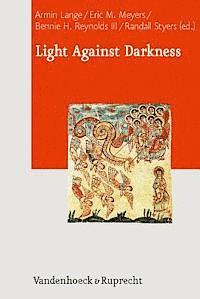
Light Against Darkness
Dualism in Ancient Mediterranean Religion and the Contemporary World
Inbunden, Engelska, 2010
1 532 kr
Skickas inom 11-20 vardagar
"Light Against Darkness" is comprised of articles that put on display the power and pervasiveness of dualistic thought. Dualism has proved a potent cultural tool for clarifying and ordering reality. Particularly in times of social stress and psychological insecurity, it can offer a valuable conceptual grid that provides orientation to the world and a clear sense of identity. At the same time, though, there are important questions to be asked about the social effects of binary thinking. As history amply illustrates, dualistic notions can readily be deployed to legitimate cultural demonisation and to rationalise violence. At a deeper level, a dualist worldview can also obscure the possibilities to be found in multiplicity. The articles in this volume treat Dualism across a wide historical spectrum and from multiple methodological perspectives. The studies are organized around the religious and cultural contexts of Ancient Judaism and they include contributions from leading voices on ancient Persia, Israel, Greece, and Egypt.Experts on modern religious and philosophical thought not only lend context to concepts applied to the ancient world, but engage recent European and American experiments in binary thought. All of the studies contribute to a richer and more complete portrait of dualism in ancient Judaism.
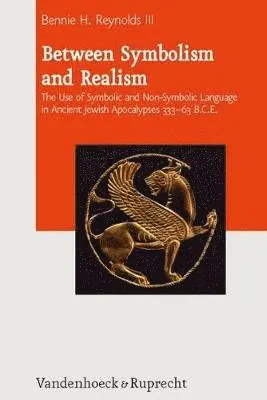
Between Symbolism and Realism
The Use of Symbolic and Non-Symbolic Language in Ancient Jewish Apocalypses 333-63 B.C.E.
Inbunden, Engelska, 2011
2 083 kr
Skickas inom 11-20 vardagar
Bennie H. Reynolds analyzes of the language (poetics) of ancient Jewish historical apocalypses. He investigates how the dramatis personae, i.e., deities, angels/demons, and humans are described in the Book of Daniel (chapters 2, 7, 8, and 10-12) the Animal Apocalypse (1 Enoch 85-90), 4QFourKingdoms(a-b) ar, the Book of the Words of Noah (1QapGen 5 29-18?), the Apocryphon of Jeremiah C, and 4QPseudo-Daniel(a-b) ar. The primary methodologies for this study are linguistic- and motif-historical analysis and the theoretical framework is informed by a wide range of ancient and modern thinkers including Artemidorus of Daldis, Ferdinand de Saussure, Charles Peirce, Leo Oppenheim, Claude Levi-Strauss, and Umberto Eco. The most basic contention of this study is that the data now available from the Dead Sea Scrolls significantly alter how one should conceive of the genre apocalypse in the Hellenistic Period. This basic contention is borne out by five primary conclusions. For example, while some apocalypses employ symbolic language to describe the actors in their historical reviews, others use non-symbolic language. Some texts, especially from the Book of Daniel, are mixed cases. Among the apocalypses that use symbolic language, a limited and stable repertoire of symbols obtain across the genre and bear witness to a series of conventional associations. While several apocalypses do not use symbolic ciphers to encode their historical actors, they often use cryptic language that may have functioned as a group-specific language. The language of apocalypses indicates that these texts were not the domain of only one social group or even one type or size of social group.