Bernadette Meyler - Böcker
Visar alla böcker från författaren Bernadette Meyler. Handla med fri frakt och snabb leverans.
7 produkter
7 produkter
1 760 kr
Skickas inom 5-8 vardagar
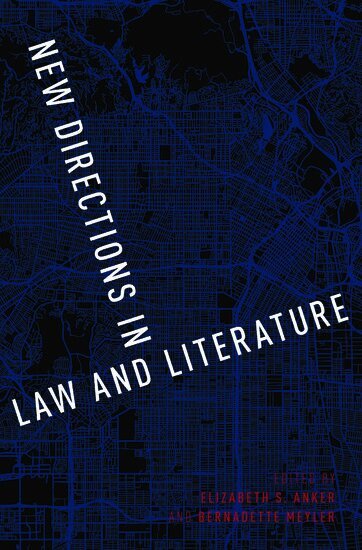
After its heyday in the 1970s and 1980s, many wondered whether the law and literature movement would retain vitality. This collection of essays, featuring twenty-two prominent scholars from literature departments as well as law schools, showcases the vibrancy of recent work in the field while highlighting its many new directions. New Directions in Law and Literature furnishes an overview of where the field has been, its recent past, and its potential futures. Some of the essays examine the methodological choices that have affected the field; among these are concern for globalization, the integration of approaches from history and political theory, the application of new theoretical models from affect studies and queer theory, and expansion beyond text to performance and the image. Others grapple with particular intersections between law and literature, whether in copyright law, competing visions of alternatives to marriage, or the role of ornament in the law's construction of racialized bodies. The volume is designed to be a course book that is accessible to undergraduates and law students as well as relevant to academics with an interest in law and the humanities. The essays are simultaneously intended to be introductory and addressed to experts in law and literature. More than any other existing book in the field, New Directions furnishes a guide to the most exciting new work in law and literature while also situating that work within more established debates and conversations.
608 kr
Skickas inom 5-8 vardagar
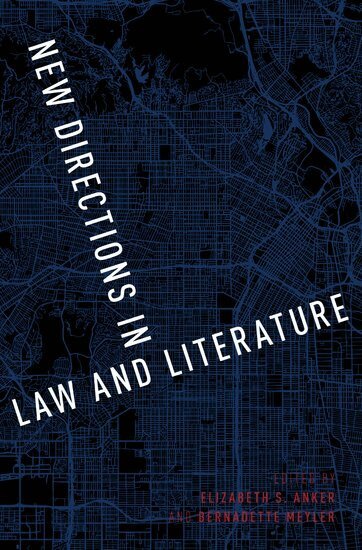
After its heyday in the 1970s and 1980s, many wondered whether the law and literature movement would retain vitality. This collection of essays, featuring twenty-two prominent scholars from literature departments as well as law schools, showcases the vibrancy of recent work in the field while highlighting its many new directions. New Directions in Law and Literature furnishes an overview of where the field has been, its recent past, and its potential futures. Some of the essays examine the methodological choices that have affected the field; among these are concern for globalization, the integration of approaches from history and political theory, the application of new theoretical models from affect studies and queer theory, and expansion beyond text to performance and the image. Others grapple with particular intersections between law and literature, whether in copyright law, competing visions of alternatives to marriage, or the role of ornament in the law's construction of racialized bodies. The volume is designed to be a course book that is accessible to undergraduates and law students as well as relevant to academics with an interest in law and the humanities. The essays are simultaneously intended to be introductory and addressed to experts in law and literature. More than any other existing book in the field, New Directions furnishes a guide to the most exciting new work in law and literature while also situating that work within more established debates and conversations.
2 949 kr
Skickas inom 3-6 vardagar
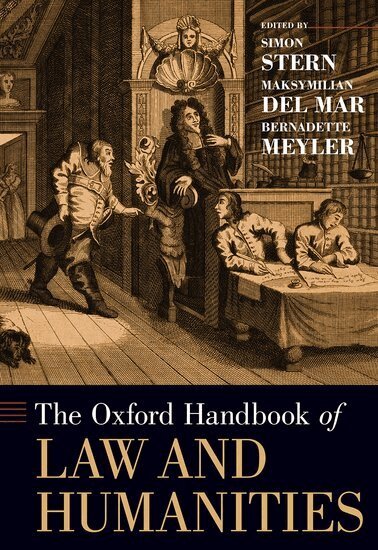
How does materiality matter to legal scholarship? What can affect studies offer to legal scholars? What are the connections among visual studies, art history, and the knowledge and experience of law? What can the disciplines of book history, digital humanities, performance studies, disability studies, and post-colonial studies contribute to contemporary and historical understandings of law? These are only some of the important questions addressed in this wide-ranging collection of law and humanities scholarship.Collecting 45 new essays by leading international scholars, The Oxford Handbook of Law and Humanities showcases the work of law and humanities across disciplines, addressing methods, concepts and themes, genres, and areas of the law. The essays explore under-researched domains such as comics, videos, police files, form contracts, and paratexts, and shed new light on traditional topics, such as free speech, intellectual property, international law, indigenous peoples, immigration, evidence, and human rights. The Handbook provides an exciting new agenda for scholarship in law and humanities, and will be essential reading for anyone interested in the intersections of law and humanistic inquiry.
1 278 kr
Kommande
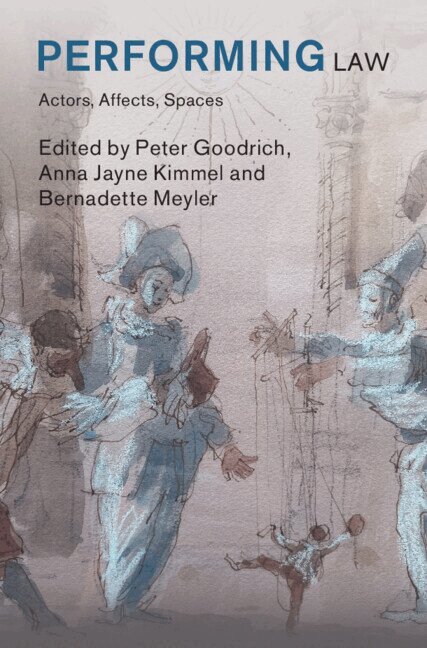
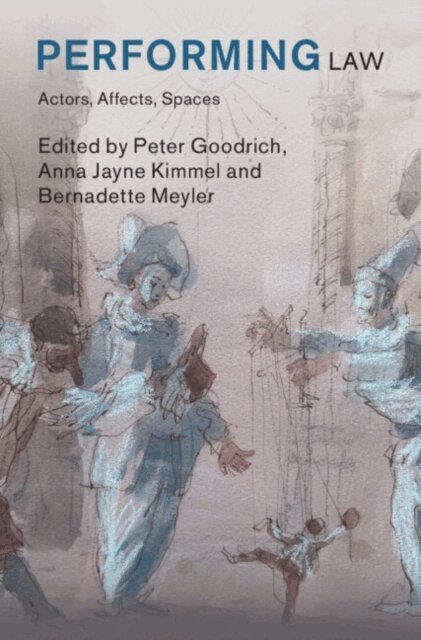
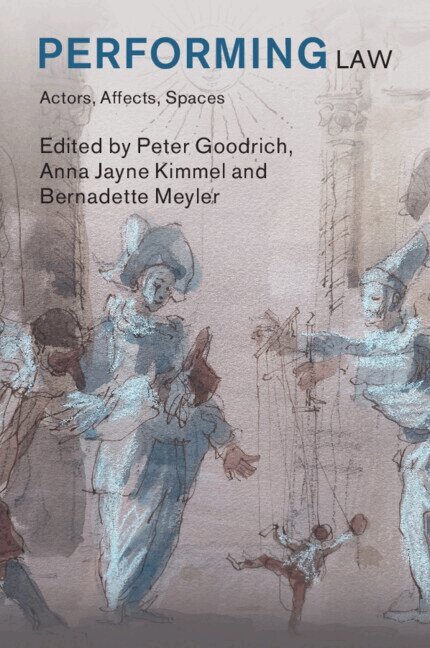
The words 'all rise' announce the appearance of the judge in the thespian space of the courtroom and trigger the beginning of that play we call a trial. The symbolically staged enactment of conflict in the form of litigation is exemplary of legal action, its liturgical and real effects. It establishes the roles and discourses, hierarchy and deference, atmospheres and affects that are to be taken up in the more general social stage of public life. Leading international scholars drawn from performance studies, theatre history, aesthetics, dance, film, history, and law provide critical analyses of the sites, dramas and stage directions to be found in the orchestration of the tragedies and comedies acted out in multiple forums of contemporary legality. This title is also available as open access on Cambridge Core.
394 kr
Kommande
The words 'all rise' announce the appearance of the judge in the thespian space of the courtroom and trigger the beginning of that play we call a trial. The symbolically staged enactment of conflict in the form of litigation is exemplary of legal action, its liturgical and real effects. It establishes the roles and discourses, hierarchy and deference, atmospheres and affects that are to be taken up in the more general social stage of public life. Leading international scholars drawn from performance studies, theatre history, aesthetics, dance, film, history, and law provide critical analyses of the sites, dramas and stage directions to be found in the orchestration of the tragedies and comedies acted out in multiple forums of contemporary legality. This title is also available as open access on Cambridge Core.
1 754 kr
Skickas inom 10-15 vardagar
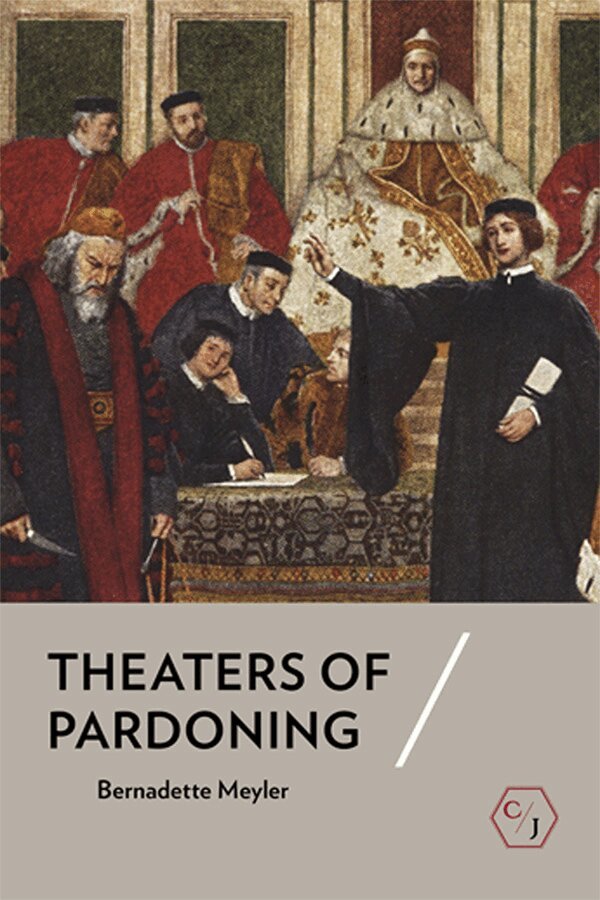
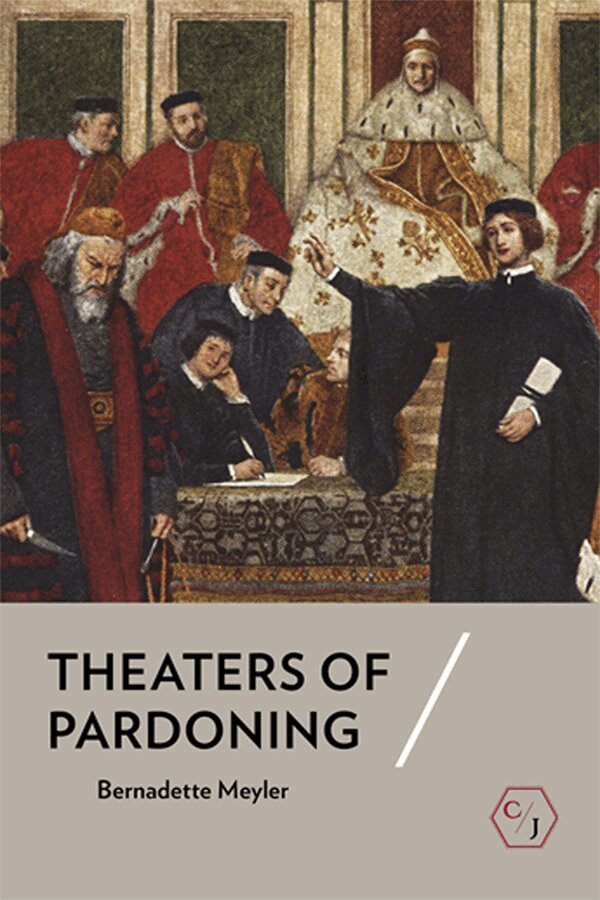
From Gerald Ford's preemptive pardon of Richard Nixon and Donald Trump's claims that as president he could pardon himself to the posthumous royal pardon of Alan Turing, the power of the pardon has a powerful hold on the political and cultural imagination. In Theaters of Pardoning, Bernadette Meyler traces the roots of contemporary understandings of pardoning to tragicomic "theaters of pardoning" in the drama and politics of seventeenth-century England. Shifts in how pardoning was represented on the stage and discussed in political tracts and in Parliament reflected the transition from a more monarchical and judgment-focused form of the concept to an increasingly parliamentary and legislative vision of sovereignty.Meyler shows that on the English stage, individual pardons of revenge subtly transformed into more sweeping pardons of revolution, from Shakespeare's Measure for Measure, where a series of final pardons interrupts what might otherwise have been a cycle of revenge, to later works like John Ford's The Laws of Candy and Philip Massinger's The Bondman, in which the exercise of mercy prevents the overturn of the state itself. In the political arena, the pardon as a right of kingship evolved into a legal concept, culminating in the idea of a general amnesty, the "Act of Oblivion," for actions taken during the English Civil War. Reconceiving pardoning as law-giving effectively displaced sovereignty from king to legislature, a shift that continues to attract suspicion about the exercise of pardoning. Only by breaking the connection between pardoning and sovereignty that was cemented in seventeenth-century England, Meyler concludes, can we reinvigorate the pardon as a democratic practice.
362 kr
Skickas inom 10-15 vardagar
From Gerald Ford's preemptive pardon of Richard Nixon and Donald Trump's claims that as president he could pardon himself to the posthumous royal pardon of Alan Turing, the power of the pardon has a powerful hold on the political and cultural imagination. In Theaters of Pardoning, Bernadette Meyler traces the roots of contemporary understandings of pardoning to tragicomic "theaters of pardoning" in the drama and politics of seventeenth-century England. Shifts in how pardoning was represented on the stage and discussed in political tracts and in Parliament reflected the transition from a more monarchical and judgment-focused form of the concept to an increasingly parliamentary and legislative vision of sovereignty.Meyler shows that on the English stage, individual pardons of revenge subtly transformed into more sweeping pardons of revolution, from Shakespeare's Measure for Measure, where a series of final pardons interrupts what might otherwise have been a cycle of revenge, to later works like John Ford's The Laws of Candy and Philip Massinger's The Bondman, in which the exercise of mercy prevents the overturn of the state itself. In the political arena, the pardon as a right of kingship evolved into a legal concept, culminating in the idea of a general amnesty, the "Act of Oblivion," for actions taken during the English Civil War. Reconceiving pardoning as law-giving effectively displaced sovereignty from king to legislature, a shift that continues to attract suspicion about the exercise of pardoning. Only by breaking the connection between pardoning and sovereignty that was cemented in seventeenth-century England, Meyler concludes, can we reinvigorate the pardon as a democratic practice.