Bernard D. Roitberg - Böcker
Visar alla böcker från författaren Bernard D. Roitberg. Handla med fri frakt och snabb leverans.
2 produkter
2 produkter
2 115 kr
Skickas inom 10-15 vardagar
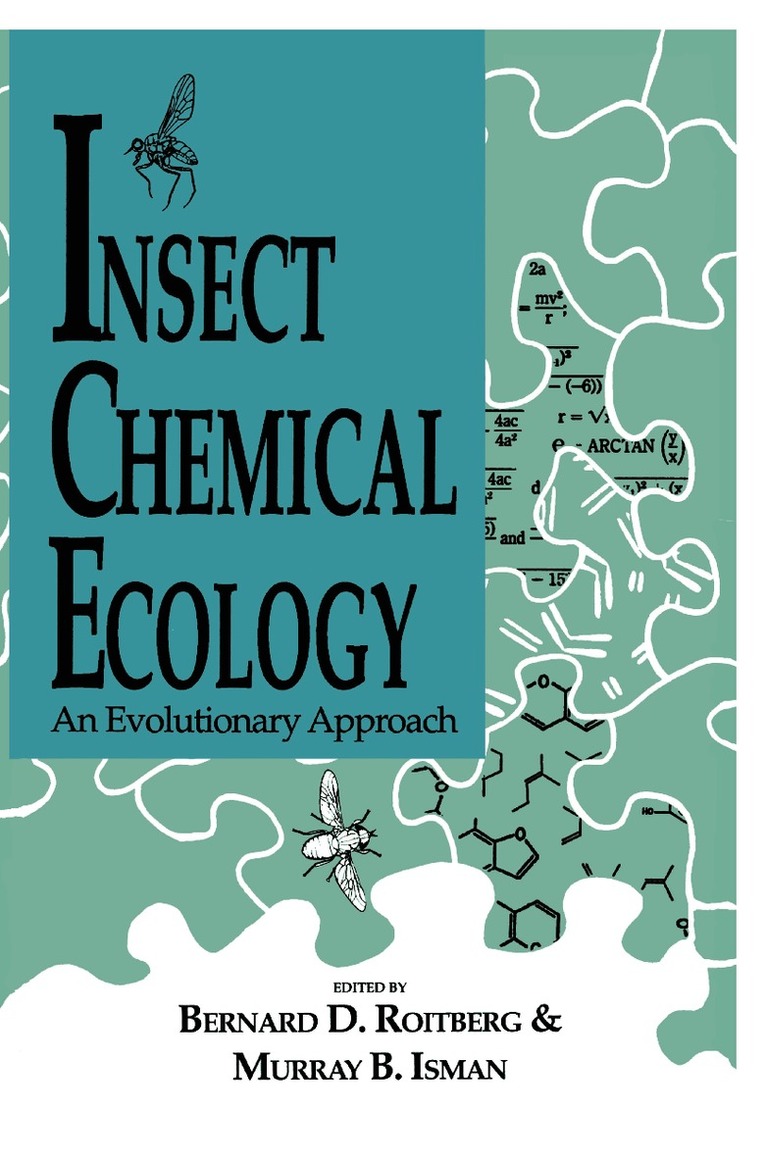
"Evolutionary Perspectives in Chemical Ecology" provides a comprehensive view of insect chemical ecology from an evolutionary perspective, showing how natural selection acts upon interacting organisms and how particular physical and biological properties of chemical compounds act as constraints upon which natural selection may operate. Individual chapters raise specific questions as to the nature of these interactions. The first part contains reviews on antagonistic and mutualistic chemical interactions, the "raw materials" of defensive chemicals and neurobiology. The second part discusses particular problems such as the evolution of resistance, insect pollination, learning, pheromones, sequestration of semiochemicals, the role of microorganisms, sex attractants, the evolution of host races and biotypes, and the role of semiochemicals and the evolution of sociality of insects. The last chapter discusses the role of chemical-based pest management programs in an ecological and evolutionary framework. This book should be of interest to those involved in ecology and evolution.
2 115 kr
Skickas inom 10-15 vardagar
"Evolutionary Perspectives in Chemical Ecology" provides a comprehensive view of insect chemical ecology from an evolutionary perspective, showing how natural selection acts upon interacting organisms and how particular physical and biological properties of chemical compounds act as constraints upon which natural selection may operate. Individual chapters raise specific questions as to the nature of these interactions. The first part contains reviews on antagonistic and mutualistic chemical interactions, the "raw materials" of defensive chemicals and neurobiology. The second part discusses particular problems such as the evolution of resistance, insect pollination, learning, pheromones, sequestration of semiochemicals, the role of microorganisms, sex attractants, the evolution of host races and biotypes, and the role of semiochemicals and the evolution of sociality of insects. The last chapter discusses the role of chemical-based pest management programs in an ecological and evolutionary framework. This book should be of interest to those involved in ecology and evolution.