Murray B. Isman - Böcker
Visar alla böcker från författaren Murray B. Isman. Handla med fri frakt och snabb leverans.
3 produkter
3 produkter
2 115 kr
Skickas inom 10-15 vardagar
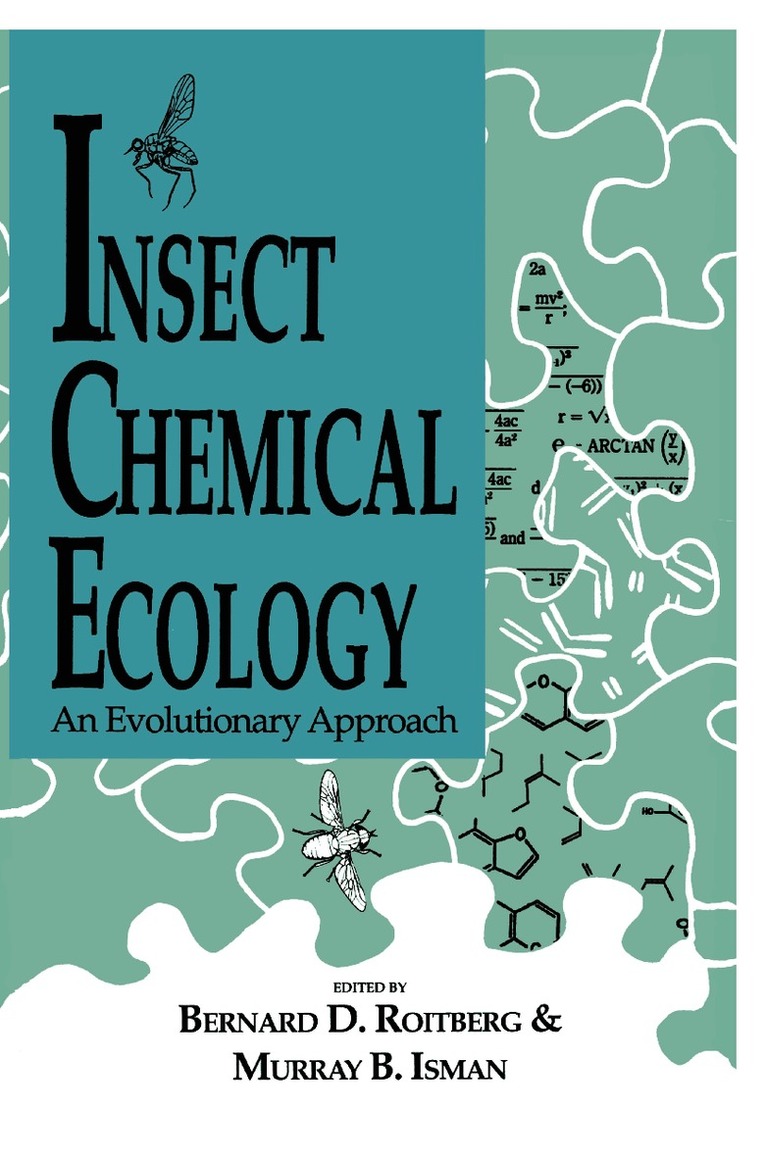
"Evolutionary Perspectives in Chemical Ecology" provides a comprehensive view of insect chemical ecology from an evolutionary perspective, showing how natural selection acts upon interacting organisms and how particular physical and biological properties of chemical compounds act as constraints upon which natural selection may operate. Individual chapters raise specific questions as to the nature of these interactions. The first part contains reviews on antagonistic and mutualistic chemical interactions, the "raw materials" of defensive chemicals and neurobiology. The second part discusses particular problems such as the evolution of resistance, insect pollination, learning, pheromones, sequestration of semiochemicals, the role of microorganisms, sex attractants, the evolution of host races and biotypes, and the role of semiochemicals and the evolution of sociality of insects. The last chapter discusses the role of chemical-based pest management programs in an ecological and evolutionary framework. This book should be of interest to those involved in ecology and evolution.
2 115 kr
Skickas inom 10-15 vardagar
"Evolutionary Perspectives in Chemical Ecology" provides a comprehensive view of insect chemical ecology from an evolutionary perspective, showing how natural selection acts upon interacting organisms and how particular physical and biological properties of chemical compounds act as constraints upon which natural selection may operate. Individual chapters raise specific questions as to the nature of these interactions. The first part contains reviews on antagonistic and mutualistic chemical interactions, the "raw materials" of defensive chemicals and neurobiology. The second part discusses particular problems such as the evolution of resistance, insect pollination, learning, pheromones, sequestration of semiochemicals, the role of microorganisms, sex attractants, the evolution of host races and biotypes, and the role of semiochemicals and the evolution of sociality of insects. The last chapter discusses the role of chemical-based pest management programs in an ecological and evolutionary framework. This book should be of interest to those involved in ecology and evolution.
1 061 kr
Skickas inom 10-15 vardagar
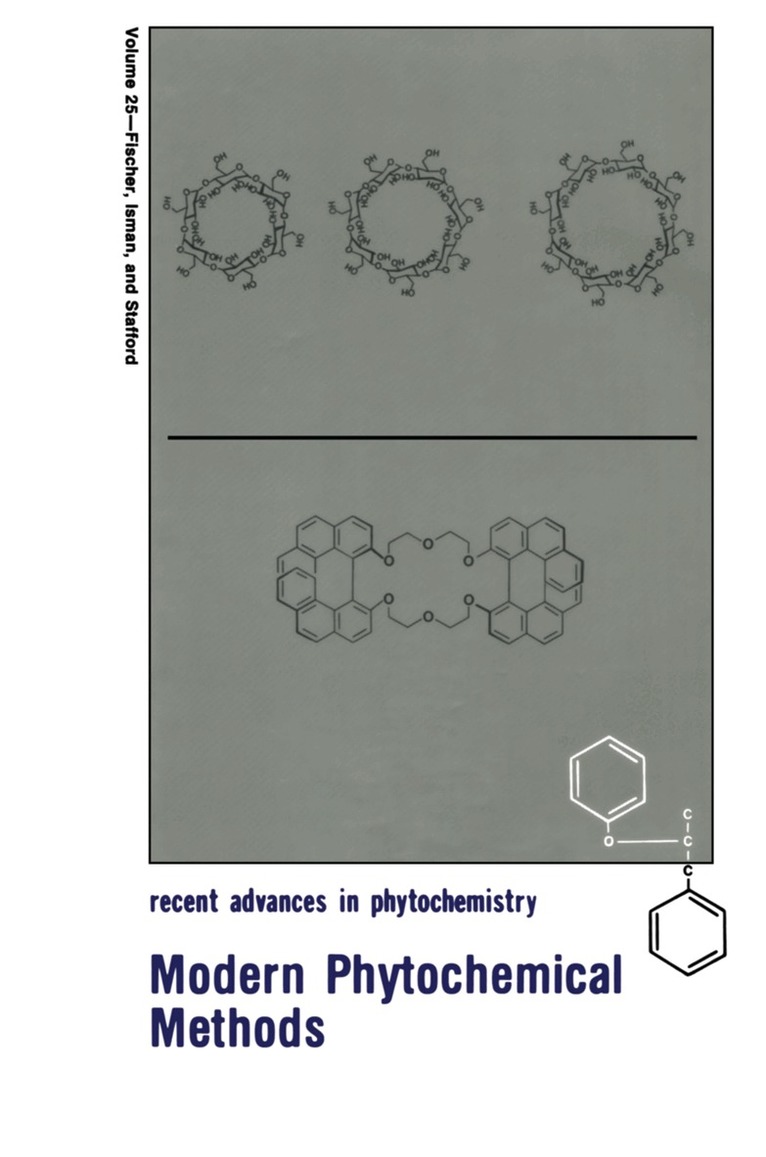
This volume contains reviews which are based on a symposium, given th at the 30 meeting of The Phytochemical Society of North America, held at Laval University in Quebec City, Canada on August 11-15, 1990. During the past two decades, there have been major new developments in methods which can be applied toward the isolation, separation and structure determination of complex natural products. Therefore, the topic of this symposium, "Modem Phytochemical Methods", is a very timely one. The organizers of the symposium recognized that it would not be possible to cover in detail all new advances in phytochemical methodology. It was therefore decided to emphasize general reviews on recent developments of major separation techniques such as high performance liquid chromatography as well as supercritical fluid chromato graphy. In addition, advances in commonly used structure determination methods, mainly NMR and MS, are reviewed. Other topics include methodo logies of micro-sampling for isolation and analysis of trichome constituents as well as recent breakthroughs on biosynthetic studies of monoterpenes using "enriched" basal cells of trichomes. The volume concludes with a review of quantitative structure-activity relationship (QSAR) studies of biologically active natural products. In Chapter I, K. Hostettmann and his colleagues give a general review of recent developments in the separation of natural products with major emphasis on preparative separations of biologically active plant constituents. The authors present a comparison of droplet countercurrent chromatography (OCCC) with the highly rapid and more versatile centrifugal partition chromatography (CPC).