Bernard J. Crespi – författare
Visar alla böcker från författaren Bernard J. Crespi. Handla med fri frakt och snabb leverans.
3 produkter
Cannibalism: Ecology and Evolution among Diverse Taxa
Av ELGAR, Mark A. Elgar m. fl.
Inbunden, 1992
2856 kr
Lägg i varukorg
Covering the contextual and taxonomic diversity of cannibalism, this book explains its costs, benefits, and consequences for a taxonomically broad distribution of species from lower eukaryotes to higher primates.The authors, all experts in their taxon of interest, use theory developed for the …
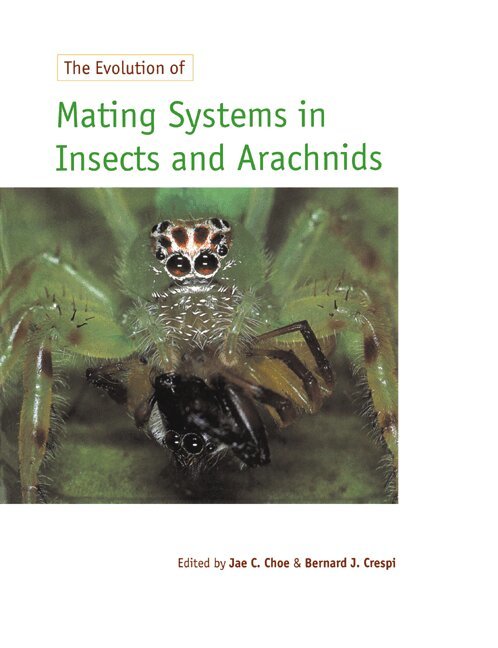
The Evolution of Mating Systems in Insects and Arachnids
Av Jae C. Choe, Bernard J. Crespi
Häftad, 1997
911 kr
Lägg i varukorg
Insects and arachnids display the most impressive diversity of mating and social behaviour among all animals. This book investigates sexual competition in these groups, and the variety of ways in which males and females pursue, persuade, manipulate, control and help one another, enabling us to gain …
The Evolution of Social Behaviour in Insects and Arachnids
Av Jae C. Choe, Bernard J. Crespi
Häftad, 1997
1035 kr
Lägg i varukorg
'Social' insects and arachnids exhibit forms of complex behaviour that involve cooperation in building a nest, defending against attackers or rearing offspring. This book is a comprehensive, up-to-date guide to sociality and its evolution in a wide range of taxa. In it, leading researchers review …