Bernard S. Cohn - Böcker
Visar alla böcker från författaren Bernard S. Cohn. Handla med fri frakt och snabb leverans.
4 produkter
4 produkter
196 kr
Skickas inom 5-8 vardagar
These twenty-three essays by Professor Cohn are collected here for the first time. The first section is concerned with methodology within the disciplines of history and anthropology, particularly as these relate to scholarly writings on India. The more empirical offerings within the next four sections are concerned with `anthropological history'.
765 kr
Skickas inom 10-15 vardagar
Recent theoretical and methodological innovations in the anthropological analysis of South Asian societies have introduced distinctive modifications in the study of Indian social structure and social change. This book, reporting on twenty empirical studies of Indian society conducted by outstanding scholars, reflects these trends not only with reference to Indian society itself, but also in terms of the relevance of such trends to an understanding of social change more generally.The contributors demonstrate the adaptive changes experienced by the studied groups in particular villages, towns, cities, and regions. The authors view the basic social units of joint family, caste, and village not as structural isolates, but as intimately connected with one another and with other social units through social and cultural networks of various kinds that incorporate the social units into the complex structure of Indian civilization. Within this broadened conception of social structure, these studies trace the changing relations of politics, economics, law, and language to the caste system.Showing that the caste system is dynamic, with upward and downward mobility characterizing it from pre-British times to the present, the studies suggest that the modernizing forces which entered the system since independence--parliamentary democracy, universal suffrage, land reforms, modern education, urbanization, and industrial technology--provided new opportunities and paths to upward mobility, but did not radically alter the system. The chapters in this book show that the study of Indian society reveals novel forms of social structure change. They introduce methods and theories that may well encourage social scientists to extend the study of change in Indian society to the study of change in other areas.
439 kr
Skickas inom 7-10 vardagar
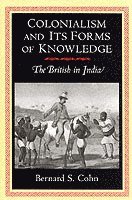
Bernard Cohn's interest in the construction of Empire as an intellectual and cultural phenomenon has set the agenda for the academic study of modern Indian culture for over two decades. His earlier publications have shown how dramatic British innovations in India, including revenue and legal systems, led to fundamental structural changes in Indian social relations. This collection of his writings in the last fifteen years discusses areas in which the colonial impact has generally been overlooked. The essays form a multifaceted exploration of the ways in which the British discovery, collection, and codification of information about Indian society contributed to colonial cultural hegemony and political control. Cohn argues that the British Orientalists' study of Indian languages was important to the colonial project of control and command. He also asserts that an arena of colonial power that seemed most benign and most susceptible to indigenous influences--mostly law--in fact became responsible for the institutional reactivation of peculiarly British notions about how to regulate a colonial society made up of "others."He shows how the very Orientalist imagination that led to brilliant antiquarian collections, archaeological finds, and photographic forays were in fact forms of constructing an India that could be better packaged, inferiorized, and ruled. A final essay on cloth suggests how clothes have been part of the history of both colonialism and anticolonialism.
2 317 kr
Skickas inom 10-15 vardagar
Recent theoretical and methodological innovations in the anthropological analysis of South Asian societies have introduced distinctive modifications in the study of Indian social structure and social change. This book, reporting on twenty empirical studies of Indian society conducted by outstanding scholars, reflects these trends not only with reference to Indian society itself, but also in terms of the relevance of such trends to an understanding of social change more generally.The contributors demonstrate the adaptive changes experienced by the studied groups in particular villages, towns, cities, and regions. The authors view the basic social units of joint family, caste, and village not as structural isolates, but as intimately connected with one another and with other social units through social and cultural networks of various kinds that incorporate the social units into the complex structure of Indian civilization. Within this broadened conception of social structure, these studies trace the changing relations of politics, economics, law, and language to the caste system.Showing that the caste system is dynamic, with upward and downward mobility characterizing it from pre-British times to the present, the studies suggest that the modernizing forces which entered the system since independence--parliamentary democracy, universal suffrage, land reforms, modern education, urbanization, and industrial technology--provided new opportunities and paths to upward mobility, but did not radically alter the system. The chapters in this book show that the study of Indian society reveals novel forms of social structure change. They introduce methods and theories that may well encourage social scientists to extend the study of change in Indian society to the study of change in other areas.