Bernhard Jussen – författare
Visar alla böcker från författaren Bernhard Jussen. Handla med fri frakt och snabb leverans.
13 produkter
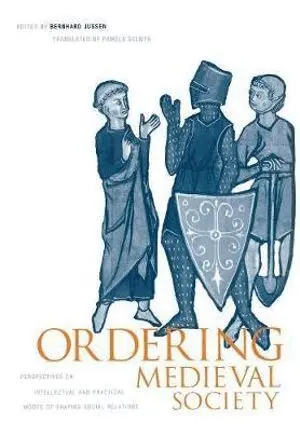
Ordering Medieval Society
Perspectives on Intellectual and Practical Modes of Shaping Social Relations
Inbunden, 2000
998 kr
Lägg i varukorg
What intellectual and practical tools did medieval peoples employ in situations of disorder? How did they attempt to maintain cultural stability? Arguing against the common notion of a static medieval society organized along kinship and feudal lines, the contributors to Ordering Medieval …
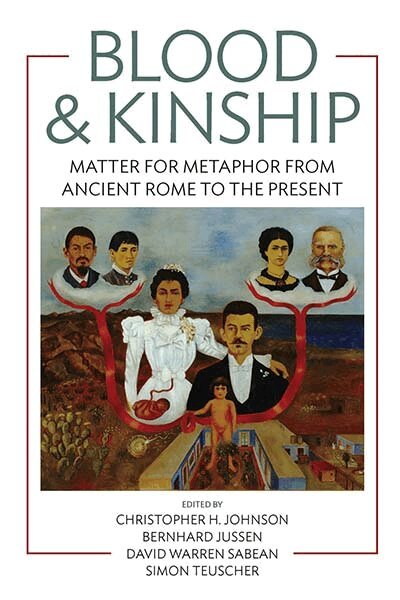
Blood and Kinship
Matter and Metaphor from Ancient Rome to the Present
Av Christopher H. Johnson, Bernhard Jussen m. fl.
Inbunden, 2013
2186 kr
Lägg i varukorg
Blood awakens associations with ancient ideas. But we know very little about the historical representations of blood in Western cultures. The contributors attempt to follow the use of blood in mapping family and kinship relations in European culture from the ancient world to the present. The …
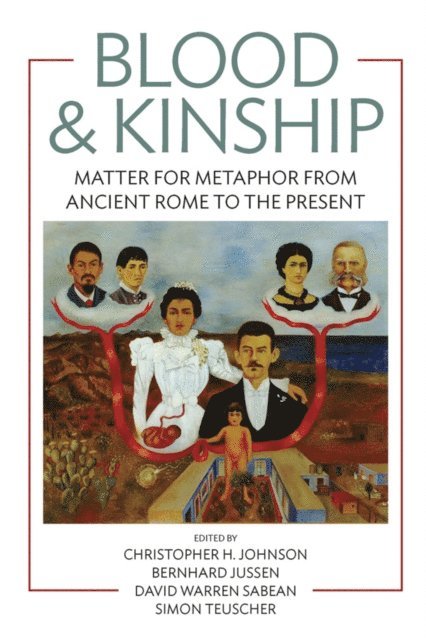
Blood and Kinship
Matter for Metaphor from Ancient Rome to the Present
Av Simon Teuscher, David Warren Sabean m. fl.
E-bok, 2013
386 kr
Lägg i varukorg
The word “blood” awakens ancient ideas, but we know little about its historical representation in Western cultures. Anthropologists have customarily studied how societies think about the bodily substances that unite them, and the contributors to this volume develop those questions in new …
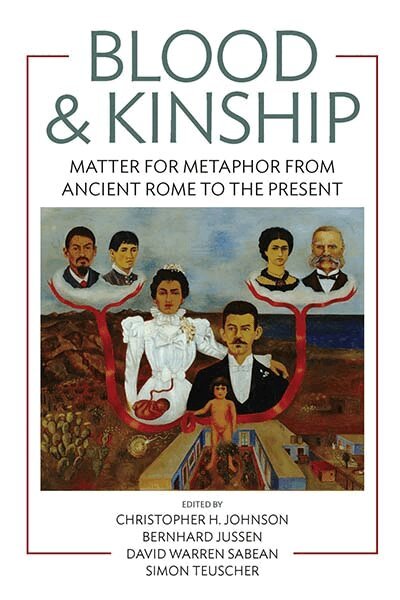
Blood and Kinship
Matter for Metaphor from Ancient Rome to the Present
Av Christopher H. Johnson, Bernhard Jussen m. fl.
Häftad, 2015
599 kr
Lägg i varukorg
The word “blood” awakens ancient ideas, but we know little about its historical representation in Western cultures. Anthropologists have customarily studied how societies think about the bodily substances that unite them, and the contributors to this volume develop those questions in new …
4
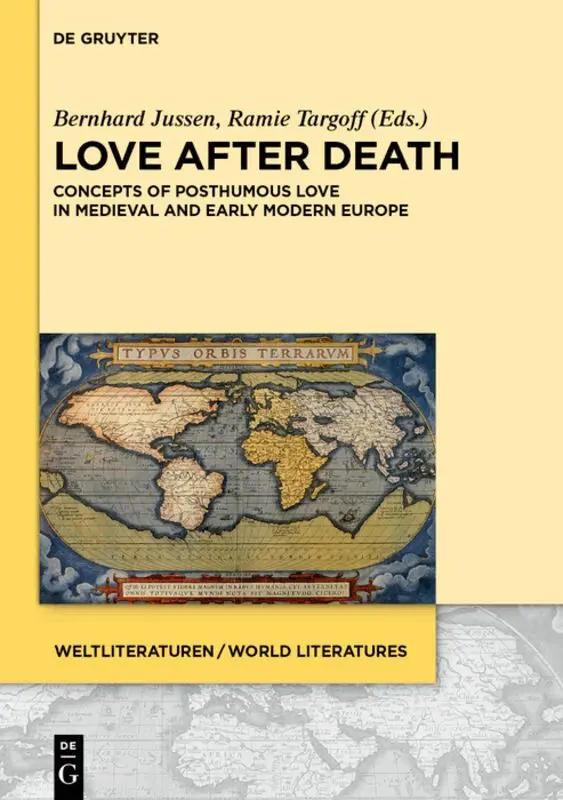
Concepts of Posthumous Love in Medieval and Early Modern Europe
Av Bernhard Jussen, Ramie Targoff
Inbunden, 2014
2142 kr
Lägg i varukorg
This book explores one of the central questions that has haunted husbands and wives and lovers over the millennia of history: What kind of afterlife might they expect for their love once one or both of them have died? Focusing on the evolution of ideas about posthumous love within medieval and …
4
Concepts of Posthumous Love in Medieval and Early Modern Europe
Av Ramie Targoff, Bernhard Jussen
E-bok, 2014
1822 kr
Lägg i varukorg
This book explores one of the central questions that has haunted husbands and wives and lovers over the millennia of history: What kind of afterlife might they expect for their love once one or both of them have died? Focusing on the evolution of ideas about posthumous love within medieval and …
4
Concepts of Posthumous Love in Medieval and Early Modern Europe
Av Ramie Targoff, Bernhard Jussen
E-bok, 2014
1841 kr
Lägg i varukorg
This book explores one of the central questions that has haunted husbands and wives and lovers over the millennia of history: What kind of afterlife might they expect for their love once one or both of them have died? Focusing on the evolution of ideas about posthumous love within medieval and …
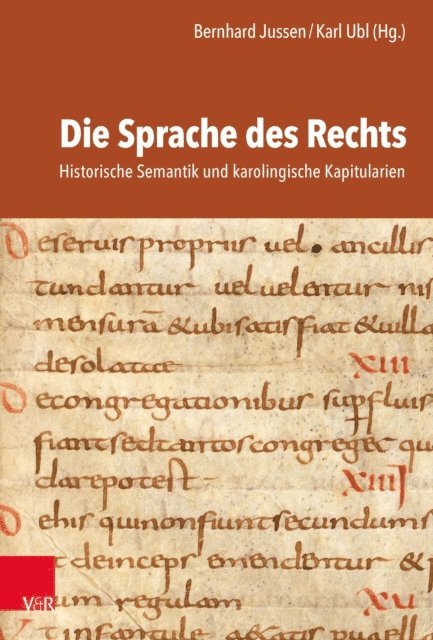
Die Sprache des Rechts
Historische Semantik und karolingische Kapitularien
E-bok, 2022
1089 kr
Lägg i varukorg
In den Erlassen der karolingischen Herrscher (»Kapitularien«) bewegt sich die Sprache in einer Indifferenzzone zwischen Recht, Moral, Religion und Administration. Dadurch schufen die Karolinger ein flexibles Instrument zur Kommunikation mit ihren Amtsträgern, das sich gerade aufgrund seiner …
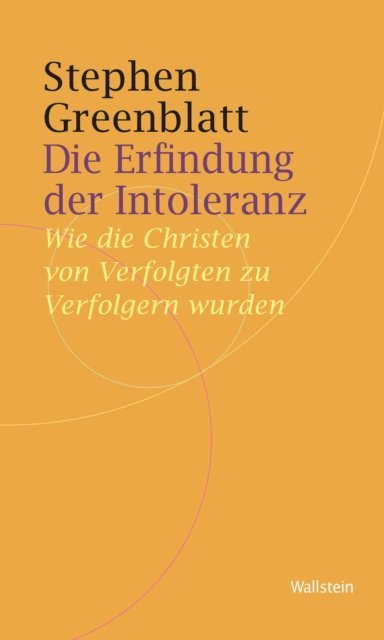
Die Erfindung der Intoleranz
Av Stephen Greenblatt, Bernhard Jussen m. fl.
Häftad, 2019
173 kr
Lägg i varukorg
Die Erfindung der Intoleranz
Wie die Christen von Verfolgten zu Verfolgern wurden
Av Stephen Greenblatt, Julika Griem m. fl.
E-bok, 2019
125 kr
Lägg i varukorg
Über das Ende der religiösen Vielfalt und Akzeptanz im alten Rom - eingeläutet durch das Christentum.Das alte Rom war in vielerlei Hinsicht fortschrittlich. Unzählige Götter und Religionen lebten in der Millionenstadt am Tiber nebeneinander - es war eine politische Strategie des Weltreiches, andere …
Die Erfindung der Intoleranz
Wie die Christen von Verfolgten zu Verfolgern wurden
Av Stephen Greenblatt, Julika Griem m. fl.
E-bok, 2019
125 kr
Lägg i varukorg
Über das Ende der religiösen Vielfalt und Akzeptanz im alten Rom - eingeläutet durch das Christentum.Das alte Rom war in vielerlei Hinsicht fortschrittlich. Unzählige Götter und Religionen lebten in der Millionenstadt am Tiber nebeneinander - es war eine politische Strategie des Weltreiches, andere …