Bernhard Malkmus – författare
Visar alla böcker från författaren Bernhard Malkmus. Handla med fri frakt och snabb leverans.
6 produkter
6 produkter
Inbunden, Tyska, 2022
264 kr
Skickas inom 3-6 vardagar
E-bok
PDF, Engelska, 2011574 kr
Läs direkt efter köp
The German Pícaro and Modernity reads the re-emergence of the picaresque narrative in twentieth-century German-language writing as an expression of modernity and its social imaginaries. Malkmus argues that the picaresque, whose origins date back to the Spanish Renaissance and the Baroque Age, re-emerged as a reflection both of Germany''s explosive modernizing processes between 1880 and 1930 and of the most barbarous implosion of modern civilization under National Socialism. Another reason for the fertility of this literary form at that particular cultural moment is rooted in the complexities of German-Jewish relations and the history of Jewish assimilation in central Europe. A considerable number of authors who used the picaresque form in the twentieth century are from a Jewish background, and Malkmus demonstrates how the picaresque narrative template also offers a medium for German-Jewish self-reflection. In highlighting these connections, he contributes not only to scholarship in European literature, but also but also to our understanding of major social, economic and political issues at stake in modernity
Häftad, Engelska, 2014
535 kr
Skickas inom 10-15 vardagar
The German Pícaro and Modernity reads the re-emergence of the picaresque narrative in twentieth-century German-language writing as an expression of modernity and its social imaginaries. Malkmus argues that the picaresque, whose origins date back to the Spanish Renaissance and the Baroque Age, re-emerged as a reflection both of Germany's explosive modernizing processes between 1880 and 1930 and of the most barbarous implosion of modern civilization under National Socialism. Another reason for the fertility of this literary form at that particular cultural moment is rooted in the complexities of German-Jewish relations and the history of Jewish assimilation in central Europe. A considerable number of authors who used the picaresque form in the twentieth century are from a Jewish background, and Malkmus demonstrates how the picaresque narrative template also offers a medium for German-Jewish self-reflection. In highlighting these connections, he contributes not only to scholarship in European literature, but also but also to our understanding of major social, economic and political issues at stake in modernity
Del 19 - Cultural History & Literary Imagination
Dialectic and Paradox
Configurations of the Third in Modernity
Häftad, Engelska, 2013
788 kr
Skickas inom 5-8 vardagar
From Hegel to the present, the humanities and social sciences have revealed the volatile power of third agency. Systems of thought and practice are often disturbed by the presence of a figure that exceeds traditional binary oppositions. The articles in this volume trace the role of these triadic figures across a broad range of discourses in social theory, philosophy and science studies. Modernity emerges as a mode of system-formation, perpetuation and self-reflection that is deeply rooted in the dynamics of dialectic and paradox.The volume offers an approach which is both systematic and genealogical, providing innovative perspectives on such major thinkers as Adorno, Agamben, Derrida, C. S. Peirce, the Romantics and Simmel as well as phenomena like the psychology of jealousy and envy, the epistemic status of scientific images and conceptions of metabolism. It is the first attempt to look at configurations of the third as a paradigm for the ‘unfinished project of modernity’ (Habermas).
Inbunden, Tyska, 2025
411 kr
Skickas inom 3-6 vardagar
E-bok
Tyska, 2025327 kr
Läs direkt efter köp
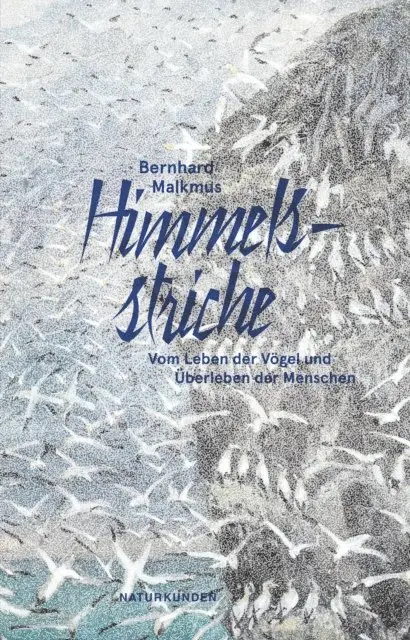
»Dieses Buch leuchtet die Beziehung zwischen Landschaften und Leben mit großer gedanklicher Spannkraft aus. Was für eine sprachliche Schönheit in einer Welt, die vergessen hat, dass wir nicht gemacht, sondern geboren sind!« — Marica Bodrožić»Bernhard Malkmus ist ein besonderer Schriftsteller: ein scharfsichtiger Beobachter der Natur, ein feinsinniger Umweltethiker und ein herausragender Sprachstilist.« — Robert MacfarlaneDer englische Nordosten ist eine Landschaft, an der sich die systemische Veränderung der Biosphäre durch 250 Jahre technischer und sozialer Revolutionen ablesen lässt: Hier wurden bis vor kurzem die reichsten Kohlevorkommen Großbritanniens abgebaut, hier lagen um 1900 die größten Werften der Welt, hier verändern immer noch riesige Chemieagglomerate den Stoffwechsel der Erde. Umsäumt von der geheimnisvollen Nordseeküste im Osten und düsteren Heidegebirgen im Westen ist dieses englisch-schottische Grenzland, um das schon römische Truppen, irische Missionare, Wikinger, berüchtigte Grenzräuberbanden gekämpft haben, auch ein wichtiges Brutgebiet für zahlreiche Vogelarten. Die »Himmelsstriche« der Seevögel – so bezeichnet Bernhard Malkmus sowohl die Gegenden, in denen diese Flugkünstler zuhause sind, als auch die Kalligrafien, die sie in die Lüfte zeichnen. Doch seit einiger Zeit wütet in diesem Vogelparadies das Grippevirus, das in der industriellen Tierhaltung hochgezüchtet und von Zugvögeln auf der ganzen Welt verbreitet wurde. Als Malkmus auf seinen Streifzügen immer mehr Kadaver findet, beginnt er, den Tieren ein literarisches Denkmal zu setzen.Himmelsstriche ist die reizvolle Verbindung von Reisetagebuch und Essay, in der Natur- und Kulturgeschichte verwoben werden: Ein Gesang auf das Meer, eine Hymne auf die Anmut und Widerstandskraft der Seevögel, eine Meditation über Heimat und Migration, eine Suche nach Worten der Trauer angesichts der Artenausrottung um uns.Finalist des W. G. Sebald-Literaturpreises.