• Fri frakt över 249 kr
  • •
  • Snabba leveranser
  • •
  • Billiga böcker
Kundservice

Du är på sajten för privatpersoner.

Företag, bibliotek eller offentlig verksamhet?

Du handlar på classic.bokus.com, där alla dina funktioner finns intakta.
Till classic.bokus.com
Bokus logotyp. Gå till startsidan.
  • Erbjudanden
  • Nyheter
  • Student
  • Topplistor
  • Barn & ungdom
  • Bokus Play
  • E-böcker
  • Pocketböcker
  • Spel & pussel

10% rabatt på allt med kod NYSTART10 →

Sidfot

Mina sidor

    Hjälp

    • Kundservice
    • Vanliga frågor och svar
    • Frakt och leverans
    • Retur vid ångerrätt
    • Reklamera vara
    • Betalning
    • Köpvillkor
    • Allmänna villkor
    • Information om webbplatsens tillgänglighet

    Om Bokus

    • Om oss
    • Pressrum
    • För studenter
    • För företag
    • För bibliotek och offentlig verksamhet
    • För leverantörer
    • Hållbarhet

    Populärt

    • Aktuella erbjudanden
    • Presentkort
    • Studentlitteratur
    • Nya böcker
    • Topplistor
    • Signerade böcker
    • Engelska böcker

    Inspiration

    • Boktips
    • BookTok
    • Populära bokserier
    • Barnbokskaraktärer
    • Populära författare
    Logotyp för Bokus
    Följ oss på Facebook (extern länk)Följ oss på Instagram (extern länk)Följ oss på YouTube (extern länk)Följ oss på TikTok (extern länk)
    bokus @ CookiesAnpassa cookiesIntegritetspolicyKöpvillkor
    Till Citymail hemsida (extern länk)Till Budbee hemsida (extern länk)Till Postnord hemsida (extern länk)Till Schenker hemsida (extern länk)Till Early Bird hemsida (extern länk)Till Walleys hemsida (extern länk)
    1. Skönlitteratur
    2. Litteraturvetenskap
    3. Litteraturvetenskap

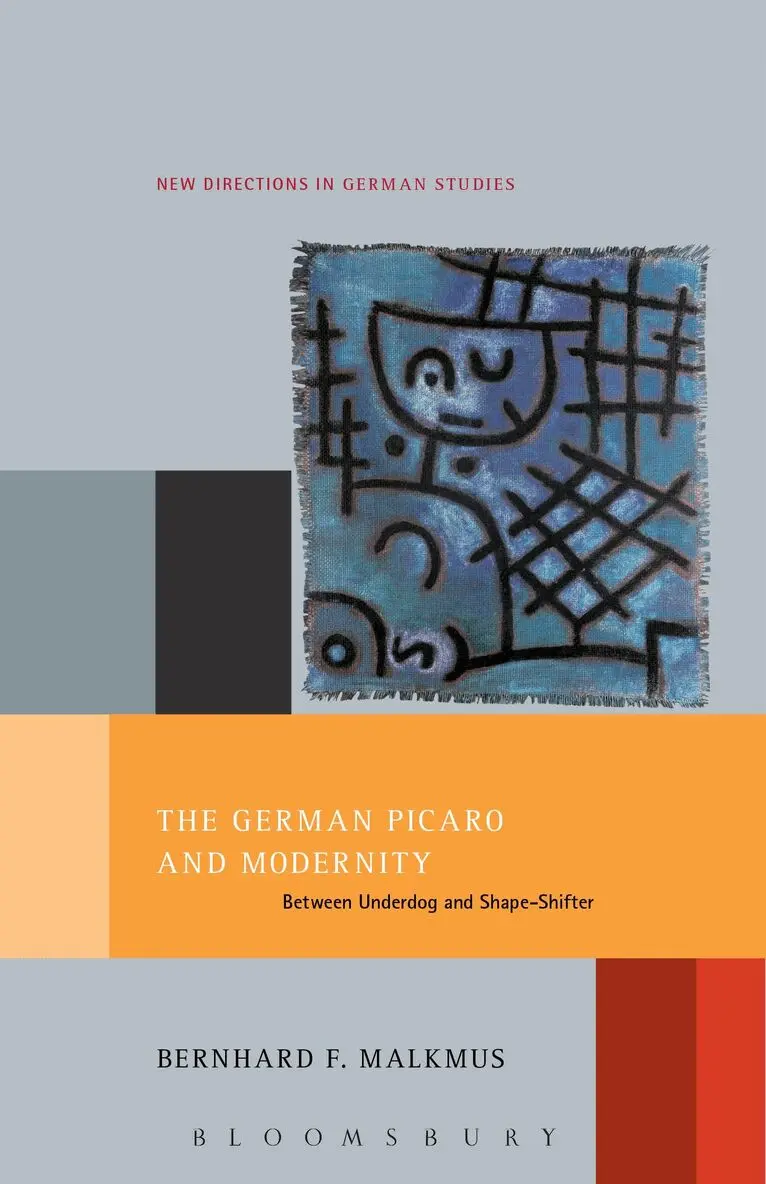
    German Picaro and Modernity

    Between Underdog and Shape-Shifter

    AvBernhard Malkmus

    Häftad, Engelska, 2014

    Del i serien New Directions in German Studies

    535 kr

    Beställningsvara. Skickas inom 10-15 vardagar. Fri frakt över 249 kr.

    Fler format och utgåvor

    E-bok

    573 kr

    Beskrivning

    The German Pícaro and Modernity reads the re-emergence of the picaresque narrative in twentieth-century German-language writing as an expression of modernity and its social imaginaries. Malkmus argues that the picaresque, whose origins date back to the Spanish Renaissance and the Baroque Age, re-emerged as a reflection both of Germany's explosive modernizing processes between 1880 and 1930 and of the most barbarous implosion of modern civilization under National Socialism. Another reason for the fertility of this literary form at that particular cultural moment is rooted in the complexities of German-Jewish relations and the history of Jewish assimilation in central Europe. A considerable number of authors who used the picaresque form in the twentieth century are from a Jewish background, and Malkmus demonstrates how the picaresque narrative template also offers a medium for German-Jewish self-reflection. In highlighting these connections, he contributes not only to scholarship in European literature, but also but also to our understanding of major social, economic and political issues at stake in modernity

    Produktinformation

    • Utgivningsdatum:2014-05-08
    • Mått:140 x 214 x 18 mm
    • Vikt:321 g
    • Format:Häftad
    • Språk:Engelska
    • Serie:New Directions in German Studies
    • Antal sidor:232
    • Förlag:Bloomsbury Publishing Plc
    • ISBN:9781628929539

    Utforska kategorier

    • Litteraturvetenskap inom Skönlitteratur
    • Sociala grupper och identitet inom Samhälle och politik

    Mer om författaren

    Bernhard F. Malkmus is Associate Professor of German at The Ohio State University, USA.

    Recensioner i media

    "In this bold and intelligent new volume, Bernhard Malkmus uses the pícaro figure to explore fundamental questions of the constitution of the subject in modernity. The book presents a set of original and searching new readings of texts, both canonical and less familiar, with considerable implications for the understanding of the conditions of modern culture, especially—but not only—in their German form." -- Andrew J. Webber, Professor of Modern German and Comparative Culture, Head of the Department of German and Dutch, University of Cambridge, UK

    Innehållsförteckning

    • Acknowledgments IntroductionBoxing (In) Life StoriesChapter OneThe Spanish Picaresque Tradition and Its European Repercussions Chapter Two"Students Who Have Lost the Holy Writ": Franz Kafka's Der VerscholleneChapter ThreeStudents Who Have Lost Their Teachers: Robert Walser's Jakob von GuntenPicaresque Topoi ITertium Datur: Between Autonomy and Self-PreservationChapter FourThe Confidence Man as Shape-Shifter: Thomas Mann's Bekenntnisse des Hochstaplers Felix KrullPicaresque Topoi IIThird Space: A Stage for the Modern PícaroChapter FiveThe Shape-Shifter as Underdog: Edgar Hilsenrath's Der Nazi und der FriseurPicaresque Topoi IIIThird Agents: The Inclusion of the ExcludedChapter SixThe Eternal Recurrence of the Picaresque Body: Günter Grass' Die BlechtrommelConclusionDrumming (Out) Life StoriesBibliographyIndex