Beth A Fischer - Böcker
Visar alla böcker från författaren Beth A Fischer. Handla med fri frakt och snabb leverans.
2 produkter
2 produkter
584 kr
Skickas inom 3-6 vardagar
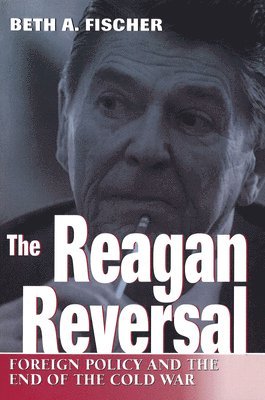
Did President Reagan's hawkish policies destroy the Soviet Union and enable the United States to win the Cold War? Many Americans believe this to be the case. In this view -- known as "triumphalism" -- Reagan's denunciations of the "evil empire" and his military buildup compelled Moscow to admit defeat. The president's triumph demonstrates that America's leaders should stand strong and threaten adversaries into submission. Drawing on both US and Soviet sources, this study demonstrates that triumphalism is a series of falsehoods about President Reagan's intentions, his policies, and the impact his administration had on the Soviet Union. In reality, the president's initially hardline posture undermined US interests and brought the superpowers to the brink of war. This work exposes Reagan's dedication to diplomacy and his unorthodox views about global security, which frequently brought him into conflict with his own advisers and allies. The president did not seek to destroy the USSR; rather, he sought to eliminate nuclear weapons. This volume also explains why Moscow chose to abandon the arms race, adopt democratic reforms, and withdraw from its ill-fated war in Afghanistan. These initiatives were part of a reform movement that had been growing in the USSR for decades before Reagan entered office. The Kremlin did not acquiesce to American pressure; rather, Soviet reformers believed the arms race had been futile and sought to move beyond the Cold War. In fact, President Reagan's initially aggressive policies had made it more difficult for Moscow to pursue these revolutionary reforms. Ultimately President Reagan and General Secretary Gorbachev together were able to accomplish what no one at the time thought possible -- the peaceful conclusion of the Cold War. The president's opposition to nuclear weapons, his determined leadership, and his dedication to diplomacy are his most enduring legacies.
244 kr
Skickas inom 7-10 vardagar
It is often assumed that Ronald Reagan's administration was reactive in bringing about the end of the Cold War, that it was Mikhail Gorbachev's ""new thinking"" and congenial personality that led the administration to abandon its hard-line approach toward Moscow. In this study, the author demonstrates that President Reagan actually began seeking a rapprochement with the Kremlin fifteen months before Gorbachev even took office. She shows that Reagan, known for his long-standing antipathy toward communism, suddenly began calling for ""dialogue, cooperation and understanding"" between the superpowers. What caused such a reversal in policy? Fischer considers three explanations for the reversal. First, it was an election year and public opinion had shifted, thus forcing the administration to become more moderate. Second, new personnel, namely Secretary of State George Schultz and National Security Adviser Robert McFarlane, took control of US policy and made changes more in line with their personal views. Third, Reagan himself may have redirected US policy out of his fear of nuclear war. This last option is the explanation Fischer defends as most significant. In the fall of 1983, the Kremlin mistook a NATO military exercise for the preliminary stages of a nuclear strike and prepared to retaliate. After this narrowly avoided nuclear exchange, Reagan began to re-examine his views on nuclear war. This hypothesis, explains why the US policy was reversed, the timing of the shift, and the nature of the changes made. This study challenges the conventional wisdom about the president himself and reveals that Reagan was - at times - the driving force behind US-Soviet policy. ""The Reagan Reversal"" should stimulate new controversy among scholars concerning the end of the Cold War.