Betsy M. Bryan - Böcker
Visar alla böcker från författaren Betsy M. Bryan. Handla med fri frakt och snabb leverans.
5 produkter
5 produkter
Del 69 - Studies in Ancient Oriental Civilization
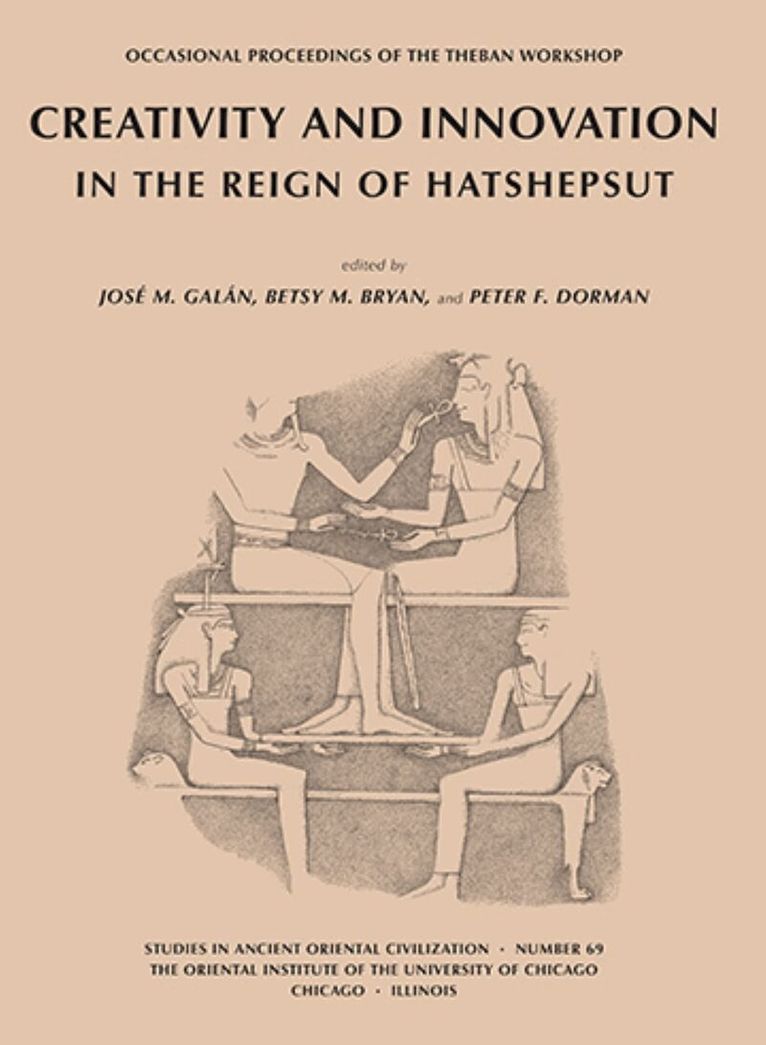
Creativity and Innovation in the Reign of Hatshepsut
Occasional Proceedings of the Theban Workshop
Häftad, Engelska, 2014
486 kr
Skickas inom 5-8 vardagar
This volume publishes the proceedings of the Theban Symposium that took place in May 2010, in Granada, Spain, at the Institute for Arabic Studies of the Spanish National Research Council (CSIC), on the general theme of "Creativity and Innovation in the Reign of Hatshepsut." The volume contains nineteen papers that present new perspectives on the reign of Hatshepsut and the early New Kingdom. The authors address a range of topics, including the phenomenon of innovation, the Egyptian worldview, politics, state administration, women's issues and the use of gender, cult and rituals, mortuary practices, and architecture. Groundbreaking for the study of Hatshepsut's reign and the beginning of the Eighteenth Dynasty, this volume will become an important reference for scholars and lay readers interested in the history, culture, and archaeology of the time of Hatshepsut and the early New Kingdom.
1 524 kr
Skickas inom 5-8 vardagar
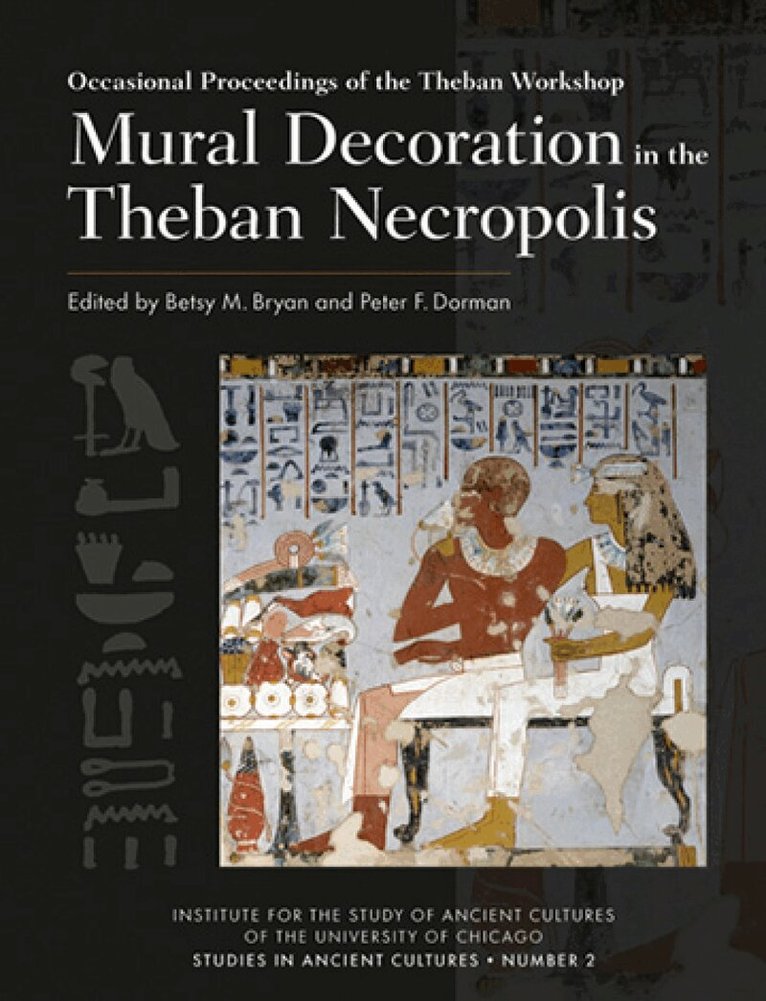
The tombs and mortuary temples of Thebes have proved an enduring topic of interest thanks to a quickly expanding corpus of field materials and a series of conferences devoted to the subject. This volume, the fourth in a series of occasional proceedings from the ongoing Theban Workshop, presents new research on wall decoration in the Theban necropolis. Its thirteen essays, by an international array of leading scholars, attest to the wide and varied scope of the theme.
Del 61 - Studies in Ancient Oriental Civilization
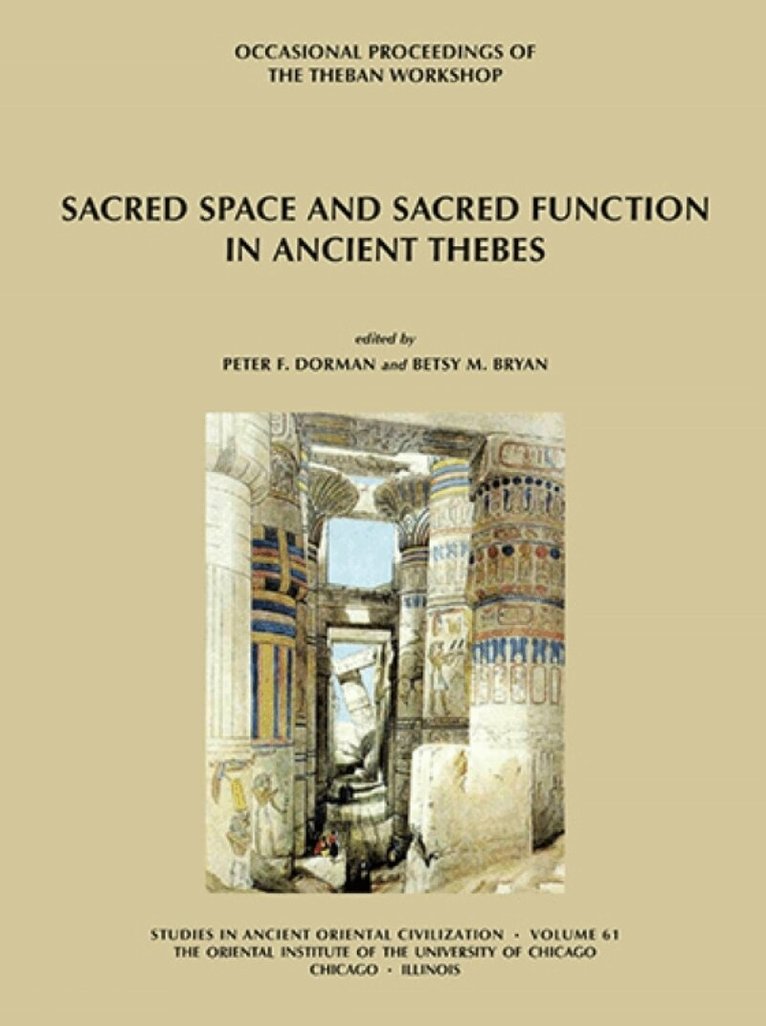
Sacred Space and Sacred Function in Ancient Thebes
Häftad, Engelska, 2007
565 kr
Tillfälligt slut
This volume presents a series of papers delivered at a two-day session of the Theban Workshop held at the British Museum in September 2003. Due to its political and religious prominence throughout much of pharaonic history, the region of ancient Thebes offers scholars a wealth of monuments whose physical remains and extant iconography may be combined with textual sources and archaeological finds in ways that elucidate the function of sacred space as initially conceived, and which also reveal adaptations to human need or shifts in cultural perception. The contributions herein address issues such as the architectural framing of religious ceremony, the implicit performative responses of officiants, the diachronic study of specific rites, the adaptation of sacred space to different uses through physical, representational, or textual alteration, and the development of ritual landscapes in ancient Thebes.
Del 65 - Studies in Ancient Oriental Civilization
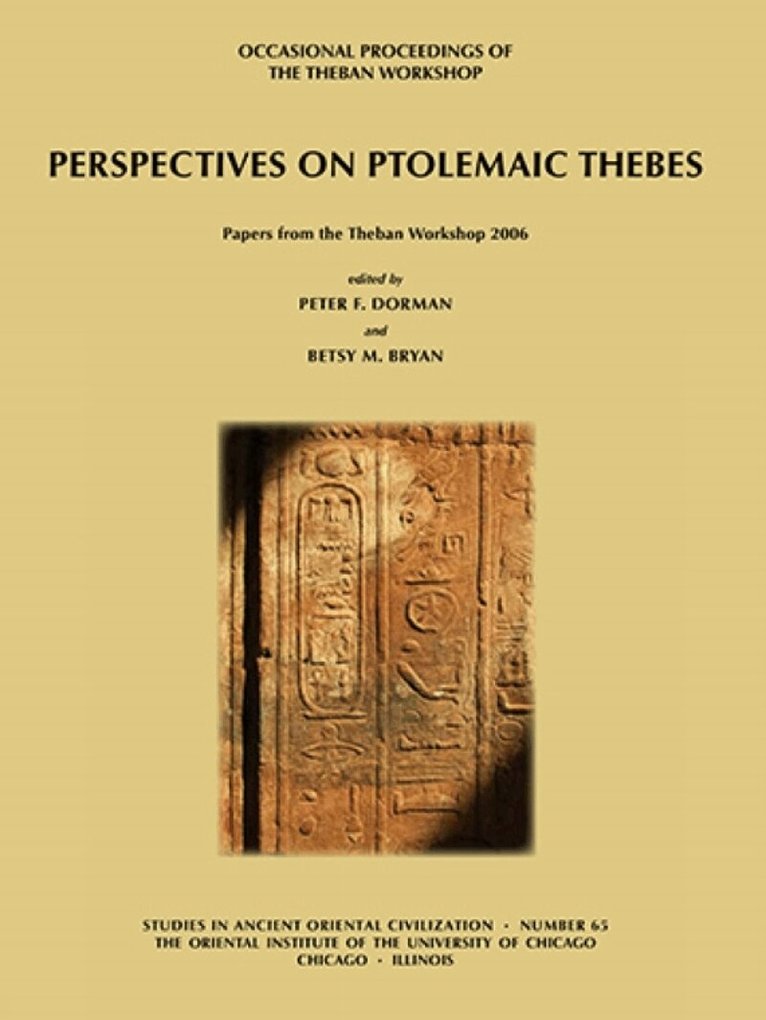
Perspectives on Ptolemaic Thebes
Häftad, Engelska, 2011
255 kr
Skickas inom 5-8 vardagar
The manuscript consists of seven papers presented at the Theban Workshop, 2006. Within the temporal and spatial boundaries indicated by the title, the subjects of the papers are extremely diverse, ranging from models of culture-history (Manning and Moyer), to studies of specific administrative offices (Arlt), a single statue type (Albersmeier), inscriptions in a single temple (DiCerbo/Jasnow, and McClain), and inscriptions of a single king (Ritner). Nonetheless, all the papers are significant contributions to scholarship, presenting new interpretations and conclusions. Two papers (DiCerbo/Jasnow and McClain) are useful preliminary reports on long-term projects. The cross-references in Arlt and Albersmeiers and in Mannings and Moyers papers attest to value added by presentation at the workshop.
290 kr
Skickas inom 5-8 vardagar
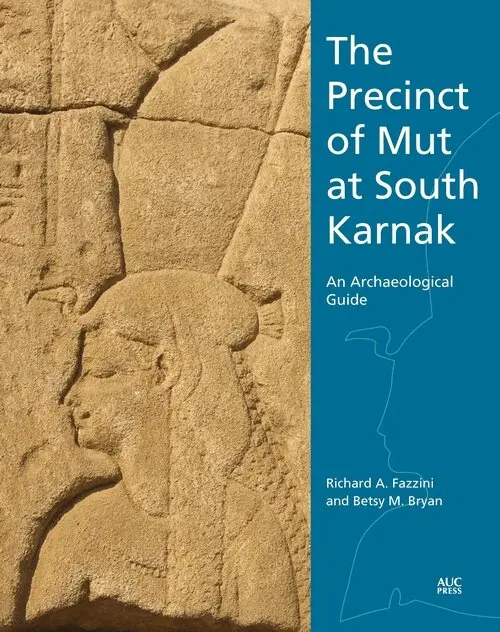
Mut was an important deity perhaps best known as the consort of Amun-Re and the mother of Khonsu, but her earlier and far more independent role was as the daughter of the sun god, much akin to Hathor. Like Nekhbet and Wadjet and the other lioness goddesses (referred to as Sekhmet) she was the 'Eye of Re', who could be both benign and dangerous. In human form, Mut protected the king and his office; as Sekhmet she could destroy Egypt if not pacified. The Mut precinct was a major religious center from the Eighteenth Dynasty to the Roman Period, but evidence suggests the existence of an even earlier temple. It expanded during the reign of the Kushite king, Taharqa and attained its present size during the fourth century BCE, sheltering three major temples, several small chapels, and eventually, a village within the protection of its massive enclosure walls. One of its most striking features is the hundreds of Sekhmet statues.In 1976, the Brooklyn Museum began the first systematic exploration of the precinct as a whole. Since 2001, Brooklyn has shared the site with an expedition from the Johns Hopkins University, both teams working cooperatively toward the same goal. This richly illustrated guide seeks to bring the goddess and her temple precinct the attention they deserve.