Bianca Kuhnel – författare
Visar alla böcker från författaren Bianca Kuhnel. Handla med fri frakt och snabb leverans.
3 produkter
3 produkter
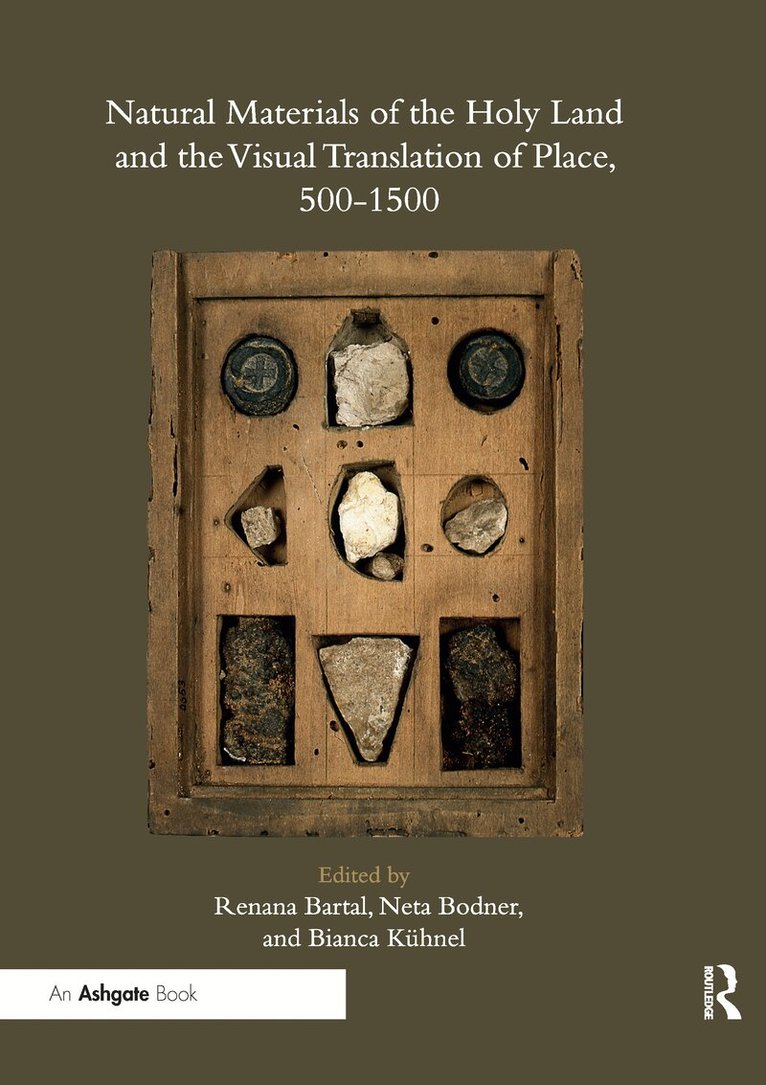
Natural Materials of the Holy Land and the Visual Translation of Place, 500-1500
Häftad, Engelska, 2020
713 kr
Skickas inom 10-15 vardagar
Natural Materials of the Holy Land and the Visual Translation of Place, 500-1500, focuses on the unique ways that natural materials carry the spirit of place. Since early Christianity, wood, earth, water and stone were taken from loca sancta to signify them elsewhere. Academic discourse has indiscriminately grouped material tokens from holy places and their containers with architectural and topographical emulations, two-dimensional images and bodily relics. However, unlike textual or visual representations, natural materials do not describe or interpret the Holy Land; they are part of it. Tangible and timeless, they realize the meaning of their place of origin in new locations.What makes earth, stones or bottled water transported from holy sites sacred? How do they become pars pro toto, signifying the whole from which they were taken? This book will examine natural media used for translating loca sancta, the processes of their sanctification and how, although inherently abstract, they become charged with meaning. It will address their metamorphosis, natural or induced; how they change the environment to which they are transported; their capacity to translate a static and distant site elsewhere; the effect of their relocation on users/viewers; and how their containers and staging are used to communicate their substance.
Natural Materials of the Holy Land and the Visual Translation of Place, 500-1500
Inbunden, Engelska, 2017
2 385 kr
Skickas inom 10-15 vardagar
Natural Materials of the Holy Land and the Visual Translation of Place, 500-1500, focuses on the unique ways that natural materials carry the spirit of place. Since early Christianity, wood, earth, water and stone were taken from loca sancta to signify them elsewhere. Academic discourse has indiscriminately grouped material tokens from holy places and their containers with architectural and topographical emulations, two-dimensional images and bodily relics. However, unlike textual or visual representations, natural materials do not describe or interpret the Holy Land; they are part of it. Tangible and timeless, they realize the meaning of their place of origin in new locations.What makes earth, stones or bottled water transported from holy sites sacred? How do they become pars pro toto, signifying the whole from which they were taken? This book will examine natural media used for translating loca sancta, the processes of their sanctification and how, although inherently abstract, they become charged with meaning. It will address their metamorphosis, natural or induced; how they change the environment to which they are transported; their capacity to translate a static and distant site elsewhere; the effect of their relocation on users/viewers; and how their containers and staging are used to communicate their substance.
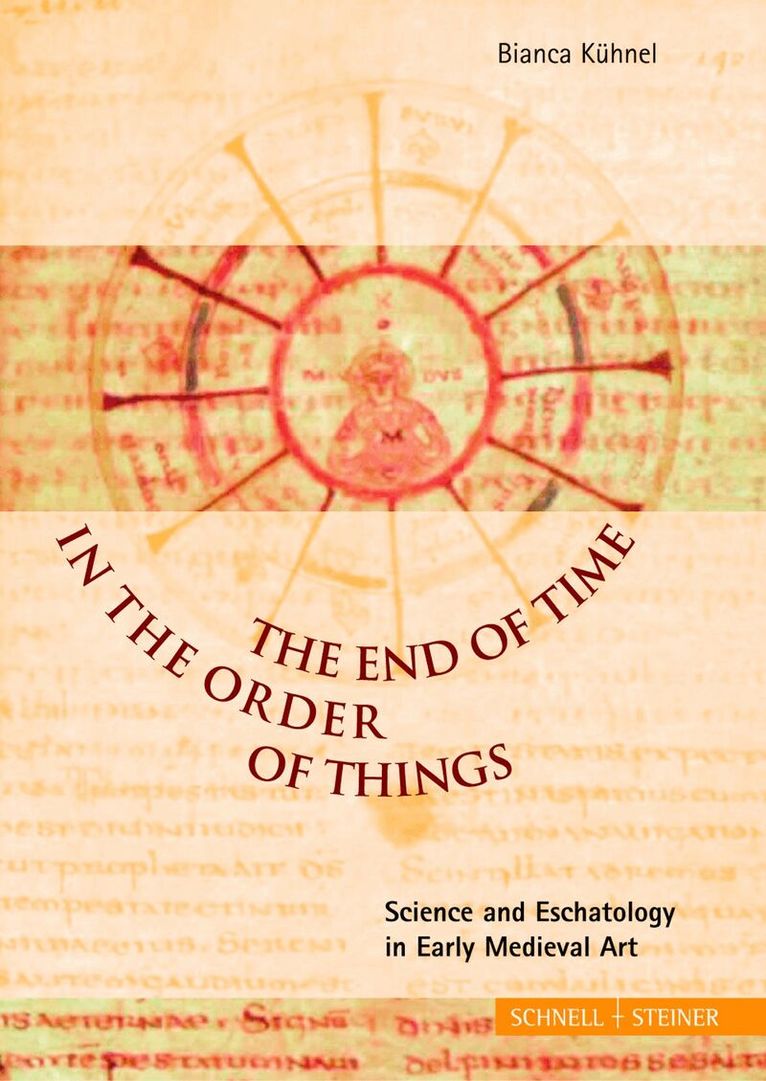
End of Time in the Order of Things
Science and Eschatology in Early Medieval Art
Inbunden, Engelska, 2003
1 080 kr
Skickas inom 5-8 vardagar
The study is based on a multidisciplinary approach from the perspective of science, religion and art. Biblical and scientific approaches - namely computistics and astronomy - are juxtaposed. By contrasting pictorial representations, written interpretations and historical facts, it becomes convincingly clear how strongly scientific representations and biblical iconography have influenced each other. Medieval scribes and illuminators did not separate these two genres.In the course of recent research, the work shows that Isidore of Seville, Beda Venerabilis or Alcuin were extremely important mediators of ancient cosmological knowledge for the modern world and that Christian authors have made lasting and still relevant contributions in the scientific field. One of these fields is computistics, originally the calculation of the exact date of Easter, in a broader sense the calculation of time.The spiritual nature of medieval science is extremely valuable for the comparison of science and art against the background of the main messages of the Christian faith. This work is the first to systematically describe the significance of the so-called Schematisms for the interpretation of medieval art, beginning in the Carolingian period and spanning a period of 300 years. Previously unknown illuminations are included in the analysis. The work convincingly illustrates the close interweaving of iconography - formed by schematic representations - and eschatology.