Birgit Anette Olsen – författare
Visar alla böcker från författaren Birgit Anette Olsen. Handla med fri frakt och snabb leverans.
15 produkter
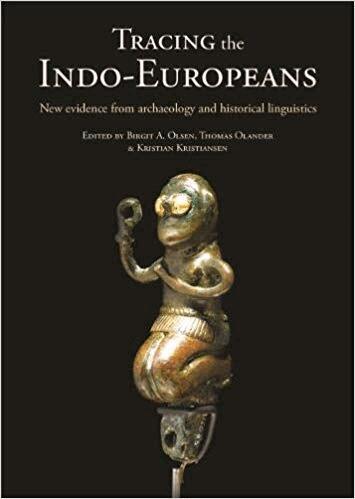
Tracing the Indo-Europeans
New evidence from archaeology and historical linguistics
Av Birgit Anette Olsen, Thomas Olander m. fl.
Häftad, 2019
435 kr
Lägg i varukorg
Recent developments in aDNA has reshaped our understanding of later European prehistory, and at the same time also opened up for more fruitful collaborations between archaeologists and historical linguists. Two revolutionary genetic studies, published independently in Nature, 2015, showed that …
Noun in Biblical Armenian
Origin and Word-Formation - with special emphasis on the Indo-European heritage
Inbunden, 1999
4750 kr
Lägg i varukorg
No detailed description available for "The Noun in Biblical Armenian".
Noun in Biblical Armenian
Origin and Word-Formation - with special emphasis on the Indo-European heritage
E-bok, 2011
4560 kr
Lägg i varukorg
No detailed description available for "e;The Noun in Biblical Armenian"e;.
Sound of Indo-European
Phonetics, Phonemics, and Morphophonemics
Av Benedicte Nielsen Whitehead, Thomas Olander m. fl.
Inbunden, 2012
1343 kr
Lägg i varukorg
One of the most detailed and comprehensive studies of Indo-European phonology, this book brings together leading linguists working in Indo-European studies to examine both the broadest definitions of the group -- from minute phonetics to abstract levels of phonemics centring on all varieties of …
Tocharian and Indo-European Studies, Volume 15
Av Birgit Anette Olsen, Michael Peyrot m. fl.
Häftad, 2014
670 kr
Lägg i varukorg
Tocharian and Indo-European Studies is the central publication for the study of two closely related languages, Tocharian A and Tocharian B. Found in many Buddhist manuscripts from central Asia, Tocharian dates back to the second half of the first millennium of the Common Era, though it was not …
Linguistic Roots of Europe
Origin and Development of European Languages
Av Robert Mailhammer, Theo Vennemann m. fl.
Inbunden, 2015
839 kr
Lägg i varukorg
Most of us know of the Indo-European roots of European languages, but how did this precursor language take hold and what did Europe look like before it did so? This book explores the continent before the spread of the Indo-Europeans, examines its indigenous population and the contacts it had with …
Tocharian and Indo-European Studies 16
Av Georges-Jean Pinault, Michael Peyrot m. fl.
Häftad, 2015
670 kr
Lägg i varukorg
Tocharian and Indo-European Studies is the central publication for the study of two closely related languages, Tocharian A and Tocharian B. Found in many Buddhist manuscripts from central Asia, Tocharian dates back to the second half of the first millennium of the Common Era, though it was not …
Language and Prehistory of the Indo-European Peoples
A Cross-Disciplinary Perspective
Av Adam Hyllested, Benedicte Nielsen Whitehead m. fl.
Inbunden, 2017
768 kr
Lägg i varukorg
This volume contains eighteen contributions to the increasingly detailed discussion about neolithic and bronze-age Europe. It touches on the arrival of Uralic and Indo-European settlers, on the origins of their languages, their customs, and pantheon. The contributors are historical linguists, …
Tocharian and Indo-European Studies 17
Av Birgit Anette Olsen, Thomas Olander m. fl.
Häftad, 2016
705 kr
Lägg i varukorg
Tocharian and Indo-European Studies is the central publication for the study of two closely related languages, Tocharian A and Tocharian B. Found in many Buddhist manuscripts from central Asia, Tocharian dates back to the second half of the first millennium of the Common Era, though it was not …
Tocharian and Indo-European Studies 18
Av Birgit Anette Olsen, Thomas Olander m. fl.
Häftad, 2018
821 kr
Lägg i varukorg
Tocharian and Indo-European Studies 19
Av Birgit Anette Olsen, Thomas Peyrot, Michaêl m. fl.
Häftad, 2019
672 kr
Lägg i varukorg
Tocharian and Indo-European Studies is the central publication for the study of two closely related languages, Tocharian A and Tocharian B. Found in many Buddhist manuscripts from central Asia, Tocharian dates back to the second half of the first millennium of the Common Era, though it was not …
Tocharian and Indo-European Studies 20: Volume 20
Av Birgit Anette Olsen, Hannes Fellner
Häftad, 2020
687 kr
Lägg i varukorg
Tocharian and Indo-European Studies 21
Av Birgit Anette Olsen, Hannes Fellner m. fl.
Häftad, 2026
667 kr
Lägg i varukorg
Indo-European Word Formation
Proceedings of the Conference Held at the University of Copenhagen October 20th - 22nd 2000
Inbunden, 2004
861 kr
Lägg i varukorg
This book contains twenty articles on the subject of derivational morphology in Indo-European languages, and is the result of the conference "Indo-European Word Formation", held in Copenhagen, October 20th - 22nd 2000. The papers, covering all areas of Indo-European, make substantial contributions …
Power, Gender, and Mobility
Aspects of Indo-European Society
Av Riccardo Ginevra, Stefan Höfler m. fl.
Inbunden, 2024
968 kr
Tillfälligt slut
Power, Gender, and Mobility is situated at the intersection of diverse but complementary approaches to the investigation of prehistoric culture and society: combining perspectives from linguistics, archaeology, anthropology, and history of religion, it seeks to explore the dynamics of power, …