Björn Heile - Böcker
Visar alla böcker från författaren Björn Heile. Handla med fri frakt och snabb leverans.
10 produkter
10 produkter
1 720 kr
Skickas inom 5-8 vardagar
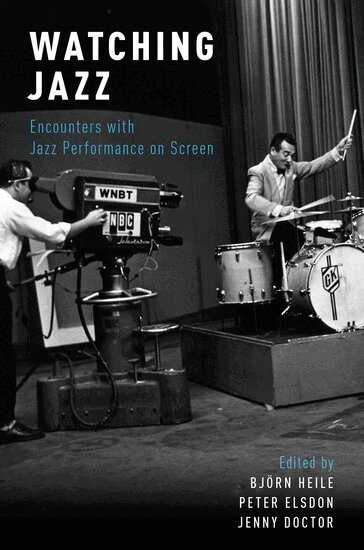
Watching Jazz: Encounters with Jazz Performance on Screen is the first systematic study of jazz on screen media. Where earlier studies have focused almost entirely on the role and portrayal of jazz in Hollywood film, the present book engages with a plethora of technologies and media from early film and soundies through television to recent developments in digital technologies and online media. Likewise, the authors discuss jazz in the widest sense, ranging from Duke Ellington and Jimmy Dorsey through the likes of Dizzy Gillespie, Art Blakey, Oscar Peterson, Miles Davis, John Coltrane and Charles Mingus to Pat Metheny.Much of this rich and fascinating material has never been studied in depth before, and what emerges most clearly are the manifold connections between the music and the media on which it was and is being recorded. Its long association with film and television has left its trace in jazz, just as online and social media are subtly shaping it now. Vice versa, visual media have always benefited from focusing on music and this significantly affected their development. The book follows these interrelations, showing how jazz was presented and represented on screen and what this tells us about the music, the people who made it and their audiences. The result is a new approach to jazz and the media, which will be required reading for students of both fields.
607 kr
Skickas inom 5-8 vardagar
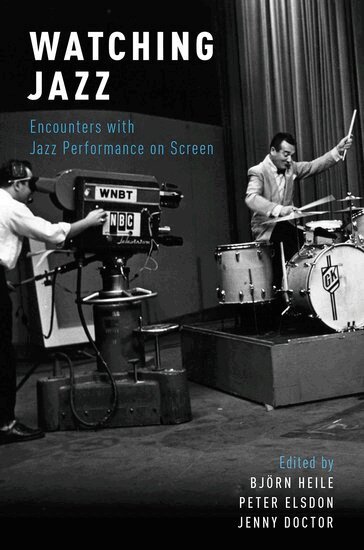
Watching Jazz: Encounters with Jazz Performance on Screen is the first systematic study of jazz on screen media. Where earlier studies have focused almost entirely on the role and portrayal of jazz in Hollywood film, the present book engages with a plethora of technologies and media from early film and soundies through television to recent developments in digital technologies and online media. Likewise, the authors discuss jazz in the widest sense, ranging from Duke Ellington and Jimmy Dorsey through the likes of Dizzy Gillespie, Art Blakey, Oscar Peterson, Miles Davis, John Coltrane and Charles Mingus to Pat Metheny.Much of this rich and fascinating material has never been studied in depth before, and what emerges most clearly are the manifold connections between the music and the media on which it was and is being recorded. Its long association with film and television has left its trace in jazz, just as online and social media are subtly shaping it now. Vice versa, visual media have always benefited from focusing on music and this significantly affected their development. The book follows these interrelations, showing how jazz was presented and represented on screen and what this tells us about the music, the people who made it and their audiences. The result is a new approach to jazz and the media, which will be required reading for students of both fields.
704 kr
Skickas inom 10-15 vardagar
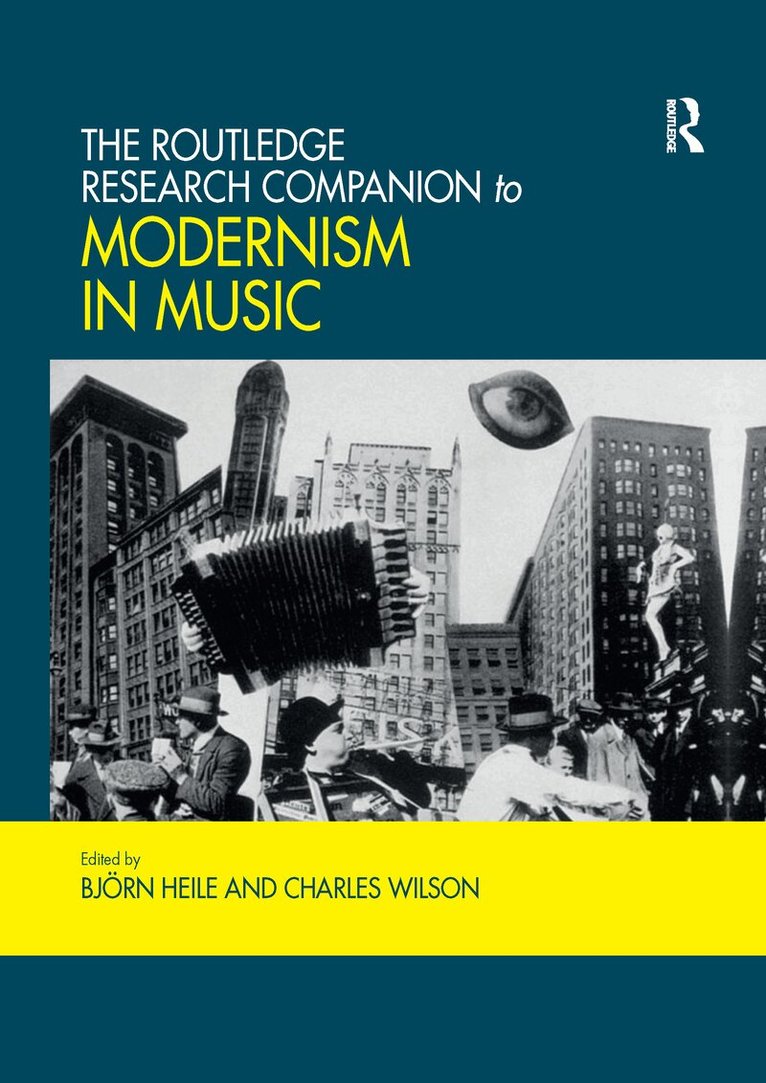
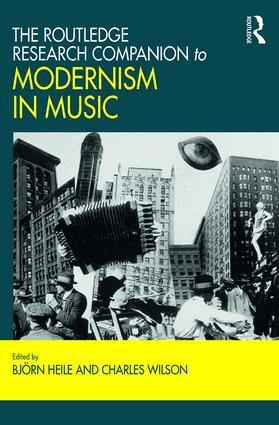
Modernism in music still arouses passions and is riven by controversies. Taking root in the early decades of the twentieth century, it achieved ideological dominance for almost three decades following the Second World War, before becoming the object of widespread critique in the last two decades of the century, both from critics and composers of a postmodern persuasion and from prominent scholars associated with the ‘new musicology’. Yet these critiques have failed to dampen its ongoing resilience. The picture of modernism has considerably broadened and diversified, and has remained a pivotal focus of debate well into the twenty-first century. This Research Companion does not seek to limit what musical modernism might be. At the same time, it resists any dilution of the term that would see its indiscriminate application to practically any and all music of a certain period.In addition to addressing issues already well established in modernist studies such as aesthetics, history, institutions, place, diaspora, cosmopolitanism, production and performance, communication technologies and the interface with postmodernism, this volume also explores topics that are less established; among them: modernism and affect, modernism and comedy, modernism versus the ‘contemporary’, and the crucial distinction between modernism in popular culture and a ‘popular modernism’, a modernism of the people. In doing so, this text seeks to define modernism in music by probing its margins as much as by restating its supposed essence.
648 kr
Skickas inom 10-15 vardagar
In this book, the contributors reconsider the fundamentals of Music as a university discipline by engaging with the questions: What should university study of music consist of? Are there any aspects, repertoires, pieces, composers and musicians that we want all students to know about? Are there any skills that we expect them to be able to master? How can we guarantee the relevance, rigour and cohesiveness of our curriculum? What is specific to higher education in music and what does it mean now and for the future? The book addresses many of the challenges students and teachers face in current higher education; indeed, the majority of today’s music students undoubtedly encounter a greater diversity of musical traditions and critical approaches to their study as well as a wider set of skills than their forebears. Welcome as these developments may be, they pose some risks too: more material cannot be added to the curriculum without either sacrificing depth for breadth or making much of it optional. The former provides students with a superficial and deceptive familiarity with a wide range of subject matter, but without the analytical skills and intellectual discipline required to truly master any of it. The latter easily results in a fragmentation of knowledge and skills, without a realistic opportunity for students to draw meaningful connections and arrive at a synthesis.The authors, Music academics from the University of Glasgow, provide case studies from their own extensive experience, which are complemented by an Afterword from Nicholas Cook, 1684 Professor of Music at the University of Cambridge. Together, they examine what students can and should learn about and from music and what skills and knowledge music graduates could or should possess in order to operate successfully in professional and public life. Coupled with these considerations are reflections on music’s social function and universities’ role in public life, concluding with the co
2 236 kr
Skickas inom 10-15 vardagar
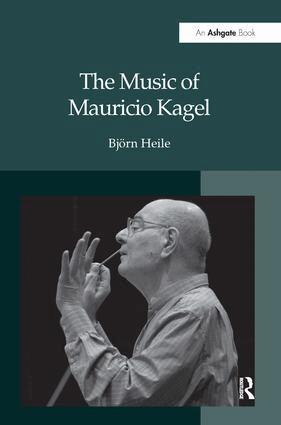
Mauricio Kagel was undoubtedly one of the major figures in the new music of the last fifty years. Growing up in the rich cultural atmosphere of Buenos Aires in the 1940s and '50s, where the writer Jorge Luis Borges was one of his teachers, he became a member of avant-garde circles as well as receiving a rigorous musical education. By 1957 Kagel had acted on the advice of Pierre Boulez to move to Europe to pursue a career as a composer. He quickly established himself at Cologne, the rallying point for young composers at the time, and became one of the leading, if controversial, figures at the famous Darmstadt summer courses. He embraced multiple serialism, aleatory technique and electronics, but he is best known for his pioneering explorations in music theatre, radio play, film and mixed media. Björn Heile charts Kagel's compositional development, considering the aesthetic and ideological issues the composer raises in his work. Focusing on Kagel's use of music as a means of intellectual inquiry, Heile shows Kagel to constantly question the nature of music and its role in society. Kagel's broadening of the concept of music to include theatre, film and other media, his disdain for purism as well as his subversive humour and sense of the absurd have challenged reified notions of music and art. Heile considers Kagel's background as Argentine immigrant to Europe (born to Russian-Jewish immigrants to Argentina) to situate the composer's aesthetic. What emerges is the breadth of Kagel's imagination and the multiplicity of contexts he drew from, which were both distinctive and, in the age of pluralist multiculturalism and globalization, exemplary. As Heile demonstrates, it was Kagel's enlarged notion of music as inherently multimedial that may be his most important contribution to new music, and on which his reputation ultimately rests.
2 375 kr
Skickas inom 10-15 vardagar
This collection of essays offers a historical reappraisal of what musical modernism was, and what its potential for the present and future could be. It thus moves away from the binary oppositions that have beset twentieth-century music studies in the past, such as those between modernism and postmodernism, between conceptions of musical autonomy and of cultural contingency and between formalist-analytical and cultural-historical approaches. Focussing particularly on music from the 1970s to the 1990s, the volume assembles approaches from different perspectives to new music with a particular emphasis on a critical reassessment of the meaning and function of the legacy of musical modernism. The authors include scholars, musicologists and composers who combine culturally, socially, historically and aesthetically oriented approaches with analytical methods in imaginative ways.
787 kr
Skickas inom 10-15 vardagar
This collection of essays offers a historical reappraisal of what musical modernism was, and what its potential for the present and future could be. It thus moves away from the binary oppositions that have beset twentieth-century music studies in the past, such as those between modernism and postmodernism, between conceptions of musical autonomy and of cultural contingency and between formalist-analytical and cultural-historical approaches. Focussing particularly on music from the 1970s to the 1990s, the volume assembles approaches from different perspectives to new music with a particular emphasis on a critical reassessment of the meaning and function of the legacy of musical modernism. The authors include scholars, musicologists and composers who combine culturally, socially, historically and aesthetically oriented approaches with analytical methods in imaginative ways.
843 kr
Skickas inom 10-15 vardagar
Mauricio Kagel was undoubtedly one of the major figures in the new music of the last fifty years. Growing up in the rich cultural atmosphere of Buenos Aires in the 1940s and '50s, where the writer Jorge Luis Borges was one of his teachers, he became a member of avant-garde circles as well as receiving a rigorous musical education. By 1957 Kagel had acted on the advice of Pierre Boulez to move to Europe to pursue a career as a composer. He quickly established himself at Cologne, the rallying point for young composers at the time, and became one of the leading, if controversial, figures at the famous Darmstadt summer courses. He embraced multiple serialism, aleatory technique and electronics, but he is best known for his pioneering explorations in music theatre, radio play, film and mixed media. Björn Heile charts Kagel's compositional development, considering the aesthetic and ideological issues the composer raises in his work. Focusing on Kagel's use of music as a means of intellectual inquiry, Heile shows Kagel to constantly question the nature of music and its role in society. Kagel's broadening of the concept of music to include theatre, film and other media, his disdain for purism as well as his subversive humour and sense of the absurd have challenged reified notions of music and art. Heile considers Kagel's background as Argentine immigrant to Europe (born to Russian-Jewish immigrants to Argentina) to situate the composer's aesthetic. What emerges is the breadth of Kagel's imagination and the multiplicity of contexts he drew from, which were both distinctive and, in the age of pluralist multiculturalism and globalization, exemplary. As Heile demonstrates, it was Kagel's enlarged notion of music as inherently multimedial that may be his most important contribution to new music, and on which his reputation ultimately rests.
2 305 kr
Skickas inom 10-15 vardagar
In this book, the contributors reconsider the fundamentals of Music as a university discipline by engaging with the questions: What should university study of music consist of? Are there any aspects, repertoires, pieces, composers and musicians that we want all students to know about? Are there any skills that we expect them to be able to master? How can we guarantee the relevance, rigour and cohesiveness of our curriculum? What is specific to higher education in music and what does it mean now and for the future? The book addresses many of the challenges students and teachers face in current higher education; indeed, the majority of today’s music students undoubtedly encounter a greater diversity of musical traditions and critical approaches to their study as well as a wider set of skills than their forebears. Welcome as these developments may be, they pose some risks too: more material cannot be added to the curriculum without either sacrificing depth for breadth or making much of it optional. The former provides students with a superficial and deceptive familiarity with a wide range of subject matter, but without the analytical skills and intellectual discipline required to truly master any of it. The latter easily results in a fragmentation of knowledge and skills, without a realistic opportunity for students to draw meaningful connections and arrive at a synthesis.The authors, Music academics from the University of Glasgow, provide case studies from their own extensive experience, which are complemented by an Afterword from Nicholas Cook, 1684 Professor of Music at the University of Cambridge. Together, they examine what students can and should learn about and from music and what skills and knowledge music graduates could or should possess in order to operate successfully in professional and public life. Coupled with these considerations are reflections on music’s social function and universities’ role in public life, concluding with the conviction that a university education in music is more than a personal investment in one’s future; it contributes to the public good.
3 419 kr
Skickas inom 10-15 vardagar
Modernism in music still arouses passions and is riven by controversies. Taking root in the early decades of the twentieth century, it achieved ideological dominance for almost three decades following the Second World War, before becoming the object of widespread critique in the last two decades of the century, both from critics and composers of a postmodern persuasion and from prominent scholars associated with the ‘new musicology’. Yet these critiques have failed to dampen its ongoing resilience. The picture of modernism has considerably broadened and diversified, and has remained a pivotal focus of debate well into the twenty-first century. This Research Companion does not seek to limit what musical modernism might be. At the same time, it resists any dilution of the term that would see its indiscriminate application to practically any and all music of a certain period.In addition to addressing issues already well established in modernist studies such as aesthetics, history, institutions, place, diaspora, cosmopolitanism, production and performance, communication technologies and the interface with postmodernism, this volume also explores topics that are less established; among them: modernism and affect, modernism and comedy, modernism versus the ‘contemporary’, and the crucial distinction between modernism in popular culture and a ‘popular modernism’, a modernism of the people. In doing so, this text seeks to define modernism in music by probing its margins as much as by restating its supposed essence.