Bjørn Lovén - Böcker
Visar alla böcker från författaren Bjørn Lovén. Handla med fri frakt och snabb leverans.
2 produkter
2 produkter
Del 15 - Monographs of the Danish Institute at Athens
Ancient Harbours of the Piraeus
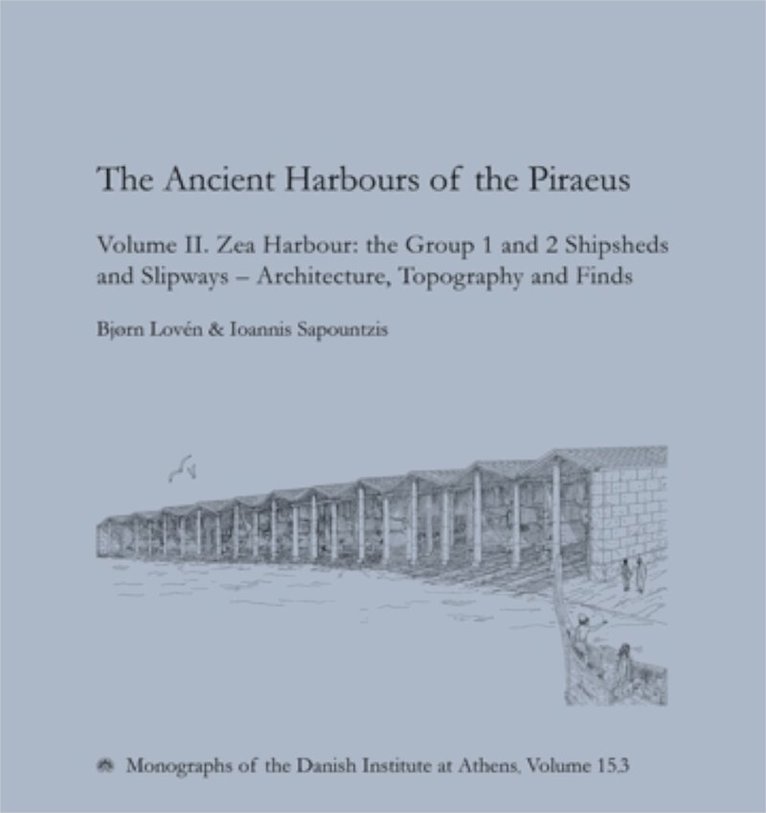
Volume II. Zea Harbour: the Group 1 and 2 Shipsheds and Slipways - Architecture, Topography and Finds
Inbunden, Engelska, 2019
659 kr
Skickas inom 7-10 vardagar
Volume 15,3: Architecture, Topography, Finds. Expanding on the publication of the shipsheds and slipways found in the northern half of Group 1 (Area 1) on the eastern side of Zea Harbour in Volume I.1–2 (2011) of the peer-reviewed Ancient Harbours of the Piraeus series, Volume II presents further results of the archaeological investigations conducted by the Zea Harbour Project (ZHP) in 2004-2010 and 2012 of ancient shipsheds and slipways in Zea Harbour (Pashalimani), both identified and possible, making them the best documented structures in Athens’ naval bases and in the wider Mediterranean. Approximately half of Volume II is devoted to the remains of shipsheds and possible shipsheds in the southern half of Group 1 (Area 2), while studies of structures identified as wide unroofed slipways in Group 2 (Area 3) on the south-eastern side of the same harbour basin occupy the balance of the book. After Chapter 1’s introduction to terminology and methodology, Chapter 2 presents the architecture of the shipsheds and possible shipsheds found in the southern half of Group 1 (Area 2), along with the arrangement and topography of this massive naval complex, which in the 4th century BC covered between 11,630 m2 and 11,989 m2. Chapter 3 examines and catalogues the ceramics and other small finds discovered in the same area, discussing their excavation contexts, composition, and chronological significance. Chapter 4 focuses on the architecture and topography of seven wide, unroofed slipways found in Group 2 in the northern part of Area 3 that represent a building type previously unknown in the Piraeus, probably designed either for a larger warship known as the penteres (‘five’), introduced into the Athenian navy between 329/8 BC and 326/5 BC, or for a larger Hellenistic-period warship type. Chapter 5 analyses and catalogues the ceramic small finds recovered during the excavation of the structures featured in Chapter 4. Chapter 6 presents the new evidence regarding relative sea-level change in the harbours of Zea and Mounichia and its impact on the reconstructed lengths and layouts of the slipways and shipsheds at Zea in Group 1 (Areas 1–2) along with the wide slipways of Group 2, including greater accuracy in the recalculated lengths of the Group 1 shipsheds and slipways presented in Volume I; furthermore, it reaffirms the validity of the ZHP’s methodology and published results in relation to shipsheds around the Mediterranean. Chapter 7 recapitulates the authors’ topographical, architectural, and chronological conclusions regarding the complexes at Zea and Mounichia, which contain the only identifiable shipsheds for triremes anywhere in the ancient world. Descriptive catalogues of the Area 2 and 3 quarries and Area 2 trenches (Appendices 1–2), Figures, and Plates complete the volume.
795 kr
Skickas inom 7-10 vardagar
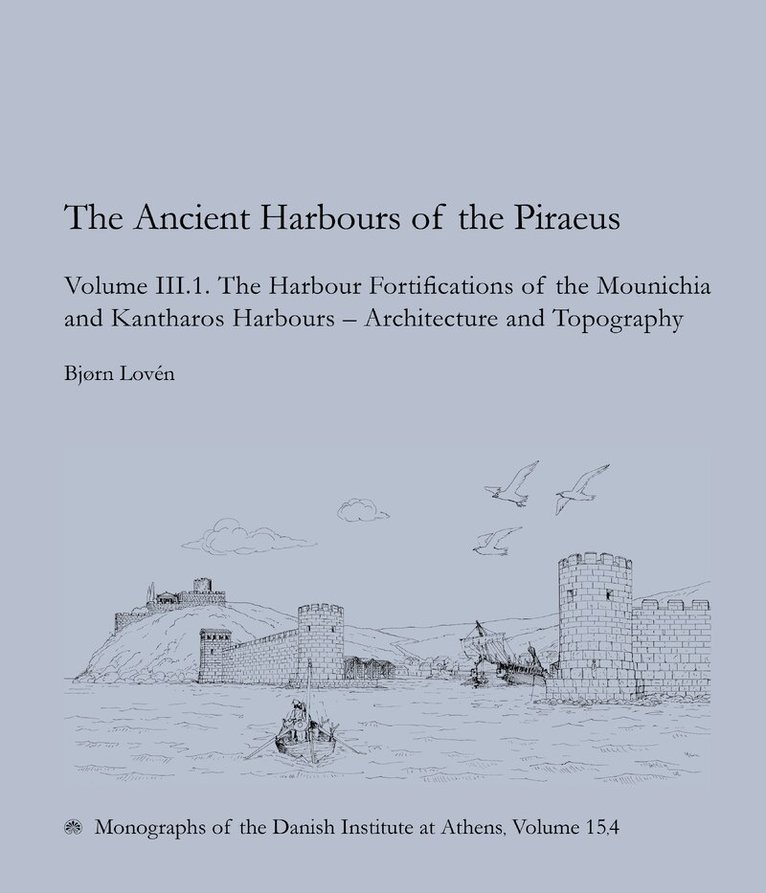
Volumes 15,4 (134 pages) and 15,5 (247 pages, 259 ill., 45 A3 plates) are conceived as a single volume (III.1–2) comprised of two fascicules.III.1: The Harbour Fortifications of the Mounichia and Kantharos Harbours – Architecture and Topography.The primary objective of this fascicule is to present the results of the Zea Harbour Project’s investigations of the harbour fortifications at Mounichia in 2005 and the period 2007 to 2012 and to re-examine what can be known about the fortifications of Kantharos, which continues to serve as the Piraeus’ principal harbour to the present day. Chapter 1 (Introduction) considers the objectives, textual sources, archaeological evidence, terminology, and methodology involved, introducing two new terms: “fortified mole” and “fortified breakwater.” Chapter 2 presents the textual evidence relating to the fortifications of the Piraeus, contextualising these structures within the history of the Piraeus from the late 6th century BC until their destruction by Sulla’s forces in 86 BC. Chapter 3 offers an overview of the documentation created by travellers since 1589, topographers since 1686, and scholars since 1881, focusing on their descriptions of the structural remains of the harbours in the Piraeus, but also bringing relevant cartographic, photographic, and artistic documents into consideration. Chapter 4 explores the topography of the fortifications at Kantharos Harbour based on published data. Chapter 5 does likewise for Mounichia, drawing on the findings of the Project’s fieldwork there to provide a detailed analysis of the harbour fortifications’ architecture, supported by feature catalogues of the northern and southern fortified moles. These monumental structures were probably initially constructed in the early 5th century BC. Two later building phases belonging to the 5th century BC (in all probability 429/28 BC or shortly thereafter) and the 4th to 3rd centuries BC have been identified.III.2: The Themistoclean Shipsheds in Group 1 at Mounichia Harbour – Architecture, Topography and Finds.This fascicule presents the findings of the Project’s 2010–2012 investigations on the northern side of Mounichia Harbour to discuss the architecture and topography of Shipsheds 1–7 in Group 1\. Chapter 1 is devoted to the survey and excavation of this set of shipsheds. Shipshed 1(α), dated to terminus post quem 500–480 BC, represents the Zea Harbour Project’s most important discovery: of all the Classical-period structures in the Piraeus, only Shipshed 1(α) has a compelling claim to be linked to Themistocles’ building programme. Chapter 2 offers a survey and catalogue of the ceramics and other small finds discovered during the excavation of Shipshed 1(α) and of the northern fortified mole at Mounichia. Appendices, Figures, and Plates complete the volume.