Blair Wheaton - Böcker
Visar alla böcker från författaren Blair Wheaton. Handla med fri frakt och snabb leverans.
4 produkter
4 produkter
416 kr
Skickas inom 7-10 vardagar
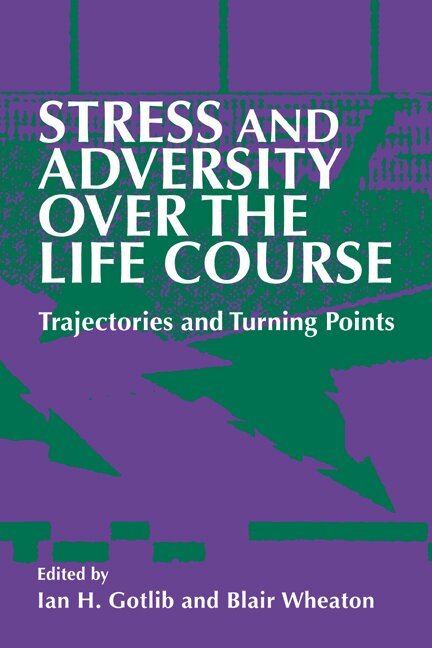
Although stress occurs at every stage of life, much research studies its effects over short-term periods, typically within circumscribed life stages. Little attention has been given to the possibilities that the consequences or impact of stress depend critically on the timing in the life course in which the individual is exposed to the stress, and that the sequence of prior stressors acts as a context for these effects. This book attempts to map the influence of early stressful experiences on later life outcomes, studying the trajectories of stressors over the life course. It examines the ramifications of stressful events at key life-course transition points, and explores the diversity of outcomes for individuals who have suffered through trauma. Finally, the book suggests methods for study of stress and adversity through the life course, where issues of timing, ordering and sequencing of stressors are crucial.
1 286 kr
Skickas inom 7-10 vardagar
Although stress occurs at every stage of life, much research studies its effects over short-term periods, typically within circumscribed life stages. Little attention has been given to the possibilities that the consequences or impact of stress depend critically on the timing in the life course in which the individual is exposed to the stress, and that the sequence of prior stressors acts as a context for these effects. This book attempts to map the influence of early stressful experiences on later life outcomes, studying the trajectories of stressors over the life course. It examines the ramifications of stressful events at key life-course transition points, and explores the diversity of outcomes for individuals who have suffered through trauma. Finally, the book suggests methods for study of stress and adversity through the life course, where issues of timing, ordering and sequencing of stressors are crucial.
Advances in the Conceptualization of the Stress Process
Essays in Honor of Leonard I. Pearlin
Inbunden, Engelska, 2009
1 096 kr
Skickas inom 10-15 vardagar
In 1981, Leonard Pearlin and his colleagues published an article that would ra- cally shift the sociological study of mental health from an emphasis on psychiatric disorder to a focus on social structure and its consequences for stress and psyc- logical distress. Pearlin et al. (1981) proposed a deceptively simple conceptual model that has now influenced sociological inquiry for almost three decades. With his characteristic penchant for reconsidering and elaborating his own ideas, Pearlin has revisited the stress process model periodically over the years (Pearlin 1989, 1999; Pearlin et al. 2005; Pearlin and Skaff 1996). One of the consequences of this continued theoretical elaboration of the stress process has been the development of a sociological model of stress that embraces the complexity of social life. Another consequence is that the stress process has continued to stimulate a host of empirical investigations in the sociology of mental health. Indeed, it is no exaggeration to suggest that the stress process paradigm has been primarily responsible for the growth and sustenance of sociological research on stress and mental health. Pearlin et al. (1981) described the core elements of the stress process in a brief paragraph: The process of social stress can be seen as combining three major conceptual domains: the sources of stress, the mediators of stress, and the manifestations of stress. Each of these extended domains subsumes a variety of subparts that have been intensively studied in recent years.
Advances in the Conceptualization of the Stress Process
Essays in Honor of Leonard I. Pearlin
Häftad, Engelska, 2014
1 096 kr
Skickas inom 10-15 vardagar
In 1981, Leonard Pearlin and his colleagues published an article that would ra- cally shift the sociological study of mental health from an emphasis on psychiatric disorder to a focus on social structure and its consequences for stress and psyc- logical distress. Pearlin et al. (1981) proposed a deceptively simple conceptual model that has now influenced sociological inquiry for almost three decades. With his characteristic penchant for reconsidering and elaborating his own ideas, Pearlin has revisited the stress process model periodically over the years (Pearlin 1989, 1999; Pearlin et al. 2005; Pearlin and Skaff 1996). One of the consequences of this continued theoretical elaboration of the stress process has been the development of a sociological model of stress that embraces the complexity of social life. Another consequence is that the stress process has continued to stimulate a host of empirical investigations in the sociology of mental health. Indeed, it is no exaggeration to suggest that the stress process paradigm has been primarily responsible for the growth and sustenance of sociological research on stress and mental health. Pearlin et al. (1981) described the core elements of the stress process in a brief paragraph: The process of social stress can be seen as combining three major conceptual domains: the sources of stress, the mediators of stress, and the manifestations of stress. Each of these extended domains subsumes a variety of subparts that have been intensively studied in recent years.