Boaz Huss - Böcker
Visar alla böcker från författaren Boaz Huss. Handla med fri frakt och snabb leverans.
6 produkter
6 produkter
Mystifying Kabbalah
Academic Scholarship, National Theology, and New Age Spirituality
Inbunden, Engelska, 2020
1 130 kr
Skickas inom 5-8 vardagar
Most scholars of Judaism take the term "Jewish mysticism" for granted, and do not engage in a critical discussion of the essentialist perceptions that underlie it. Mystifying Kabbalah studies the evolution of the concept of Jewish mysticism. It examines the major developments in the academic study of Jewish mysticism and its impact on modern Kabbalistic movements in the contexts of Jewish nationalism and New Age spirituality.Boaz Huss argues that Jewish mysticism is a modern discursive construct and that the identification of Kabbalah and Hasidism as forms of mysticism, which appeared for the first time in the nineteenth century and has become prevalent since the early twentieth, shaped the way in which Kabbalah and Hasidism are perceived and studied today. The notion of Jewish mysticism was established when western scholars accepted the modern idea that mysticism is a universal religious phenomenon of a direct experience of a divine or transcendent reality and applied it to Kabbalah and Hasidism. "Jewish mysticism" gradually became the defining category in the modern academic research of these topics. This book clarifies the historical, cultural, and political contexts that led to the identification of Kabbalah and Hasidism as Jewish mysticism, exposing the underlying ideological and theological presuppositions and revealing the impact of this "mystification" on contemporary forms of Kabbalah and Hasidism.
449 kr
Skickas inom 7-10 vardagar
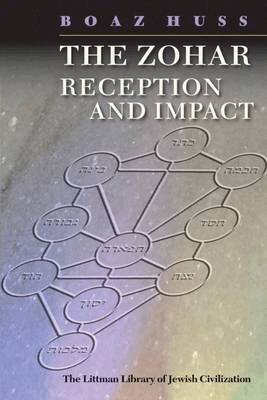
National Jewish Book Awards Finalistfor the Nahum N. Sarna Memorial Award for Scholarship, 2016.From its first appearance, theZohar has been one of the most sacred, authoritative, and influential books inJewish culture. Many scholarly works have been dedicated to its mysticalcontent, its literary style, and the question of its authorship. This bookfocuses on different issues: it examines the various ways in which the Zoharhas been received by its readers and the impact it has had on Jewish culture,including the fluctuations in its status and value and thevarious cultural practices linked to these changes. This dynamic and multi-layered history throwsimportant new light on many aspects of Jewish cultural history over the lastseven centuries.Boaz Husshas broken new ground with this study, which examines of the reception andcanonization of the Zohar as well as its criticism and rejection from itsinception to the present day. His underlying assumption is that the differentvalues attributed to the Zohar are not inherent qualities of the zoharic texts,but rather represent the way it has been perceived by its readers in differentcultural contexts. He therefore considers not only the attribution of differentqualities to the Zohar through time but also the people who were engaged inattributing such qualities and the social and cultural functions associatedwith their creation, re-creation, and rejection.For each historical period from the beginning of Zoharscholarship to the present, Huss considers the social conditions that stimulatedthe veneration of the Zohar as well as the factors that contributed to itsrejection, alongside the cultural functions and consequences of each approach.Because the multiple modes of the reception of the Zohar have had a decisiveinfluence on the history of Jewish culture, this highly innovative andwide-ranging approach to Zohar scholarship will have important repercussionsfor many areas of Jewish studies.
805 kr
Skickas inom 7-10 vardagar
National Jewish Book Awards Finalistfor the Nahum N. Sarna Memorial Award for Scholarship, 2016.From its first appearance, theZohar has been one of the most sacred, authoritative, and influential books inJewish culture. Many scholarly works have been dedicated to its mysticalcontent, its literary style, and the question of its authorship. This bookfocuses on different issues: it examines the various ways in which the Zoharhas been received by its readers and the impact it has had on Jewish culture,including the fluctuations in its status and value and thevarious cultural practices linked to these changes. This dynamic and multi-layered history throwsimportant new light on many aspects of Jewish cultural history over the lastseven centuries.Boaz Husshas broken new ground with this study, which examines of the reception andcanonization of the Zohar as well as its criticism and rejection from itsinception to the present day. His underlying assumption is that the differentvalues attributed to the Zohar are not inherent qualities of the zoharic texts,but rather represent the way it has been perceived by its readers in differentcultural contexts. He therefore considers not only the attribution of differentqualities to the Zohar through time but also the people who were engaged inattributing such qualities and the social and cultural functions associatedwith their creation, re-creation, and rejection.For each historical period from the beginning of Zoharscholarship to the present, Huss considers the social conditions that stimulatedthe veneration of the Zohar as well as the factors that contributed to itsrejection, alongside the cultural functions and consequences of each approach.Because the multiple modes of the reception of the Zohar have had a decisiveinfluence on the history of Jewish culture, this highly innovative andwide-ranging approach to Zohar scholarship will have important repercussionsfor many areas of Jewish studies.
2 028 kr
Skickas inom 3-6 vardagar
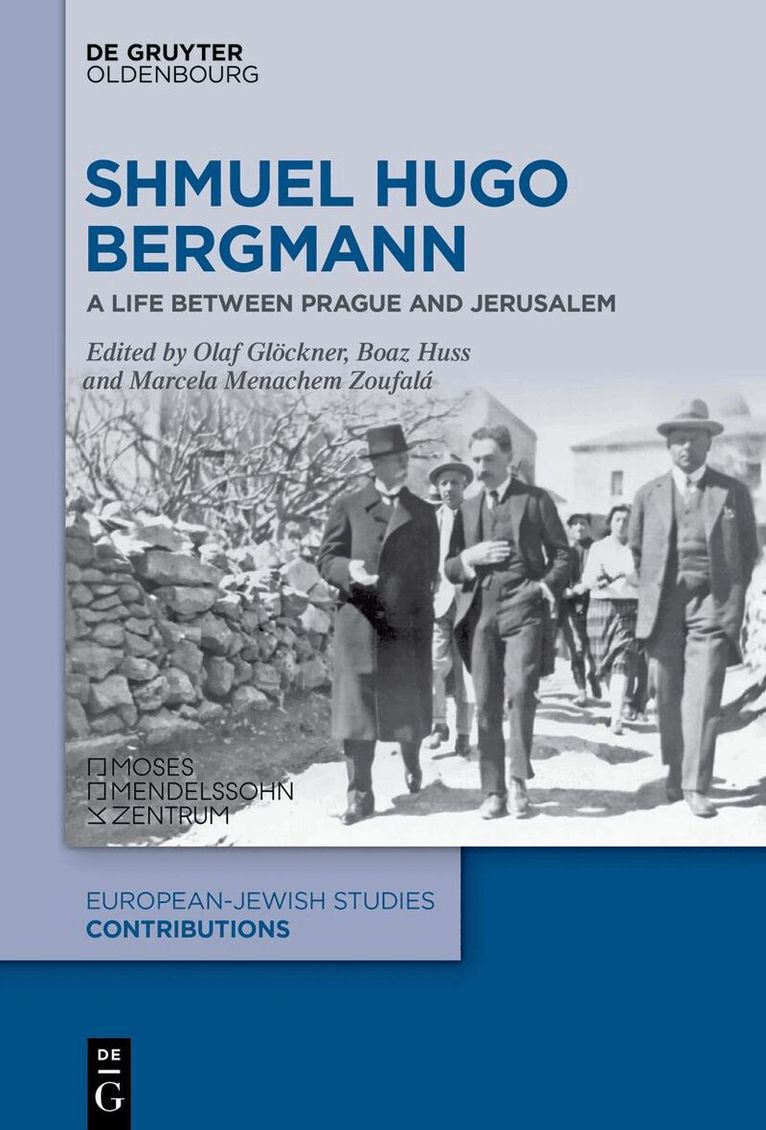
In recent years, the interest on life and work of the Jewish writer, philosopher, mystic and politician Shmuel Hugo Bergmann (1883–1975) has perceptibly increased. Well-known as a protagonist of the famous "Prague Circle", Bergmann headed for Palestine in 1920, became the driving force for building the Jewish National Library in Jerusalem and finally advanced as first Rector of the Hebrew University. All his life, close ties to the Czech Republic remained.In the State of Israel, Bergmann became a leading philosopher and highly admired cultural figure. He himself showed great interest in world religions, mysticism, and Western esotericism. Bergmann also emerged as an important point of reference for left-wing Israeli discourse. Up from the late 1920ies has was one of the protagonists of the “Brit Shalom”, an initiative which called for an advocated peaceful coexistence of Jews and Arabs and a bi-national State in Israel/Palestine.In this volume, distinguished historians, scholars of religion, and cultural scientists conflate a fascinating life story of a man who always worked on social and educational improvements and searched for fairness and deeper truths in a world full of conflict and antagonisms.
1 193 kr
Skickas
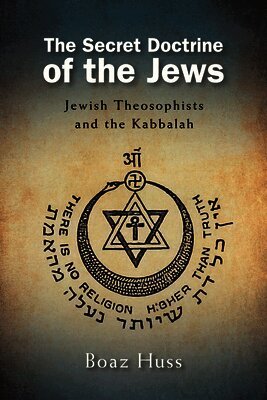
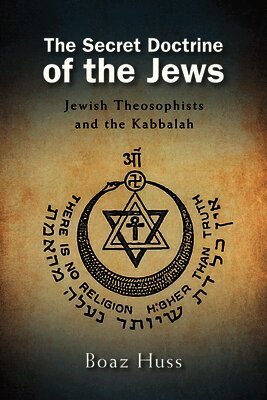
A comprehensive exploration of the Jewish adherents of the Theosophical Society and their impact on modern Jewish culture and the development of modern forms of Kabbalah.The Secret Doctrine of the Jews offers the first comprehensive study of Jewish followers of the Theosophical Society, the highly influential global esoteric movement that was established in New York in 1875. The book presents a detailed examination of the major Jewish followers of the Theosophical Society and the formation of Jewish lodges and associations within its framework. It discusses the endeavors of Jewish theosophist to reconcile their Jewish identity with their theosophical convictions and to create new, theosophical inspired interpretations of Kabbalah. The book aims to underscore the role of Jewish theosophists within the Theosophical Society and explore their impact on modern Jewish culture—particularly their influence on the development of modern perspectives and forms of Kabbalah. The monograph makes significant contributions to research is several areas, including the global history of the Theosophical Society, modern Jewish religious movements, and the development and dissemination of modern forms of Kabbalah during the twentieth century.
360 kr
Skickas
A comprehensive exploration of the Jewish adherents of the Theosophical Society and their impact on modern Jewish culture and the development of modern forms of Kabbalah.The Secret Doctrine of the Jews offers the first comprehensive study of Jewish followers of the Theosophical Society, the highly influential global esoteric movement that was established in New York in 1875. The book presents a detailed examination of the major Jewish followers of the Theosophical Society and the formation of Jewish lodges and associations within its framework. It discusses the endeavors of Jewish theosophist to reconcile their Jewish identity with their theosophical convictions and to create new, theosophical inspired interpretations of Kabbalah. The book aims to underscore the role of Jewish theosophists within the Theosophical Society and explore their impact on modern Jewish culture—particularly their influence on the development of modern perspectives and forms of Kabbalah. The monograph makes significant contributions to research is several areas, including the global history of the Theosophical Society, modern Jewish religious movements, and the development and dissemination of modern forms of Kabbalah during the twentieth century.