
Bob Switky – författare
Visar alla böcker från författaren Bob Switky. Handla med fri frakt och snabb leverans.
3 produkter
3 produkter
496 kr
Skickas inom 10-15 vardagar
This title was first published in 2000. This text addresses concerns about regional trade agreements. From a variety of political and economic angles, it explains the emergence of trade blocs, their internal policies and politics, and their effects on global trade. It does not provide sequential descriptions and analyses of each of the world's major trading blocs. The focus here is on a number of causal factors that help explain the emergence of trading blocs and the development of their relations to and effects on the multilateral trading system. In each chapter, attempts have been made to draw theoretical and case-based generalizations that may apply to other trade blocs than the used in the empirical analyses.
1 148 kr
Skickas inom 10-15 vardagar
This title was first published in 2000. This text addresses concerns about regional trade agreements. From a variety of political and economic angles, it explains the emergence of trade blocs, their internal policies and politics, and their effects on global trade. It does not provide sequential descriptions and analyses of each of the world's major trading blocs. The focus here is on a number of causal factors that help explain the emergence of trading blocs and the development of their relations to and effects on the multilateral trading system. In each chapter, attempts have been made to draw theoretical and case-based generalizations that may apply to other trade blocs than the used in the empirical analyses.
432 kr
Skickas inom 3-6 vardagar
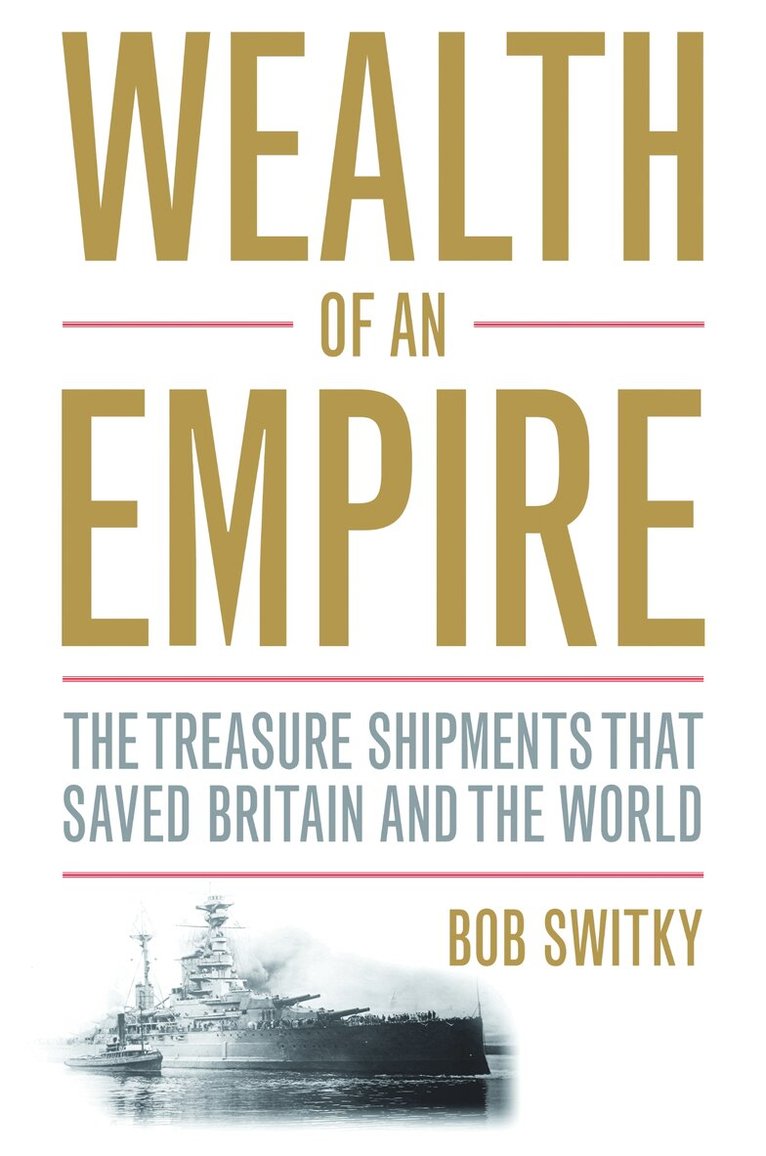
Wealth of an Empire tells the dramatic true story of a top-secret mission that changed the course of World War II: Great Britain’s shipment of virtually its entire treasury across the treacherous waters of the North Atlantic to safety in the United States and Canada. Had the Germans captured or sunk the treasure-laden ships, the war could have been lost more than eighteen months before the Japanese attack on Pearl Harbor. The British government authorized this immensely risky and long-running operation not only because of the obvious danger that Germany’s rising militancy posed but also because of the isolationist sentiment that permeated both American society and Congress. America’s refusal to sell arms and other goods without payment up front left Britain little choice but to mount this daring operation. Only a few banking, political, and military leaders were responsible for the complicated logistical and security procedures that were designed to safeguard the transfer of both gold and financial securities to North America. Although the special shipments were initially of relatively modest value, the strategic imperative changed dramatically when Germany threatened to invade Britain in the summer of 1940. Fearing that Britain’s wealth might fall into German hands, in an audacious yet visionary decision newly installed prime minister Winston Churchill authorized the evacuation of nearly all of Britain’s liquid assets. Wealth of an Empire uses previously unused and unavailable original documents-including those from the British National Archives, the Bank of England’s archives, the Imperial War Museum, and the Bank of Canada’s archives-to shed new light on this underexplored aspect of Britain’s wartime history.