Boleslaw Domanski - Böcker
Visar alla böcker från författaren Boleslaw Domanski. Handla med fri frakt och snabb leverans.
3 produkter
3 produkter
675 kr
Skickas inom 10-15 vardagar
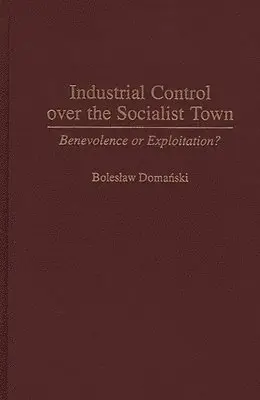
The author addresses the neglected issue of the relations between the functioning of powerful state industrial firms and the town under socialism. As they strived for labor force, the manufacturing and mining employers in Central and Eastern Europe became prominent gatekeepers controlling access to scarce goods and services, which reflected a specific labor market segmentation. The distribution of social benefits and burdens they generated enhanced life chances of certain groups by and large at the cost of the underprivileged—women and the elderly in particular. This socialist industry contributed to social injustice and deprivation as well as the reproduction of entrapping spatial settings such as factory colonies and areas reserved for potential expansion.The study reveals a great diversity of mechanisms of industrial control over and exploitation of socialist towns in Poland. Spatial organization of local activities and facilities exhibited the power of industrial gatekeepers, and in several cases became a mediating element facilitating achievement of the firm's objectives. The residents' sense of place was permeated by the company through its multiple involvement outside the factory gates, which could justify its dominant position and conceal sources of social inequalities and conflicts. The legacy of socialist factory paternalism bears heavily upon post-socialist society, which is evident in anti-egalitarian attitudes and social closure attempts demonstrated by the beneficiaries of the gatekeepers' allocation.
Evolution of European Manufacturing Industries
The Dynamics of Core-Periphery Relationships
Inbunden, Engelska, 2024
2 096 kr
Skickas inom 10-15 vardagar
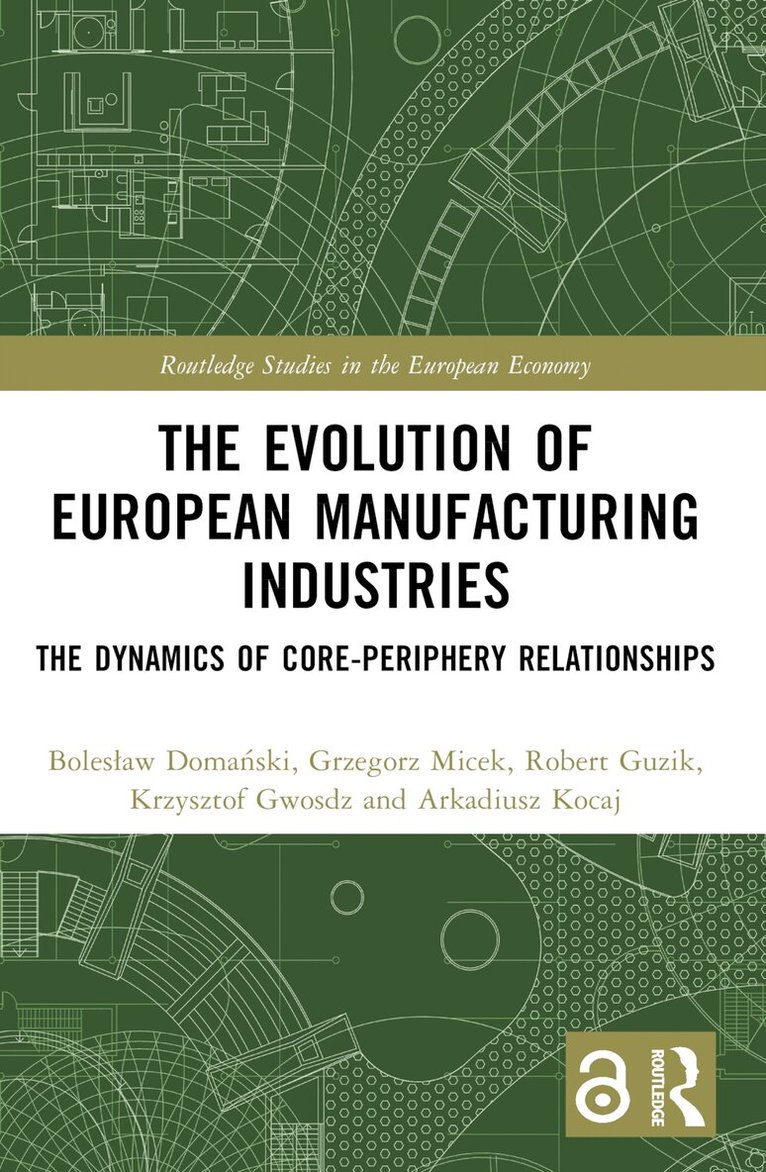
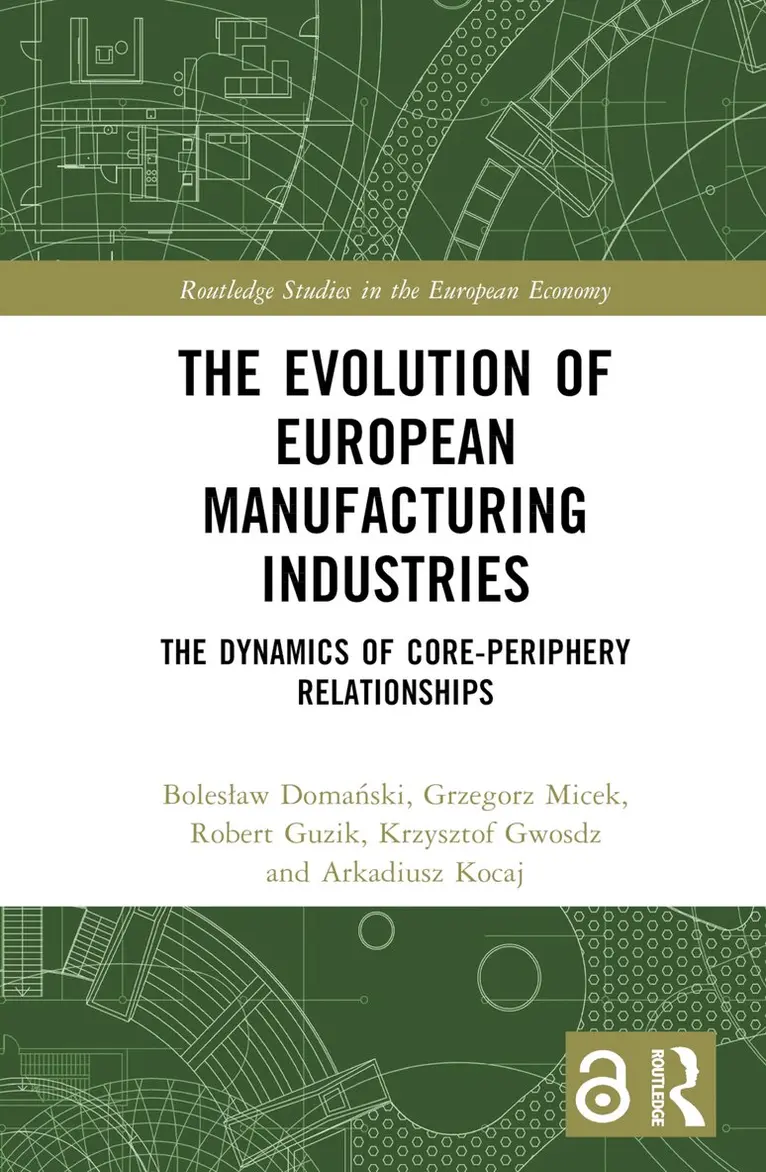
The book provides a picture of the increasing significance of Central Europe and especially Poland in global production networks, discussing the underlying economic, social, and political factors. The key question it answers is to what extent the growth of production and exports results in industrial upgrading towards the manufacturing of more sophisticated high value-added products, new technologies, and the development of non-production functions, especially design and advanced service capabilities.The book shows that Central European manufacturing no longer exhibits the typical features of production activities in the periphery, in particular low density and diversity, low productivity, narrow specialisation in low value-added activities and poor local linkages, hence limited local value creation and value capture. There is still dependence on foreign-controlled enterprises in several sectors and limited product innovation, which remains a major weakness. Further, the book assesses the social consequences of the ongoing development of manufacturing capabilities in Poland and its impact on employment conditions including the quality of jobs and level of wages.The authors provide insight into relationships between globalisation processes, place-specific attributes, and current economic policies, and as such the book will be of interest to academics, policy makers and other stakeholders interested in both peripheral economies and core countries and representing various international organisations dealing with economic transition and development.
Evolution of European Manufacturing Industries
The Dynamics of Core-Periphery Relationships
Häftad, Engelska, 2026
675 kr
Kommande
The book provides a picture of the increasing significance of Central Europe and especially Poland in global production networks, discussing the underlying economic, social, and political factors. The key question it answers is to what extent the growth of production and exports results in industrial upgrading towards the manufacturing of more sophisticated high value-added products, new technologies, and the development of non-production functions, especially design and advanced service capabilities.The book shows that Central European manufacturing no longer exhibits the typical features of production activities in the periphery, in particular low density and diversity, low productivity, narrow specialisation in low value-added activities and poor local linkages, hence limited local value creation and value capture. There is still dependence on foreign-controlled enterprises in several sectors and limited product innovation, which remains a major weakness. Further, the book assesses the social consequences of the ongoing development of manufacturing capabilities in Poland and its impact on employment conditions including the quality of jobs and level of wages.The authors provide insight into relationships between globalisation processes, place-specific attributes, and current economic policies, and as such the book will be of interest to academics, policy makers and other stakeholders interested in both peripheral economies and core countries and representing various international organisations dealing with economic transition and development.