Bonnie C. Wade - Böcker
Visar alla böcker från författaren Bonnie C. Wade. Handla med fri frakt och snabb leverans.
5 produkter
5 produkter
1 784 kr
Skickas inom 3-6 vardagar
1 424 kr
Skickas inom 5-8 vardagar
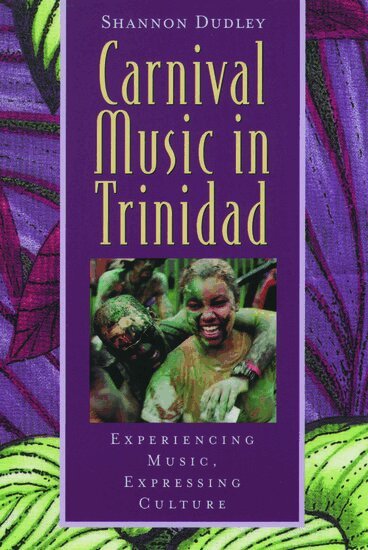
Designed for undergraduates with little or no background in world music, Music in Trinidad is one of several volumes that can be used along with Thinking Musically, the main book in the Global Music Series, in any introductory world music or ethnomusicology course. Music in Trinidad explores how the history and culture of Trinidad is related to the expression and interpretation of Carnival music, the musical tradition most representative of Trinidadian culture. It looks at the genres of calypso, steelband, and soca and describes both their musical structure and their political and symbolic meanings in Trinidad's society. The book also examines how the instruments, sounds, and lyrics of Carnival music provide a sense of national and ethnic identity. Music in Trinidad includes many vivid accounts and illustrations of Carnival performances and is packaged with a 70-minute CD that includes examples of the various genres of Carnival music.
1 424 kr
Skickas inom 5-8 vardagar
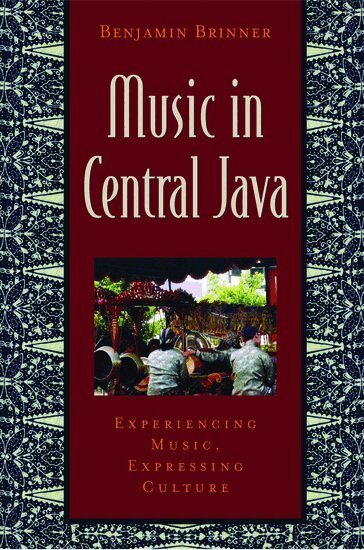
Music in Central Java: Experiencing Music, Expressing Culture, is one of the case study volumes in the Global Music Series, edited by Bonnie Wade and Patricia Shenhan Campbell. This volume describes the adventures of two central characteres: John an American student who travels to Java and Joko, a Javanese musician. Their adventures and exploits lead them through Javanese society and as they travel they explore the variety and range of instruments and perormance styles through out central JAva. Flexibility, appropriateness and intergration are the three themes that drive Javanese musical culture, and this book pays particular attention to them as well as to Javanese musicians. While gamelan is the focus of the text, the author also provides a broad survey of the other types of music that may be found in Central Java. This book introduces cultural and social processes and the values of music in Javanese life. The text features eye witnessaccounts of performances, interviews with key performers, hands-on activities, vivid illustrations and a 70 minute CD of the author's field recordings.
282 kr
Skickas inom 7-10 vardagar
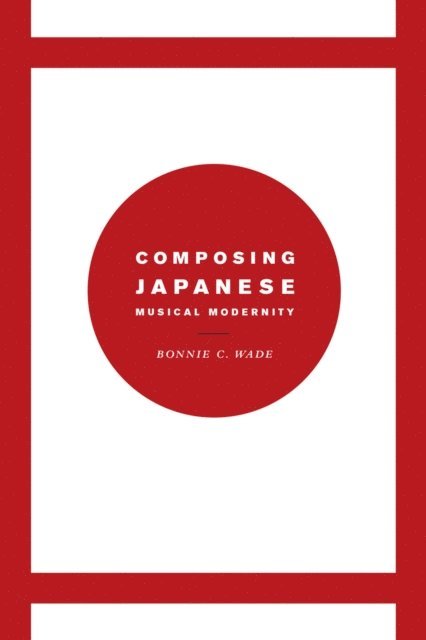
When we think of composers like Mozart or Beethoven, we usually envision an isolated artist separate from the orchestra - someone alone in a study, surrounded by staff paper - and in Europe and America this image generally has been accurate. For most of Japan's musical history, however, no such role existed - composition and performance were deeply intertwined. Only when Japan began to embrace Western culture in the late nineteenth century did the role of the composer emerge. In Composing Japanese Musical Modernity, Bonnie C. Wade uses an investigation of this new musical role to offer new insights not just into Japanese music but Japanese modernity at large. Wade examines the history of composers in Japanese society, looking at the creative and economic opportunities that have sprung up around them - or that they forged - during Japan's astonishingly fast modernization. She shows that modernist Japanese composers have not bought into the high modernist concept of the autonomous artist, instead remaining connected to the people.Articulating Japanese modernism in this way, Wade tells a larger story of international musical life, of the spaces in which tradition and modernity are able to meet and, ultimately, where modernity itself has been made.
300 kr
Skickas inom 11-20 vardagar
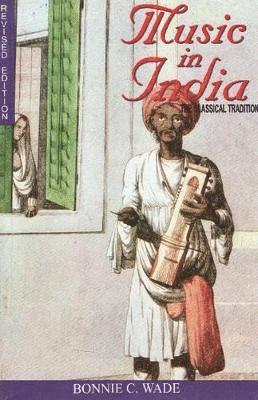
Music in India is written for the uninitiated Westerner. It is an introduction to the principles, ideas, and systems of two traditions of Indian classical music. It is geared to the listener as well as to the performer. Chapter 1 concerns the listener and the effect of music. Performance situations are described to show how theory is put into practice. Chapters 2 and 3 contrast concepts in Indian and Western classical music as well as classification of melody type, ideas about notating and notation systems used in Indian traditions are also explained. Chapter 4 describes the primary melody producing instruments. Chapter 5 contrasts Hindustani and Western concepts of rhythm and meter. Additional chapters are concerned with those performance genres which can be heard on available recordings. The final chapter combines all of the various elements by commenting on the requirements of a good musician.